

I n the new Gucci campaign, Mariah Carey blows a goodbye kiss to 2026 in the most Mariahhhh way possible. Dressed in a fake fur coat and an azure dress, she enters a Christmas party to the twinkly sounds of All I Want For Christmas Is You. There are beautiful people, presents wrapped with Gucci string and butterflies, which have been associated with the popstar since her 1997 album, Butterfly, but have recently fluttered back to become a symbol of gen Z defiance and girlhood.
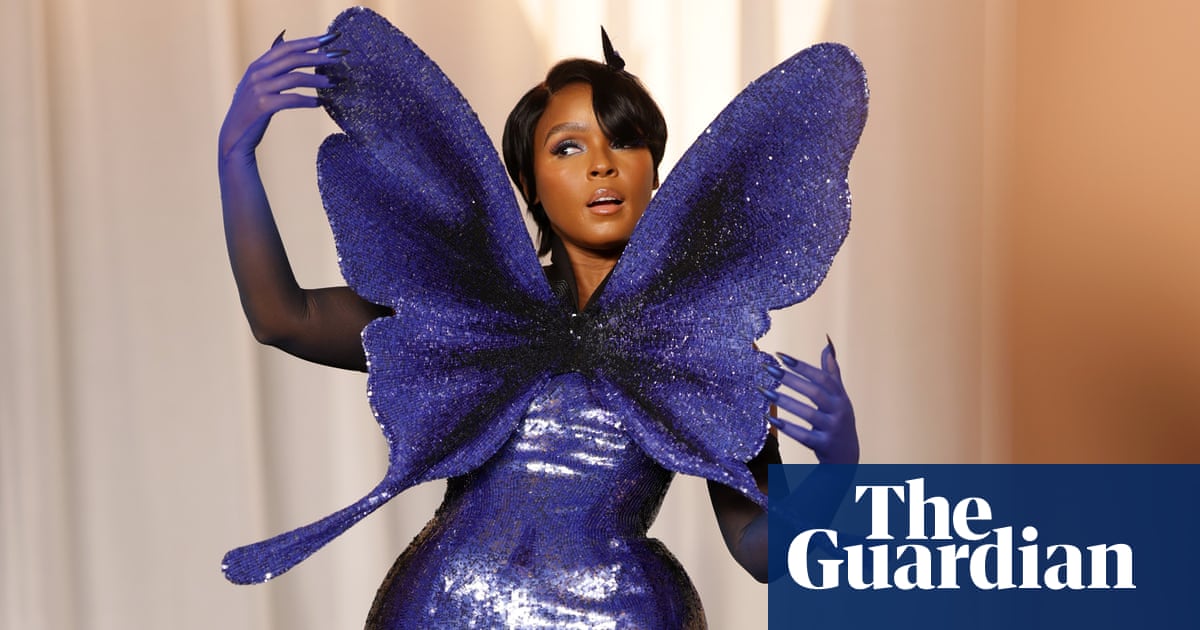
Carey serves as fairy godmother to the other “pop girlies” who have embraced the emblem, from PinkPantheress to Dua Lipa; Rachel Chinouriri to Marina and the Diamonds. At the Academy Museum gala in October, the singer Janelle Monáe looked as if she might take flight in a Robert Wun couture gown, with wide, yonic wings. Elsewhere, Tate McRae recently wore a black sequined butterfly bra and matching butterfly wing belt from lingerie wunderkind Ludovic de Saint Sernin. Both Swedish popstar Zara Larsson and her fans are championing glittery butterfly makeup motifs.
To mark 25 years of the Le City bag, Balenciaga has collaborated with Damien Hirst on a range featuring butterfly motifs, in a nod to the artist’s In and Out of Love exhibition , in which live butterflies hatched within his show space. The high street is swarming too. Urban Outfitters is a kaleidoscope of butterflies with fluttery motifs covering everything from trinket trays and duvets to cushions and hair clips.
Caterina Ospina, a stylist who has been working with Larsson on the Australian and Asian legs of her world tour, suggests the winged insect’s resurgence is a backlash against growing up.
Which makes it surprising, then, that the often hyper-feminised symbol has also been given an erotic currency when it was used by designers like Versace and Mugler in the 90s. Both had “a very clear sexual side”, says Dr Valerie Steele, an expert on fashion symbolism and director of the Museum at the Fashion Institute of Technology, “and although the butterfly isn’t primarily a sexual symbol, it functioned as one for them”.
Later in the 90s, when it was adopted by Carey, Britney Spears and Destiny’s Child, the butterfly came to represent the electricity of girlhood and coming-of-age. “At the time I was writing Butterfly, I was going through my own personal metamorphosis,” Carey told me when I interviewed her in 2022. “After that, I grew into becoming a free, emancipated person. People call me ‘butterfly’ instead of ‘Mariah’”.
There have been “layers upon layers” of meaning behind the butterfly throughout history, says Steele. “In Greco-Roman times it was a symbol of the soul; in the 18th century, the painter Thomas Gainsborough used [the butterfly] as a portrait of innocence with his daughters chasing one.” By the 60s, the then Times editor William Rees-Mogg criticised the prison sentence given to Mick Jagger and Keith Richards after the Redlands drug raid, asking the judge in an editorial: “Who breaks a butterfly on a wheel?” It suggested that they were being made an example of, above and beyond their crimes.
But in the current climate, there’s another layer to the gen z revival. Kyle Raymond Fitzpatrick, who writes culture newsletter the Trend Report, links the butterfly resurgence to young people’s growing sense of unease, fuelled by global instability and climate chaos. “It’s about future-anxiety. Mourning the future you’re never going to have, in the present,” he says. “Nature is disappearing and we are more cut off from it. Like ‘remember when there were butterflies?’” He’s right: 80% of butterfly species in the UK have declined since 1970 . “It’s worn as a form of activism,” Raymond Fitzpatrick says.
Last month, in the same week that Jennifer Lawrence invoked her Hunger Games hero Katniss Everdeen’s three-finger salute encouraging fans to vote in the midterms, Elle Fanning wore baby pink and white Valentino couture with her gloves and hat adorned with butterflies in reference to a McQueen butterfly dress worn by her character, Effie Trinket, in the original films.
For Nicky Zimmermann, creative director of the Australian boho brand that featured “hive”-like butterfly tops and denim “butterflies” popping out of jeans in its spring/summer ‘27 collection , butterflies can be pegged to perseverance. “It wasn’t about the delicacy,” she says of the collection. “It was about resilience.”
But for those lucky enough to study them, they represent something else. “They conjure up images of sunshine, the warmth and colour of flowery meadows and gardens teeming with life,” says Emma Butler from charity Butterfly Conservation. “And of course there is also the undeniable truth that they are just beautiful insects.”
To read the complete version of this newsletter – complete with this week’s trending topics in The Measure and your wardrobe dilemmas solved – subscribe to receive Fashion Statement in your inbox every Thursday.