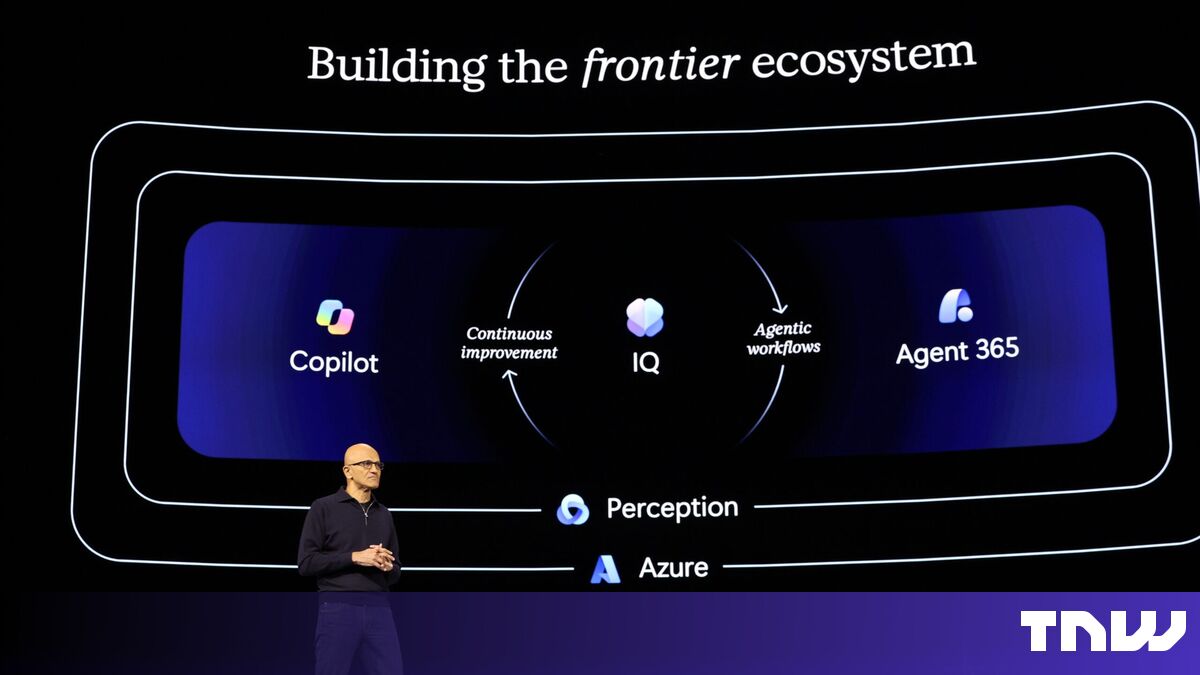
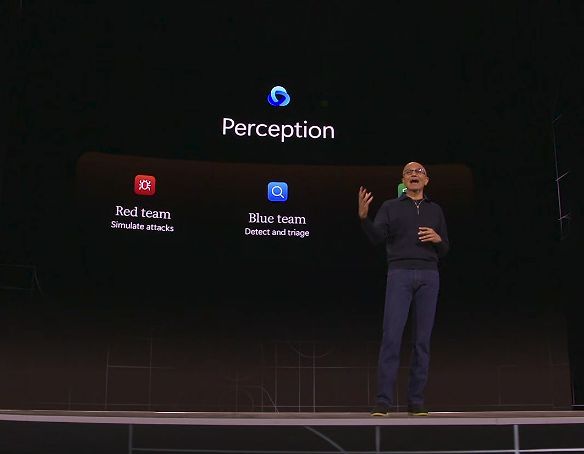
Microsoft has launched Perception at Ignite 2026, giving security teams a way to coordinate AI agents through automated playbooks, with human approval retained for high-impact actions.
Perception and core ISOC capabilities in Microsoft Defender are generally available. That status doesn’t extend to the full line-up: application penetration testing and cross-cloud remediation tools remain in preview.
The question is how much authority security teams will delegate. Microsoft’s approach lets agents investigate and act within defined limits, but it isn’t an unrestricted autonomous security system.
Perception links security signals, information about the customer’s environment, and agents that investigate or respond. Its controls can contain devices, revoke identity access, and block agents at the authorisation layer.
Microsoft says its own and partner sources supply more than 165 trillion signals daily through more than 500 connectors. Threat intelligence enriches that data before a context layer prepares it for agents.
That’s the information on which automated decisions depend. Microsoft says the context layer is optimised for precision, recall, and token efficiency, although those are obviously vendor claims rather than independent performance findings.
Security teams define incident criteria and the limits governing automated playbooks. Under Microsoft’s stated model, high-impact actions won’t proceed without human sign-off.
MCP and API connections extend orchestration into existing security and IT service management systems. Signals from AWS, Okta, and Salesforce are available in preview.
ISOC in Microsoft Defender combines security information and event management with behavioural analytics, threat intelligence and response capabilities.
Its generally-available ‘Alert Triage Agent’ and ‘Attack Investigation Agent’ target the investigation workload. Microsoft says they can reduce the time spent detecting and responding to threats, leaving analysts to handle decisions requiring judgement.
Application testing is less mature in release terms. ‘Web App Pen Test Agent’ remains in preview, alongside Codename MDASH, Microsoft’s code scanner.
For teams assessing AI vulnerability detection , the connection between those tools is worth examining: MDASH scans can feed the testing agent to help prioritise and fix vulnerabilities. MDASH also runs in regulated clouds.
Cross-cloud remediation is another preview deployment. ‘Risk Reduction Agent’ supports coordinated remediation across Microsoft, AWS, and Google Cloud, and can recommend vulnerability shielding.
That shielding applies targeted, temporary protection when patches aren’t immediately available for deployment. It’s a holding measure while teams arrange patching, with both the agent and shielding capability still in preview.
Microsoft is also extending identity and data controls to the agents operating inside customer environments. Discovery in Agent 365 and Entra assigns identities to discovered agents, making them subject to identity governance.
Intune policies can contain supported local agents on devices. Defender and Purview Data Loss Prevention govern runtime access and sensitive data, alongside Conditional Access policies.
Discovery covers third-party cloud agents on AWS and Google Cloud, plus 60 local agent types, including Claude Code, OpenAI Codex, and GitHub Copilot.
See also: Why Commonwealth Bank is using AI to detect software vulnerabilities earlier
Want to learn more about AI and big data from industry leaders? Check out AI & Big Data Expo taking place in Amsterdam, California, and London. The comprehensive event is part of TechEx and is co-located with other leading technology events including IoT Tech Expo and the Cyber Security & Cloud Expo . Click here for more information.
AI News is powered by TechForge Media . Explore other upcoming enterprise technology events and webinars here .