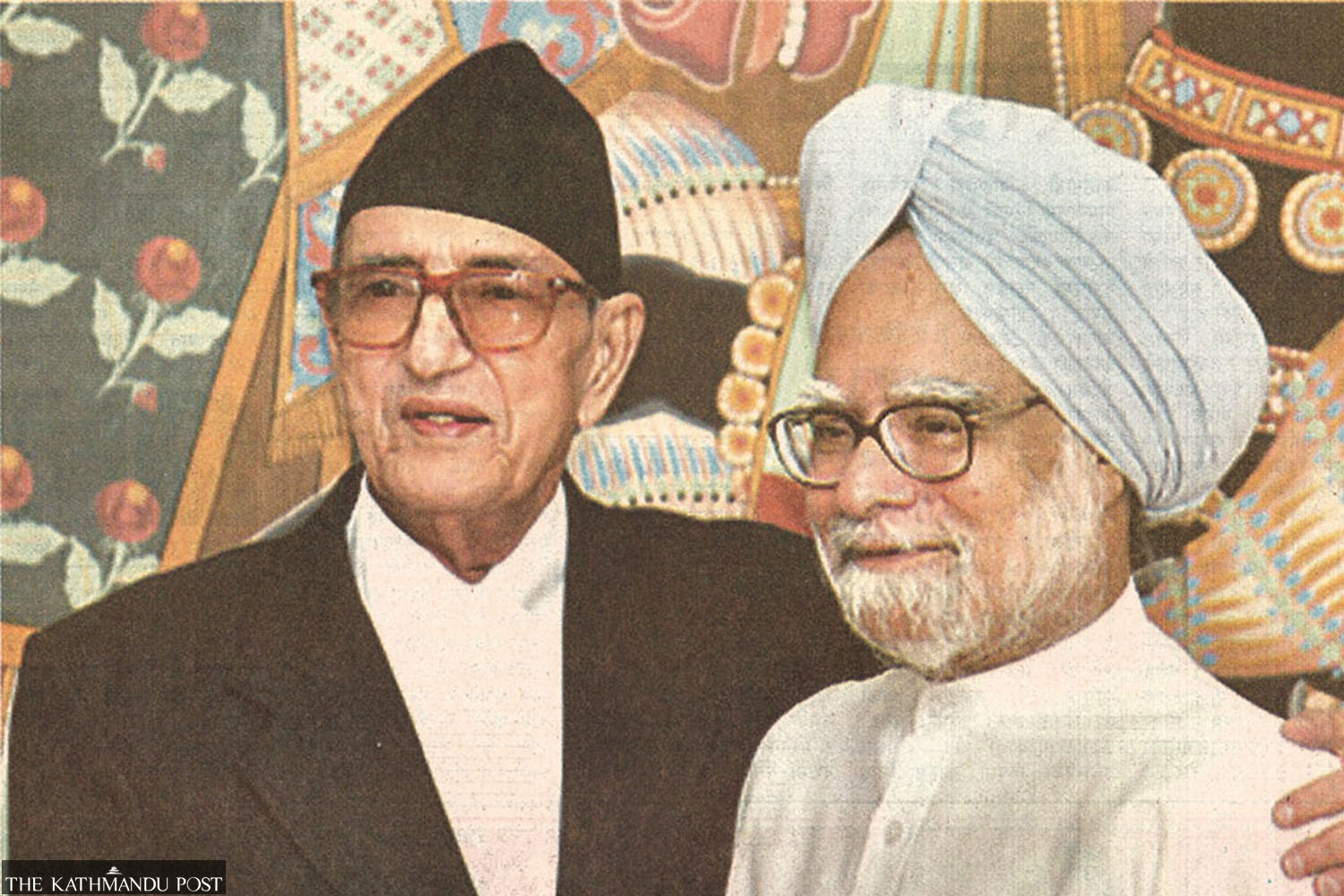
In January 1960, young BP Koirala, Nepal’s first democratically elected Prime Minister and leader of the Nepali Congress, arrived in India to meet Prime Minister Jawaharlal Nehru. Nepal had emerged from the popular uprisings of 1950-51 that ended the century-old Rana rule, and its first general elections in 1959 had brought young Koirala to power with a decisive mandate. Nehru was already India’s Prime Minister for over 12 years. Their joint communiqueé of January 28, 1960 laid the foundations of sovereign equality, territorial integrity, and mutual economic cooperation as the bedrock of bilateral ties.
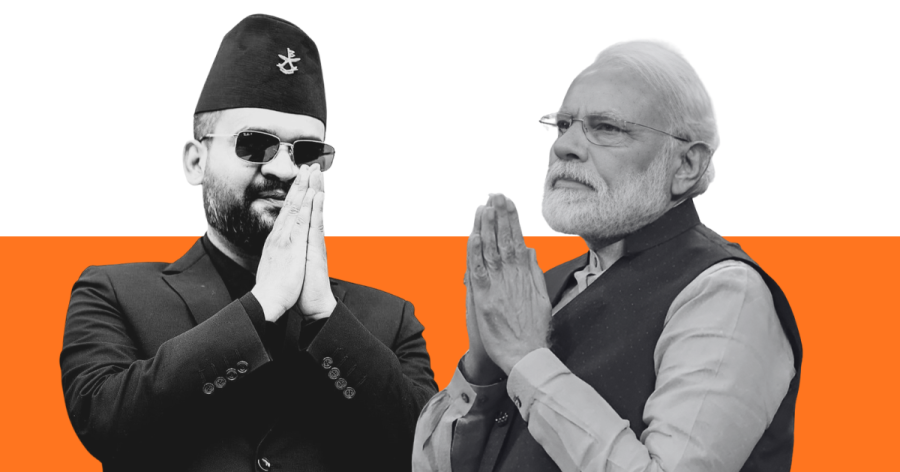
More than six decades later, from November 24 to 26, another young Nepali leader will arrive in New Delhi to meet Prime Minister Modi, who has also been in office for over 12 years. Shah, 36, represents a generation impatient to see unfulfilled promises fructify.
The pertinent question is whether this summit can reaffirm those foundational principles of the 1960s. Can they unfreeze their persistent mistrust, resolve pending border issues and unblock their key economic and strategic partnerships? Can they adapt to the fast-shifting geopolitical realities to build a pragmatic, forward-looking relationship rooted in mutual respect, sovereign equality, and shared prosperity?
Though the gravity of their relationship has endured, compared to Koirala meeting Nehru, the geopolitical landscape of India-Nepal relations has changed dramatically. Nepal today has an increasingly consequential economic and strategic partnership with China. Nepal’s participation in China’s Belt and Road Initiative, first formalised in 2017 and given a project-cooperation framework in December 2024, reflects Kathmandu’s diversifying connectivity, investment and development partnerships. This framework identifies several potential projects, including the China-Nepal cross-border railway, the Tokha–Chhahare tunnel and other strategic roads.
No doubt, Kathmandu cannot be expected to organise its foreign policy around New Delhi’s anxieties just yet. For India, Nepal’s engagement with China inevitably entails geopolitical implications. India’s scepticism is accentuated given its own complicated equations with Beijing. Nepal’s landlocked geography makes India indispensable for much of its trade and transit, but China today offers Nepal several additional routes and investments. In this backdrop, with his predecessor KP Sharma Oli choosing to visit Beijing before New Delhi, Shah’s first foreign visit to New Delhi must be reciprocated. India must use this opportunity to make its partnerships more attractive through reliable connectivity, timely investments and greater sensitivity towards Nepal’s sovereign choices.
Nepal also remains sceptical of India-China interactions, as their opening of border trade through Lipulekh Pass in 2015 had reignited Nepal’s territorial claims. Their relationship, obviously, cannot be reset by ignoring such politically sensitive issues. Lately, this dispute involving Kalapani, Limpiyadhura and Lipulekh has become especially contentious. Nepal’s 2020 constitutional amendment incorporated these territories into its revised political map, which India rejects. Susta is another unresolved boundary issue. These disputes have acquired a political life of their own, frequently becoming symbols of national sovereignty and pride.
Shah’s earlier political interventions on territorial questions suggest that he can be pragmatic in addressing this puzzle. However, neither side can be expected to abandon their established position. The way forward lies in reviving institutionalised boundary negotiations, separating technical demarcation from political rhetoric and preventing disagreements from contaminating the wider relationship. Even an agreement to resume serious, time-bound border talks would represent progress. The challenge is to ensure that maps do not become metaphors for mutual mistrust.
Economic interdependence presents the most transformative pathway for modern Nepal–India ties. India remains Nepal’s primary trading partner, accounting for approximately 62.3 percent of its total merchandise trade. However, bilateral trade during FY 2025-26 highlighted a stark structural asymmetry: Indian exports to Nepal reached $7.45 billion, whereas Nepal exported just $1.94 billion, creating a $5.5 billion trade deficit. Rectifying this disparity requires expanding Nepal’s productive capacity across manufacturing, agro-processing, pharmaceuticals, and tourism through a predictable investment ecosystem.
This economic priority is further compounded by the August 2026 Bhotekoshi flood, following which Nepal requested $2 billion in Indian assistance comprising concessional credit, grants, and infrastructure reconstruction. Then there are those long-term energy collaborations that serve as primary engines for sustainable integration. Having achieved an electricity export capacity of 1,150 MW to India by the 2025 wet season, Nepal is advancing toward a ten-year framework targeting 10,000 MW in power exports. Key initiatives such as Lower Arun, West Seti, and Seti River-6, alongside expanded cross-border transmission networks, can further deepen their energy link.
But political disagreements over water-sharing and cost distribution have left the flagship Pancheshwar Multipurpose Project stalled for nearly three decades. Resolving such hydro-diplomatic bottlenecks, while securing additional air-entry routes for Bhairahawa and Pokhara airports, expanding petroleum pipelines, and upgrading rail links, will be major issues before their coming summit.
Likewise, their historical defence ties require urgent political attention following the indefinite suspension of fresh Gorkha recruitment into the Indian Army since August 2022. Governed by the 1947 Tripartite Agreement, this generational bond of service, remittances and pensions was disrupted by India’s June 2022 Agnipath scheme. Under Agnipath’s four-year tour of duty, only 25 percent of recruits are retained for regular service, with the remainder exiting without traditional military pensions. Questioning the scheme’s alignment with the 1947 agreement and its socio-economic impact on returnees, Nepal had indefinitely postponed recruitment rallies, effectively freezing a vital institutional connection. Reopening high-level negotiations on service terms and post-discharge opportunities is essential to preserving this pillar of bilateral goodwill
The scheduled meeting between Shah and Modi will test whether generational political shifts in Kathmandu can dismantle decades of structural asymmetry. Shah’s post-movement mandate brings heightened domestic expectations, yet the ambition of the agenda will confront deep-seated economic and strategic friction points that ceremonial diplomacy cannot resolve.
Systemically, Nepal’s $5.5 billion trade deficit reflects its industrial weakness rather than mere tariff policy friction. Similarly, while Nepal’s growing hydropower capacity provides enormous leverage, the stalled Pancheshwar Multipurpose Project underscores how institutional inertia and water-sharing disputes regularly derail their cross-border energy synergy.
Strategically, the impasse over the Agnipath recruitment freeze and territorial disputes expose a persistent policy divergence. For Kathmandu, these represent core matters of sovereign equality; for New Delhi, they intersect with national security. Expecting a fixed-timeframe resolution to these disputes through the Joint Working Group remains politically ambitious given domestic nationalist pressures on both sides.
Ultimately, the Shah-Modi summit’s success will depend on whether both leaders can move beyond transactional diplomacy.
Singh is a former professor of International Studies at Jawaharlal Nehru University, New Delhi.
Devkota is a PhD scholar at TU specialising in education and conflict management.



.png)