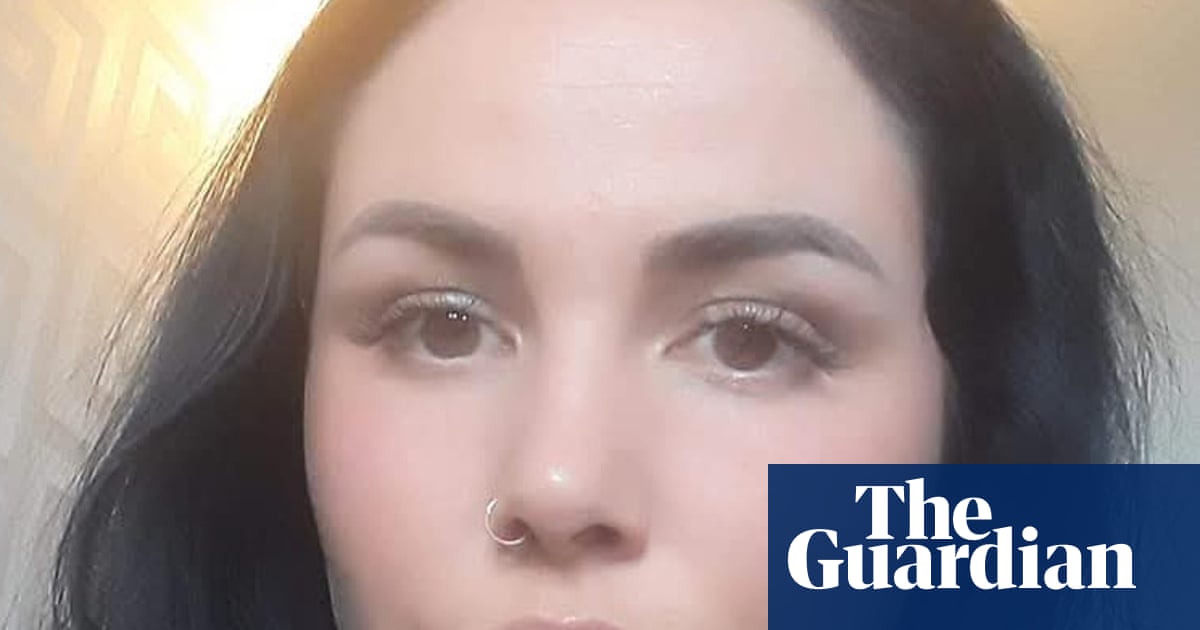
Tammy Shipley died alone in her cell at Silverwater Women's Correctional Centre in December 2022. ( Supplied )
Tammy Shipley was arrested for shoplifting goods worth about $23.
Eleven days later, the mother of five died alone in prison custody while on remand after drinking 20 litres of water.
After a lengthy inquest, New South Wales Coroner Teresa O'Sullivan found her death was preventable, and that opportunities to steer her away from custody were missed long before she reached a cell.
Aboriginal and Torres Strait Islander readers are advised that this article contains the name and image of an Indigenous person who has died, used with the permission of family.
Tammy Shipley lived with schizo-affective disorder, but in the months leading up to her final arrest she had been taking her prescribed medication inconsistently.
In the year before she died, she had contact with police on three occasions, during which officers recognised she was in a mental health crisis and directed her to hospital.
These incidents were recorded on the NSW Police Force Computerised Operational Policing System (COPS).
When Ms Shipley was arrested on December 9,2022, for shoplifting, the inquest heard, she had asked police officers to arrest her and told them she wanted to return to jail.
But the arresting police did not look up her history on the COPS database.
Instead, police told the court they were unaware of any mental health issues, and her custody management record answered "no" to whether she had a mental illness, which Ms O'Sullivan identified as a key failing.
"I'm satisfied that police did have the corporate knowledge about Tammy's mental health background," Ms O'Sullivan said.
"It was police who were in a position to advise the magistrate about her mental health history, which may have been considered to be an impairment relevant to the determination of bail."
Photos of Tammy Shipley as a young mother. ( Supplied )
After her arrest, Ms Shipley refused legal representation when she appeared in court.
Experts told the inquest she was likely in an acute phase of her illness and was not equipped to advocate for herself.
On December 14, when Ms Shipley pleaded guilty at Campbelltown Local Court, records wrongly showed she was on bail for other charges listed for January, when bail had actually been refused.
Ms O'Sullivan found this to be a failure of the system, and that the magistrate had clearly sought to release Ms Shipley rather than keep her in custody.
"Had the magistrate been aware of Tammy's mental health history and the fact that her bail had been revoked on the outstanding offences, they may have considered alternative options," she said.
"[They included] dealing with the offences on the mental health legislation, asking Legal Aid to provide further assistance, or bringing forward the outstanding offences to be dealt with that day."
Ms Shipley was held in the Mum Shirl Unit, which is meant to be a specialist therapeutic unit inside Silverwater Women's Correctional Centre.
It is named after Aboriginal leader Mum Shirl, who was a fierce advocate for prisoner welfare.
Ms O'Sullivan said she was "gravely concerned" about the environment of the unit, which she described as "austere and depressing".
She was unable to say with certainty that Ms Shipley's confinement in the cell contributed to her developing primary polydipsia, a psychiatric condition that caused her to drink excessive amounts of water.
But she said it was "self-evident" that Ms Shipley was isolated and likely bored, worried and depressed.
"Whether or not the environment contributed to Tammy developing polydipsia, it certainly did not facilitate staff conducting the necessary welfare checks or providing the human connection that had been recommended for Tammy when she came into custody."
Vicki Shipley with a photo of Tammy as a child. ( ABC News: Jack Fisher )
While held in the Mum Shirl Unit, Ms Shipley had a risk plan that required physical checks every 30 minutes.
Blinds on Ms Shipley's cell door were broken and permanently closed, and officers told the inquest the CCTV monitors were too small to show clearly what was happening.
Ms O'Sullivan found the physical checks were not carried out as required, labelling it a "serious failure" by Corrective Services.
NSW Coroner Teresa O'Sullivan handed down her findings on Thursday. ( ABC Broken Hill: Bill Ormonde )
CCTV showed Ms Shipley drinking huge quantities of water for days, but her behaviour went unnoticed by staff.
Her water consumption led to hyponatraemia, a drop in sodium levels that eventually led to Ms Shipley's death.
If the observations had been carried out every half hour, the coroner said, someone may have noticed her excessive drinking and prevented it from continuing.
She said there was further missed opportunity to get Ms Shipley psychiatric care.
"Tammy wasn't seen by a psychiatrist or mental health assistant assessment, and was never seen by a mental health nurse, and this was unsatisfactory … this would potentially have prevented this tragedy," she said.
Vicki Shipley, mother of Tammy Shipley. ( ABC News: Floss Adams )
Ms O'Sullivan paid tribute to Ms Shipley's family, who attended every day of the inquest and agreed to the distressing CCTV footage of her final hours being shown publicly, hoping to highlight the conditions women with mental illness can face in custody.
"Their unyielding determination to advocate for change after what they have seen and heard about Tammy's last days took extraordinary courage.
"This is a testament to their character and to their love for Tammy," Ms O'Sullivan said.
Ms Shipley's mother, Vicki Shipley, said she felt relieved at the findings, but the process had been long and painful.
"I don't understand why people who have a mental illness cannot be transferred from prison to medical facilities."
The coroner made 10 recommendations, including that police check their records for mental health history, that court and police records be reconciled, and that the unit's environment and observation monitoring be reviewed.
"Every system eventually caused trauma to my daughter until eventually it killed her," Ms Shipley said.
"I thank the coroner for her recommendations … my only hope is that those changes will be made, because if they're not made, there will be some other family standing here."
A spokeswoman for Corrective Services NSW offered its sympathies to Tammy Shipley's family and said it would carefully consider the findings.
"Every death in custody is treated seriously and we continually seek to improve security, correctional centre design, and inmate management to prevent such incidents," she said.
"Our focus remains on learning from these tragedies and continuing to improve the safety and care of those in our system."
If this story raises concerns for you, Lifeline is on 13 11 14, and 13YARN (for Aboriginal and Torres Strait Islander people) is on 13 92 76.