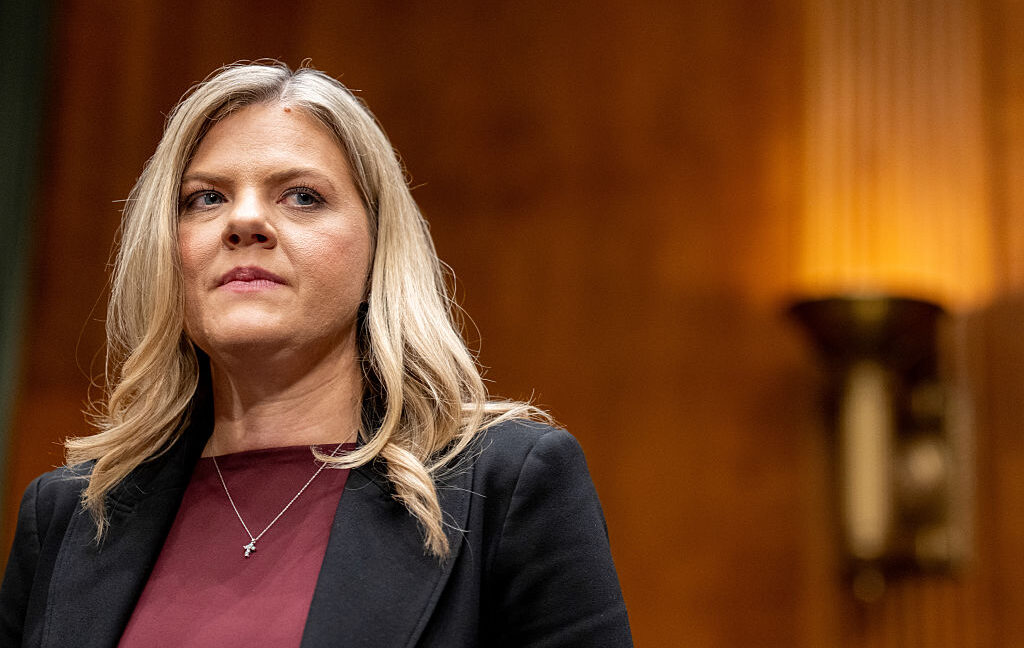
Senior health officials were blindsided by the White House decision to abandon Dr. Heidi Overton, its nominee to run the Food and Drug Administration, just hours after they believed she’d finally secured enough Senate support to advance, a half-dozen people familiar with the matter told CNN.
The decision late Tuesday night was so sudden that Overton’s team found out about her fate from an Axios report that some of them initially insisted had to be a mistake, two of those people said.
Since then, Overton’s allies have grown convinced that the White House used the Senate uncertainties as justification to kill a candidate that Health and Human Services Secretary Robert F. Kennedy Jr. and new White House chief of staff Stephen Miller had soured on in the months since Trump first hailed her as a “ROCKSTAR” nominee.
“I think she absolutely had the votes,” one of those people familiar with the matter said. “There wasn’t any indication that she had an issue.”
The surprise move to pull Overton’s nomination followed days of negotiations between her team and a handful of holdout GOP senators. Her team had just made a series of concessions Tuesday afternoon to Sen. Josh Hawley to win what officials saw as the crucial final vote, the sources said.
But hours after striking that deal, the White House dropped Overton’s candidacy — catching senior HHS officials off-guard and angering Sen. Bill Cassidy, the Republican chair of the Senate’s health committee.
Spokespeople for the White House and the Health and Human Services Department did not respond to requests for comment on the episode.
In the aftermath, Trump officials did not appear to have a plan to quickly nominate a replacement — raising the prospect that Republicans will fail to confirm a permanent FDA commissioner before handing Senate control over to Democrats in January.
The multibillion-dollar agency, which is responsible for the safety of Americans’ food and prescription medicines, has not had a permanent commissioner since May. Current acting chief Kyle Diamantas has been widely expected to leave the FDA by the end of the year, three of the people familiar said.
Cassidy was livid over the abrupt withdrawal, according to two of the sources, and appeared to rule out considering another nominee this year in an X post that insisted Overton would have had the votes to advance out of his committee.
“Unfortunately, with the limited time left, confirming a permanent FDA Commissioner will fall to Senate Democrats,” he wrote. Cassidy, who backed Kennedy’s confirmation but has since emerged as one of his chief antagonists, lost his primary election earlier this year and is leaving Congress at the end of the term.
On Wednesday, he also said he would not advance the nomination for Jim O’Neill, the administration’s pick to lead the National Science Foundation, because he felt the candidate “did not do enough to stand up for science and against irresponsible decisions and statements” from Kennedy when O’Neill served as a deputy at HHS.
There is little expectation among administration officials that Democrats next year will support any nominee aligned with Kennedy, who they have long criticized over his anti-vaccine policies and broader stewardship of the department.
Ending Overton’s nomination has stoked fresh rounds of finger-pointing that threaten to deepen existing divides within the GOP over the administration’s healthcare agenda. And it served as the latest sign that Miller plans to empower Kennedy to more freely pursue his ambitions, after months of White House efforts to effectively sideline his most divisive and politically unpopular policies.
Miller, who Trump promoted to chief of staff earlier this month, is widely seen as more supportive of Kennedy’s “Make America Healthy Again” platform than former chief Susie Wiles. The HHS secretary, meanwhile, had previously clashed with Overton during her time as a senior White House domestic policy official, where she served as the main conduit between HHS leaders and top West Wing aides, the people familiar with the matter said.
Over the last several months, Kennedy and his allies came to see Overton as an impediment to his agenda, with some blaming her for slowing or outright stalling a series of key policies. Overton’s defenders countered that she had been a key MAHA advocate at the White House level — and that the slowdown was driven by a broader shift in Trump’s policy priorities ahead of the midterm elections.
Trump nominated Overton in August to run the FDA based in part on the endorsement of Wiles, the people familiar with the matter said.
But after Trump replaced Wiles with Miller, White House discussions about the fate of Overton’s candidacy quickly intensified, the people familiar said. Trump officials debated last week and into the weekend over whether to devote political capital to her confirmation bid — or abandon her candidacy altogether.
Overton’s standing was also hurt by a series of public attacks levied by former senior HHS official Calley Means, a close Kennedy ally who accused her and Wiles of prioritizing corporate interests over the MAHA agenda and blamed her for a range of the movement’s policy setbacks.
The allegations gained traction within the White House, where Miller had already taken some early steps viewed as a rebuke of Wiles’ operation — including banning meetings with lobbyists on the White House grounds without prior approval. The allegations also energized opposition to Overton across the broader MAHA movement, spurring activists to urge officials in public and private to drop her nomination.
“She was Susie’s person,” a person familiar with the matter said. “They were definitely rooting for her failure.”
Overton and senior health officials working on her nomination had stepped up their campaign to win the sufficient Senate votes in the meantime. Overton met privately with Cassidy last week, in a sit down that her team believed locked in his support, two of the people familiar said. The senator, in his X post, later confirmed he’d planned to vote for her.
Health officials had also worked to assuage the lingering concerns of senators, including GOP moderates Lisa Murkowski and Susan Collins, by dispatching Medicaid and Medicare official Dr. Mehmet Oz to make calls on Overton’s behalf, two of the people said. Spokespeople for Murkowski and Collins did not respond to requests for comment.
The final challenge, Overton’s team believed on Tuesday, was winning over the stridently anti-abortion Hawley. Officials ultimately made a handful of commitments that afternoon tied to the FDA’s ongoing study of mifepristone, the nation’s most-used abortion pill, including posting the study’s anticipated completion date on the agency’s website.
“I thought her responses were completely responsive to everything I asked for,” Hawley told reporters on Wednesday, praising her for the “strongest commitments any nominee has made on life.”
In a sign of heath officials’ confidence on Tuesday that Overton would advance through committee, they were already plotting to have her meet with another anti-abortion senator, Steve Daines of Montana, whose support she would need ahead of her final confirmation vote in the full Senate.
But the White House yanked her nomination shortly afterward, abruptly ending Overton’s three-month candidacy before she could reach a single recorded vote.
CNN’s Sarah Owermohle contributed to this report.