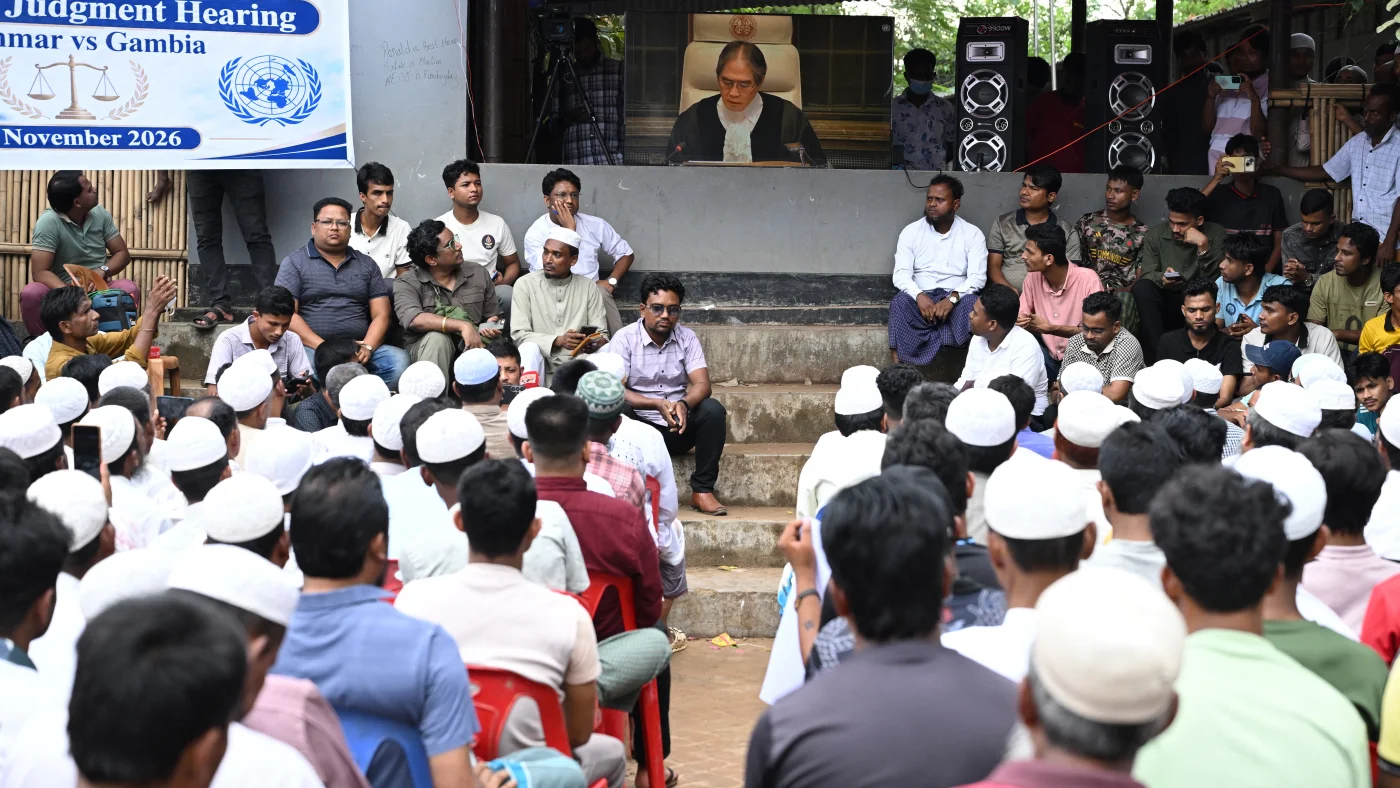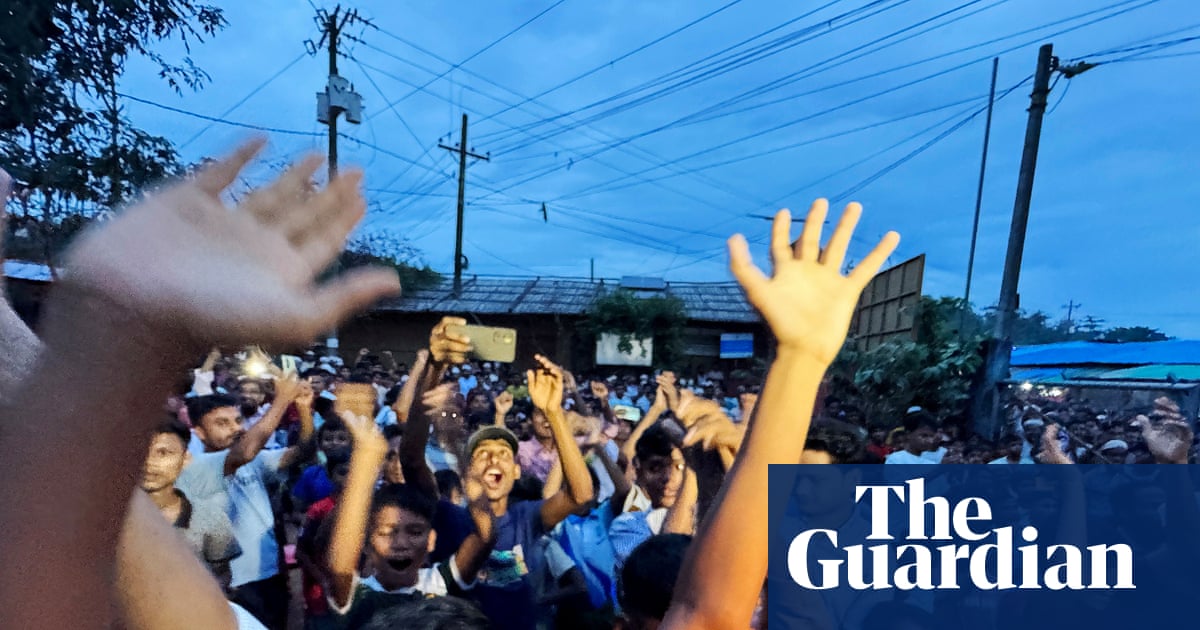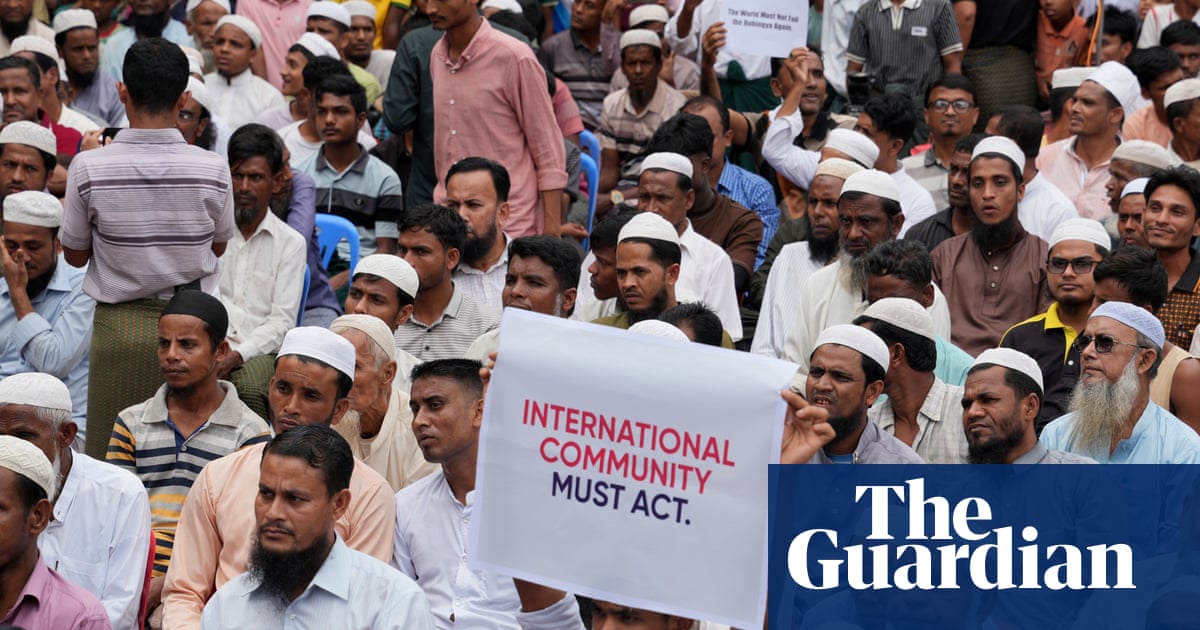
The international court of justice (ICJ) verdict making Myanmar the first country in history to be found guilty of committing genocide does not just deliver justice for Rohingya victims. It also gives the 1948 genocide convention new relevance in governing the actions of nation states.
In their nine votes to six majority ruling, the panel of judges in The Hague set out a detailed roadmap for how the convention should be applied to real-world situations in which a government is accused of committing genocide against a whole population group, especially when it comes to assessing the question of intent.
The lengthy judgment will have been read particularly carefully by Israel, the only other country currently before the ICJ accused of genocide.
It is also relevant to Germany, which has been brought before the court by Nicaragua on the accusation it has facilitated and failed to prevent genocide in Gaza.
“I think it’s a judgment that brings the genocide convention alive,” said Philippe Sands, a leading human rights lawyer who was part of the Gambian legal team. “It gives the convention practical, real meaning. And if the alternative view had been taken, the convention would essentially become a dead letter.”
Amnesty International’s secretary general, Agnès Callamard, called the ruling “a rare moment of justice for survivors, victims and their families”. But it was also an assertion of humanitarian law in an increasingly lawless world.
“This is a good day for international law. We needed it,” said Dr Iva Vukušić, an assistant professor in international History at Utrecht University and a war crimes expert. “It is really important, clarifying a lot of law, and that’s going to be very helpful going forward.”
There will be a spillover from this ruling to its sister tribunal in The Hague, the international criminal court (ICC), providing a benchmark for when genocide charges could be made against individual perpetrators.
The Trump administration, instinctively hostile to international legal institutions, is also watching critically. The US ambassador to the UN warned the ICJ before this judgment not to “lower the legal threshold for proving genocide” lest it be “weaponised” against US and allied soldiers.
The court did not directly lower the standard for demonstrating genocide, and the Gambia – which brought the case to The Hague – did not ask it to.
The judges kept the existing benchmark for judging genocide intent as the “only reasonable inference” of Myanmar’s actions and referred extensively to prior case law. But it went a long way towards clarifying how that standard should be applied in assessing atrocity crimes committed by states.
Before this case, only Serbia had faced the charge of genocide at the ICJ, in cases brought by Croatia and Bosnia and Herzegovina. In the Bosnian ruling in 2007 , Belgrade was found to have failed to prevent the 1995 genocide in Srebrenica, but in both cases it was cleared of committing the genocide directly.
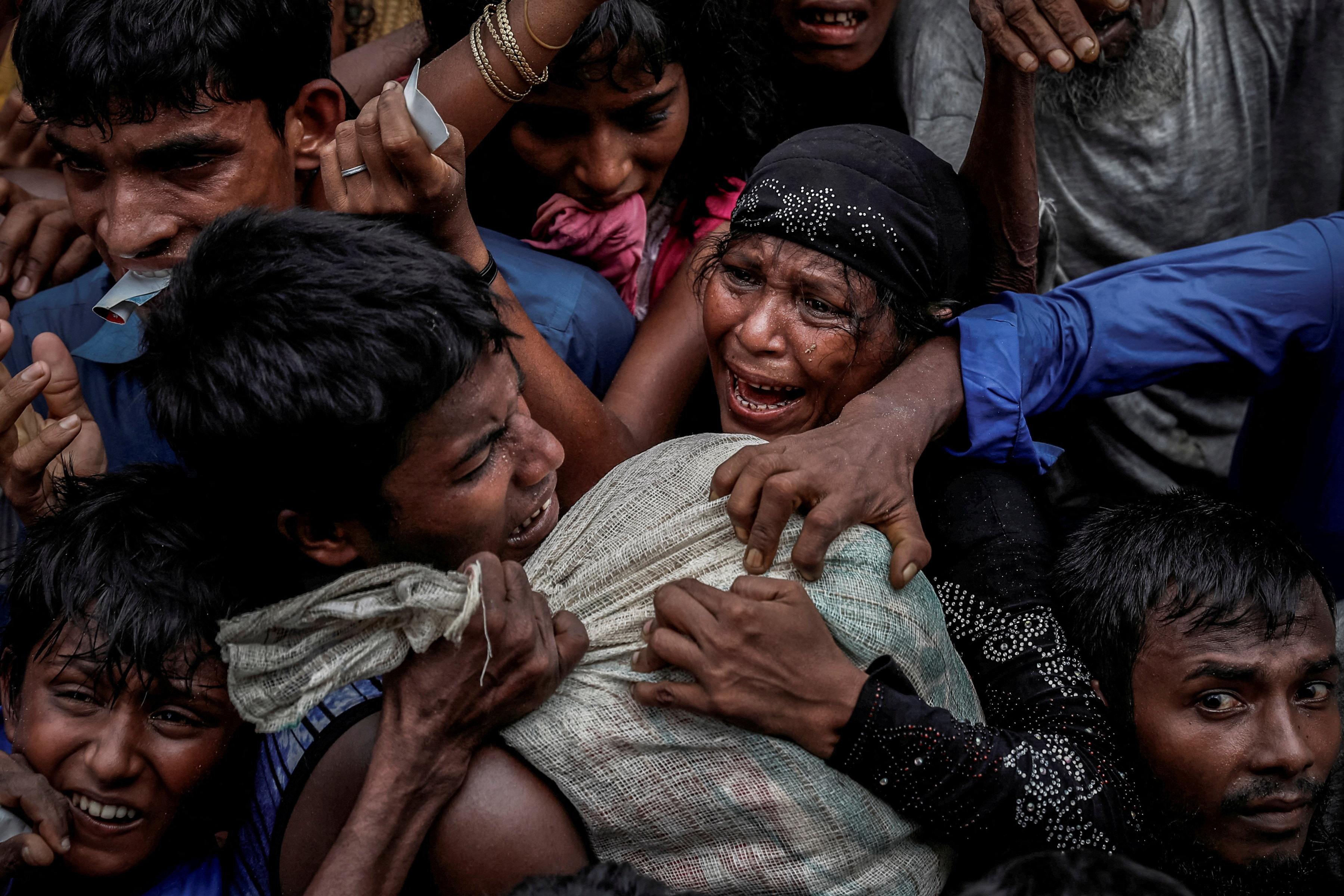
The new ICJ judgment finds the Myanmar military directly responsible for genocide against the Rohingya , a Muslim minority targeted in a ferocious counterinsurgency campaign that reached its peak in 2017.
In assessing the Myanmar campaign, the ICJ looked not just at the death toll of about 10,000 in assessing the scale of the atrocities, but at the total Rohingya population targeted in northern Rakhine state, 815,000 people. Significantly, it cast its net wider than just the death toll, considering mental damage done to the survivors, particularly victims of sexual violence, and the impact on reproduction in the Rohingya community.
Most importantly, the ICJ judgment provided a guide to interpreting the standard set by Serbian cases, in which a finding of genocide could only be made if there were not other plausible motives for mass killing.
In this judgment, the court ruled that Myanmar could have had other motives, such as the desire to displace or punish the Rohingya population, but that those motives could exist alongside genocidal intent. The judges said genocidal intent was the “only reasonable inference” from the “totality” of evidence.
In justifying that conclusion the judges pointed to several factors that international law experts say are relevant to the Gaza case, which is now hearing written pleadings and is expected to take at least another three years.
The common factors include the targeting of children, which the court described as striking at the “foundation” of the Rohingya as a group – the ICJ said up to 2,109 Rohingya children under the age of five had been killed, while more than 5,000 Palestinian children under five years old have been killed in the Gaza war.
Another incriminating factor cited by the court was the “bulldozing and large-scale terrain clearance” after the destruction of villages followed by “rapid construction” including security installations, which has been the hallmark of Israeli army occupation of over 60% of the Gaza Strip.
“It’s full of messages for Israel,” said William Schabas, an international law professor and expert on genocide at Middlesex University. “There are obvious differences, of course, the evidence will be different, but if you exchanged the word Myanmar with Israel, you wouldn’t have to change much in the judgment.”
The fact that there were six dissenting voices on the bench suggested that substantial parts of the majority’s reasoning were not beyond dispute, and lawyers involved in the case cautioned that it did not necessarily mean that the same bench would find Israel guilty of genocide in Gaza. But the same lawyers added that the opposite was almost certainly true. If this case had failed, the case brought by South Africa against Israel would have been all but dead.