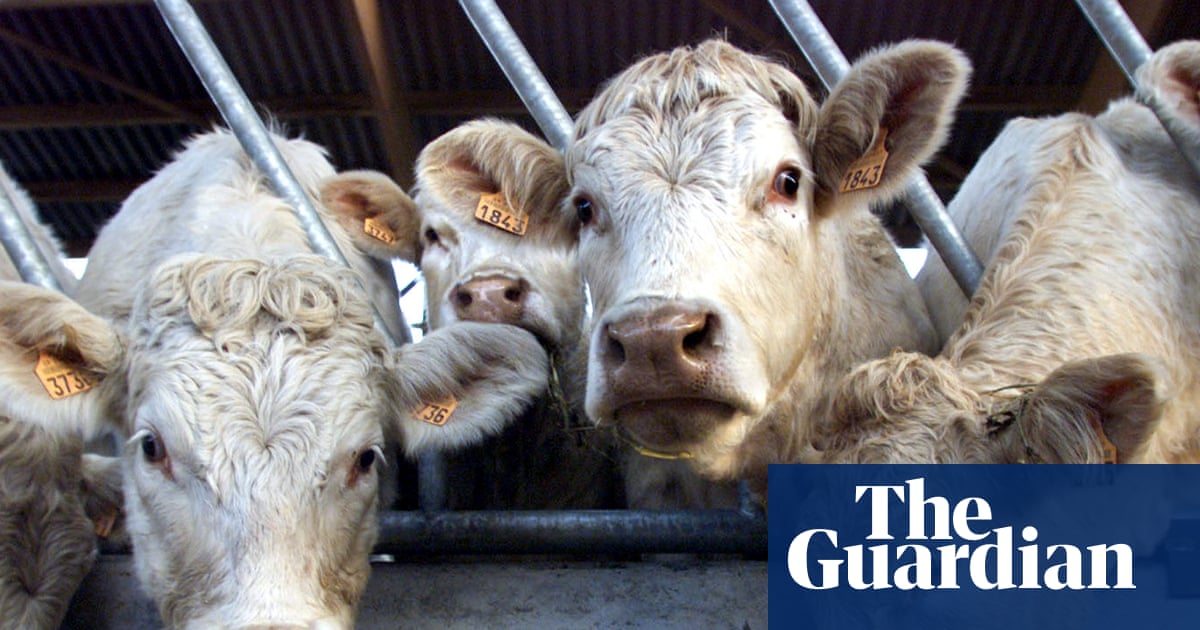
France confirmed the death of the first person infected with the Shamonda virus, which is known to affect cattle, sheep, and goats and was previously considered non-transmissible to humans. The French government asserts that, based on current knowledge of this pathogen, there is no risk to the general public. It emphasized, however, that health authorities are continuing to investigate.
The report specifies that the case occurred in Lyon. The patient, who died earlier this month, suffered from severe immunosuppression , making this likely an exceptional case. “The neurological complications observed in the immunocompromised patient prior to his death were most likely related to infection with the Shamonda virus,” the official statement notes.
According to preliminary evidence, the patient contracted Shamonda virus from an insect bite . A tiny gnat known as the biting midge is known to be the primary route of transfer between animals. Since the virus was first identified in Nigeria in the mid-1960s, sporadic infections have been reported in livestock across Africa as well as in Japan. Cattle are considered the primary host because they develop visible symptoms. (Although sheep and goats can become infected, no obvious clinical signs have been documented in these animals.)
After animal is bitten by a midge carrying Shamonda virus, the infection has an incubation period of two to three days. Symptoms observed in animals include fever, diarrhea, and a decrease in milk production. When pregnant cows have become infected, the virus can cause miscarriages or severe deformations in the calf.
To date, there is no vaccine, so prevention and control measures rely on the use of insecticides and repellents. That doesn’t mean you should panic. Public health authorities are considering the case to be “exceptional,” because the deceased patient was severely immunocompromised.
Still, several European countries are on alert, because until a few months ago, this region was considered free of the virus . However, this summer, a new variant known as Shamonda-Europe was detected in livestock in Switzerland. Other cases were subsequently identified in Germany, France, Austria, Belgium, the Netherlands, Liechtenstein, Italy, and Spain.
Spain’s Ministry of Agriculture, Fisheries, and Food states that two genetically distinct forms of the virus, known as Shamonda Type 1 and Shamonda Type 2, have been identified circulating in Europe. It adds that, in early September, infections of both types were confirmed on livestock farms in 37 provinces across France.
The case documented in France constitutes the first known infection in a person.
“This is an important scientific finding. However, it is important to put this into perspective. The patient had a serious underlying illness that left them particularly vulnerable to infections, and we do not yet know whether Shamonda virus contributed to their death,” Ben Brennan, professor of virology at the University of Glasgow, said in a statement .
It’s premature to draw conclusions about the virus and it’s potential to infect humans, agreed David Roiz, a scientist Institute for Game and Wildlife Research in Spain. Many viruses “circulate naturally amongst mammals in tropical regions and cause sporadic cases in humans ,” he said. “In a globalized world, where animals and goods are on the move and the climate is changing, it is not unusual for cases of human transmission to occur, and we should not be concerned; we simply need to monitor the situation, remain vigilant, and be proactive in addressing potential health risks.”
This story originally appeared on WIRED en Español and has been translated from Spanish.
Introducing the app: More ways to make the most of WIRED
OpenAI claimed a huge math discovery —some academics cried foul
Big Story: Her life was destroyed by the burnerverse —so she fought back
Apple doesn’t want you to worry about the Apple Watch’s listening features
In your inbox: Go inside the world of digital security with Kernel Panic