Marco Rubio may not want to talk about 2028 yet.
But all around him, Republicans are not-so-quietly strategizing over how to push the secretary of state into the GOP’s suddenly wide-open presidential race.
The groundswell of support for Rubio comes as donors, lawmakers and operatives — alarmed by the party’s midterm wipeout — begin to plot for a post-Trump era that now appears more uncertain than ever. And many Republicans are increasingly warming to Rubio as a potential standard bearer who could build a winning coalition of his own that’s distinct from the now-shaky MAGA movement.
But they have to coax him off the sidelines first. While it’s still far from certain that he jumps in, there have been increasing signs that he’s weighing a run.
“Marco is the most frequent name I hear from everybody,” said former GOP House Speaker Newt Gingrich, who maintains a close relationship with President Donald Trump. “It’s striking to me how many people — even before the election — were saying they really wanted him.”
The growing enthusiasm for Rubio has coincided with the emergence of fresh doubts about Vice President JD Vance, whose overt attempt to distance himself from the Iran war following the midterms angered some Trump officials, galvanized Vance’s skeptics and confounded others who saw it as clumsy positioning for a 2028 race that’s still months away. Some Rubio supporters noted more fallout over Vance’s postmortem could be coming, anticipating a potential confrontation with Trump.
Republicans have also tracked Rubio’s own subtler recalibration, several people familiar with the matter told CNN. After insisting last year that he would support Vance if he decided to run, Rubio has more recently declined to reiterate that pledge.
The State Department and representatives for Vance declined to comment for this story.
The 55-year-old has grown vaguer in private as well about his post-State Department plans, two sources familiar with those conversations told CNN. It’s a marked departure from earlier in Trump’s presidency, when Rubio insisted to allies that he had no intentions to run and instead wanted to pursue a lucrative private-sector job, according to two sources familiar with those previous remarks.
During a high-profile speech at a Federalist Society convention last week, he laid out an expansionist vision of American values and power that some around him viewed as a window into his potential campaign. Introduced by his daughter, he called the US “a nation of irrepressible ambition — ambition which, since the very beginning, extended far beyond our borders.”
“He loves his job, he loves being the secretary of state and he understands he’s got some really important stuff on his plate right now,” said one Trump adviser familiar with Rubio’s private deliberations. “But I also think there’s part of him that’s always wanted to be president.”
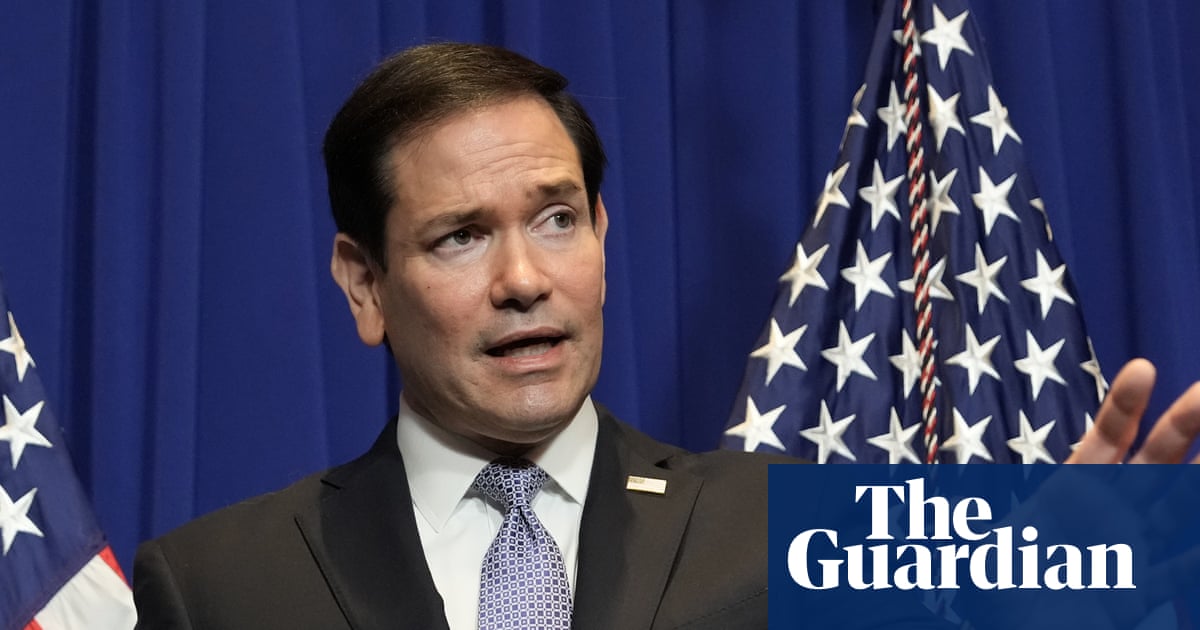
Rubio has consistently refused to talk about 2028, responding to CNN’s questions last week on the sidelines of the G7 foreign ministers meeting in Paris that he’s “not going to discuss it in any form or fashion.”
“I have that choice. I can make it,” he said. “There’s things that I am just not going to talk about.”
Rubio has also taken great care not to discuss the looming presidential race within the Trump administration, said people familiar with the conversations, who noted he’s been particularly cautious about what he says in group settings.
But people close to the secretary of state told CNN that Rubio has continued to weigh a 2028 run, opting to see how the race evolves in the coming months before making a final call.
The wait-and-see approach is driven by a range of competing factors, including his own indecision over how best to spend the next two years. The son of Cuban immigrants, Rubio has been particularly animated by the possibility of orchestrating lasting political change in Cuba, where he’s overseen a pressure campaign aimed at collapsing the country’s communist regime, those people said. The next two years could be the window of opportunity to press on that effort, they added, and others noted that his supporters in the Cuban community will expect to see progress on that front.
But while continuing within the administration allows Rubio more time to solidify his accomplishments, it also comes with significant risks.
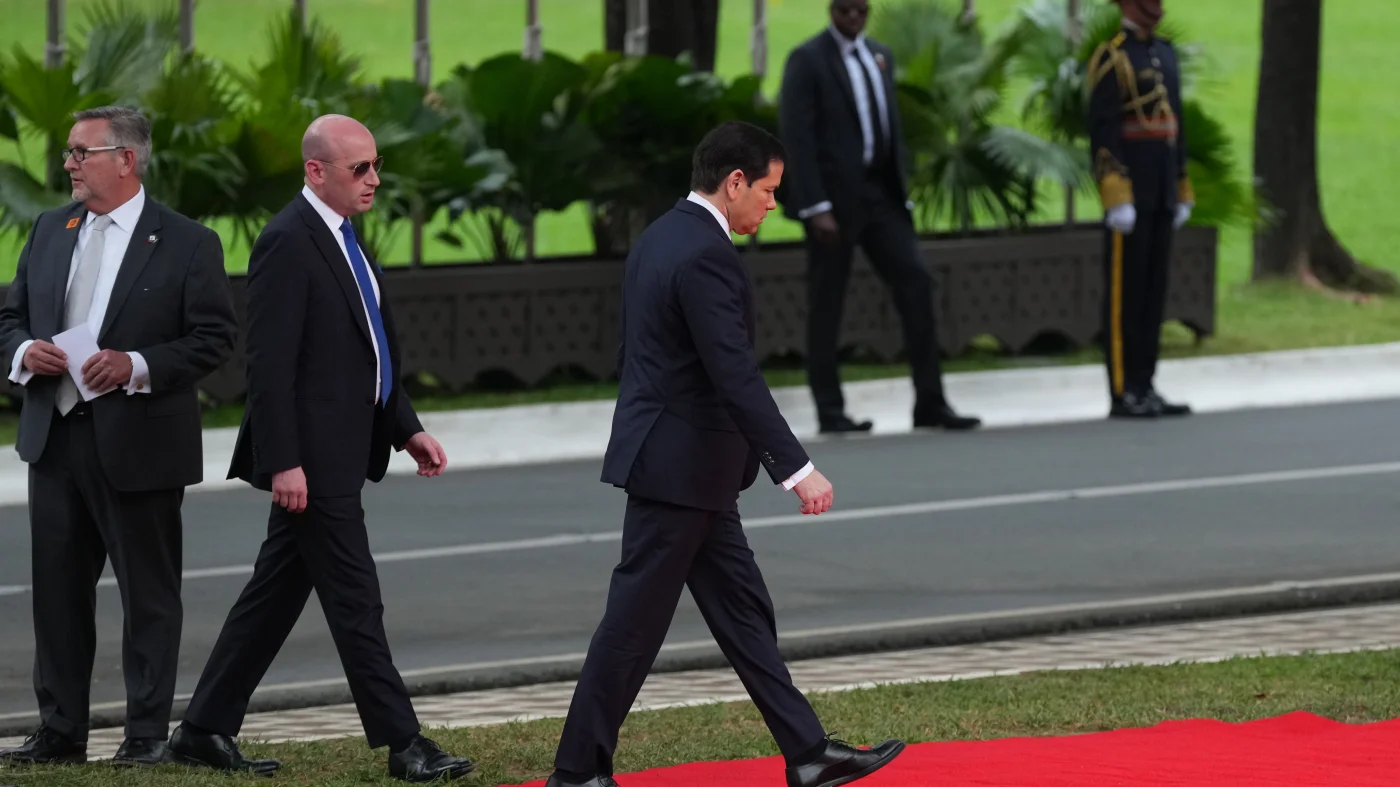
The secretary of state called an impromptu press conference in Manila this week to soothe fears about a cascade of online outages after officials publicly criticized the administration’s lack of transparency. The episode reinforced Rubio’s reputation as a seasoned communicator and trusted national security voice, but also served as a reminder that every additional day in the administration could mean becoming entangled with new crises.
Vance also found himself caught up in the outage aftermath in a way that contrasted with Rubio; on Wednesday, he abruptly canceled an appearance at The New York Times’ DealBook summit, citing the need to be at White House meetings on the cascading tech issues.
The secretary of state has tried to avoid becoming the face of many of Trump’s expansive and often-volatile foreign conflicts. That includes efforts to find a path out of the deeply unpopular war with Iran and broker a resolution to the Russia-Ukraine war that has dragged on despite the president’s 2024 campaign vow to immediately end the fighting.
Still, Rubio’s candidacy could see negative impacts if the administration fails to show progress toward ending those wars. Even then, it remains unclear if any Republican with links to Trump will have a viable shot at the presidency in 2028 if voters are still feeling the effects of a Middle East conflict that just cost Republicans their congressional majorities.
While Rubio has avoided publicly taking a lead in negotiations — something Vance embraced — he has steadfastly supported Trump’s strikes on Iran. And amid the deepening backlash over that decision, Rubio’s foreign policy views risk putting him out of step with both isolationists at the core of the MAGA movement and the independent voters alienated by the war’s economic repercussions.
“Whoever runs will have to own everything from this administration or distance themselves from pieces of it, which will be problematic in terms of their relationship with Trump,” said a former administration official.
Trump’s handling of the 2028 race is also expected to be an influential factor for Rubio, who many allies believe would only run if the president endorsed him and effectively cleared the field.
For months, Trump quizzed allies about whether they backed Vance or Rubio, while expressing a preference publicly for the two to run on the same ticket. But in the midterms’ aftermath, the president has signaled he may not immediately anoint any successor, preferring instead to withhold his endorsement until later in the primary.
In a further sign that neither Vance nor Rubio is viewed as strong enough candidates to clear the field, several Republicans outside the administration have indicated that they plan to run or are weighing a 2028 bid.
That group includes Texas Sen. Ted Cruz and Florida Gov. Ron DeSantis, as well as Arkansas Gov. Sarah Huckabee Sanders, who remains well-liked by Trump and refused to rule out a run during a Sunday appearance on CNN. And former press secretary Karoline Leavitt, who remains well-respected within the administration, made clear in an interview on Fox News Tuesday that she did not believe a Vance candidacy would clear the field.
“Regardless of whether the vice president runs or not, I believe we are going to see a very wide and big field of Republican candidates, and I think that’s a very good thing for the party,” Leavitt said.
Despite the uncertainty, many Republicans still believe that Vance has the inside track on the GOP nomination, if only because he already spent months as Trump’s heir apparent — building out a donor base and solidifying support in parts of the MAGA base.
A longtime opponent of foreign wars, Vance has advanced a more anti-interventionist, America-First vision, making inroads with younger GOP voters and stressing a focus on addressing domestic economic challenges.
But Republicans’ midterm collapse provided a fresh opening for Rubio boosters and Vance critics alike, who argued that the vice president might now be too inextricably tied to Trump’s failures across the board to mount a successful run. A White House official insisted in a statement to CNN that “President Trump has built the greatest political movement in history with the MAGA movement.”
Vance’s subsequent essay-length post on X, which bluntly stated that “the reason we lost is the war,” shocked some Trump allies who saw it as a betrayal that renewed lingering questions about his political instincts and judgment.
For others in the GOP who had long been at odds with Vance’s foreign policy views and skepticism toward Israel, it revived a push to advance Rubio as a viable alternative. That group has included a range of GOP operatives and wealthy donors who contend that Rubio is the party’s best shot to revitalize the MAGA base while expanding Republicans’ coalition into new territories.
“He’s able to deliver the same core message with a positive approach,” Gingrich said. “People just have a sense that he’s more mature, he’s a broader personality and that he would reach out to a much wider constituency.”
Still, whether and when Rubio arrives at those same conclusions remains to be seen — and will likely be determined largely by how much headway he can make in the interim toward resolving the current president’s most pressing political challenges.
“He knows if he doesn’t do that job well, he’s got no shot at being president,” the Trump adviser said. “One of the reasons why Marco looks as good as he does right now is he just looks like a guy taking care of America’s interests around the world.”