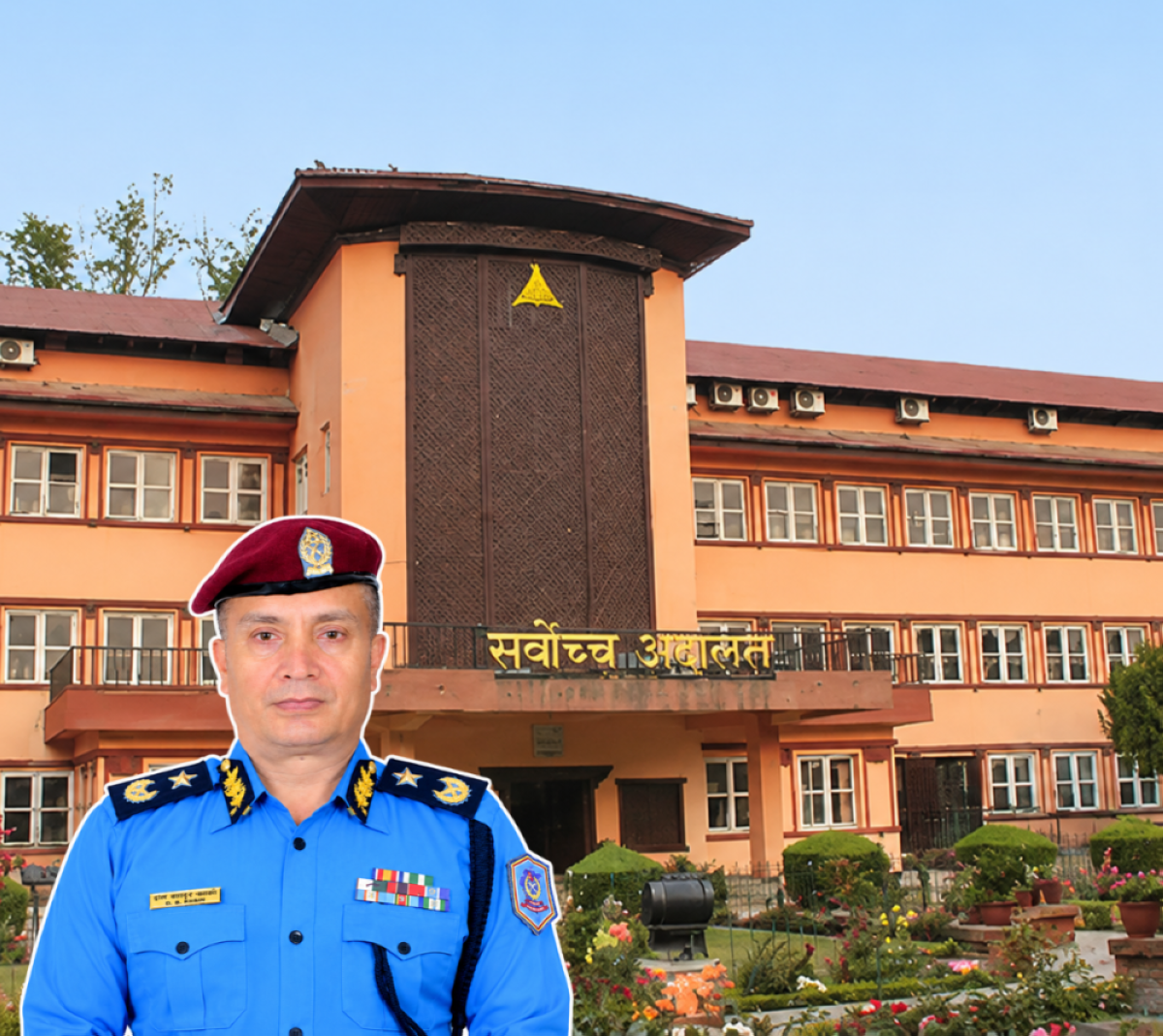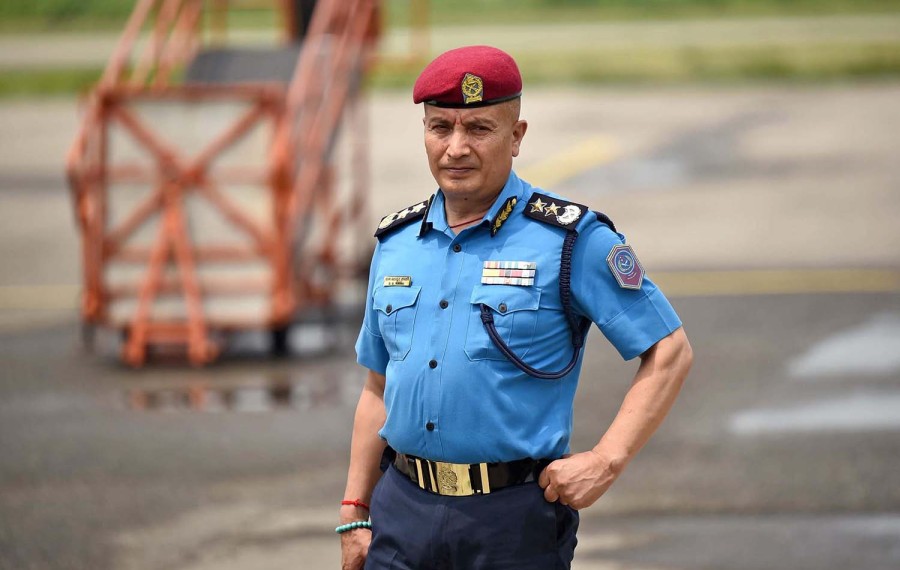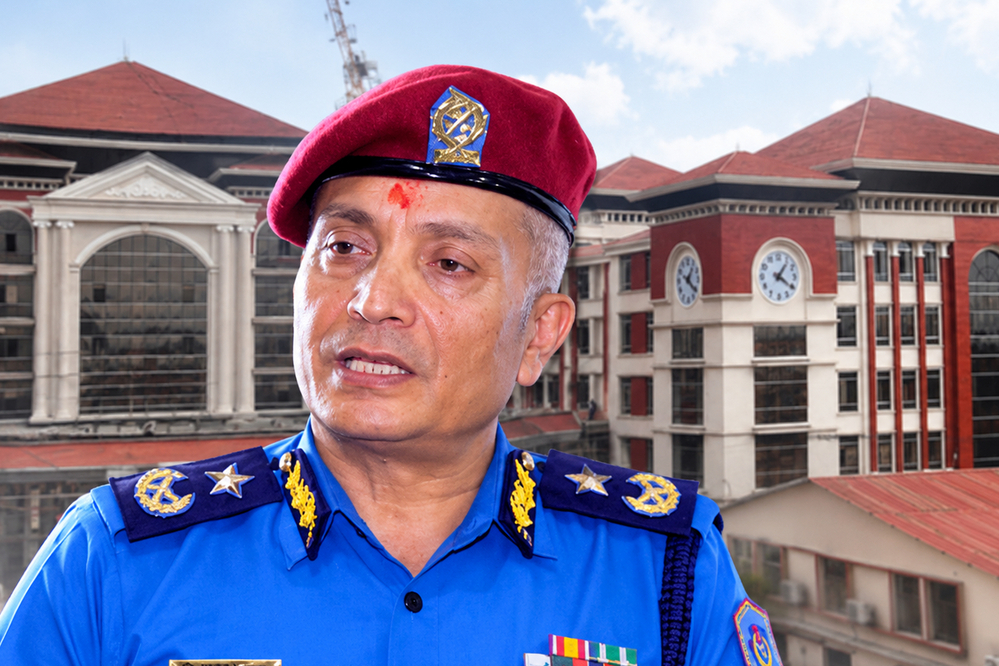
The government’s decision on November 4 to remove Inspector General Dan Bahadur Karki before the end of his tenure has revived a longstanding debate over political interference in Nepal Police. The Cabinet did not publicly state a reason for the move. It created the post of special security adviser to the prime minister for Karki and promoted Additional Inspector General Manoj Kumar KC to lead the force.
Karki has challenged the decision in Supreme Court, arguing that he was removed unlawfully, without being told the reasons or given an opportunity to respond. The court has scheduled a hearing for Wednesday. Its response will be watched closely, not least because the case recalls earlier battles over the appointment and removal of police chiefs.
Since the restoration of multiparty democracy in 1990, appointments to the country’s top police post and the departures of those holding it have repeatedly been marked by political lobbying, legal challenges and rivalries among senior officers.
Former home secretary Umesh Mainali says the practice has damaged the force’s command structure. “The sudden transfer of Inspector General Achyut Krishna Kharel in 1996 and the appointment of Dhruba Bahadur Pradhan battered the chain of command,” said Mainali. “Factions emerged in the police after that, and the institution became weaker with each passing year.”
The roots of political intervention can be traced to 1992, when then-home minister Sher Bahadur Deuba amended police regulations to introduce a 30-year service limit. The change forced then-IG Ratna Shumsher Rana to retire before completing his tenure and cleared the way for Motilal Bohora to become chief. The episode, according to Mainali, established a precedent for using service rules to influence who leads the force.
The controversy intensified in 1996. Kharel, appointed IG that year, was transferred to the National Investigation Department after a change of government, and Pradhan was named in his place. Kharel challenged the move and later returned to the post following a Supreme Court order.
The appointments of Pradip Shumsher Rana in 2000 and Shyam Bhakta Thapa in 2002 were relatively uncontroversial. But the period from 2006 to 2009 brought another damaging sequence. Om Bikram Rana became IG in 2006, Hem Bahadur Gurung in 2008 and Ramesh Chand Thakuri in 2009. Their tenures became entangled in the procurement scandal involving armoured personnel carriers and other equipment bought for Nepal Police’s United Nations peacekeeping mission.
Investigations by the Commission for Investigation of Abuse of Authority and final court verdicts found the three former chiefs guilty, and they were sent to prison. The decade was among the most troubled in the organisation’s history, with controversy surrounding both appointments and exits.
Former IG Thakur Gyawali says governments create the conditions for such instability. “The environment can also be created from within the organisation, but the government is mainly responsible for providing the opportunity,” he said. “The law and regulations do not provide for the transfer of a police chief. Even if there is no specific provision, the government cannot remove an IG without giving a reason.”
The tenures of Rabindra Pratap Shah, appointed in 2011, Kuber Singh Rana in 2012 and Upendra Kanta Aryal in 2013 were comparatively calm. But expectations of greater professionalism after the 2006 political movement and the abolition of the monarchy were soon overshadowed by another bitter contest.
In 2017, the government appointed Jaya Bahadur Chand, who ranked third among the contenders, as IG. Senior most officer Nawaraj Silwal went to court. The Supreme Court overturned Chand’s appointment and directed the government to consider seniority and performance evaluations. Allegations that the performance evaluation documents had been manipulated added to the dispute. Prakash Aryal was eventually appointed chief.
Outgoing IG at that time, Upendra Kanta Aryal questioned how officers could provide effective service when their own futures were uncertain.
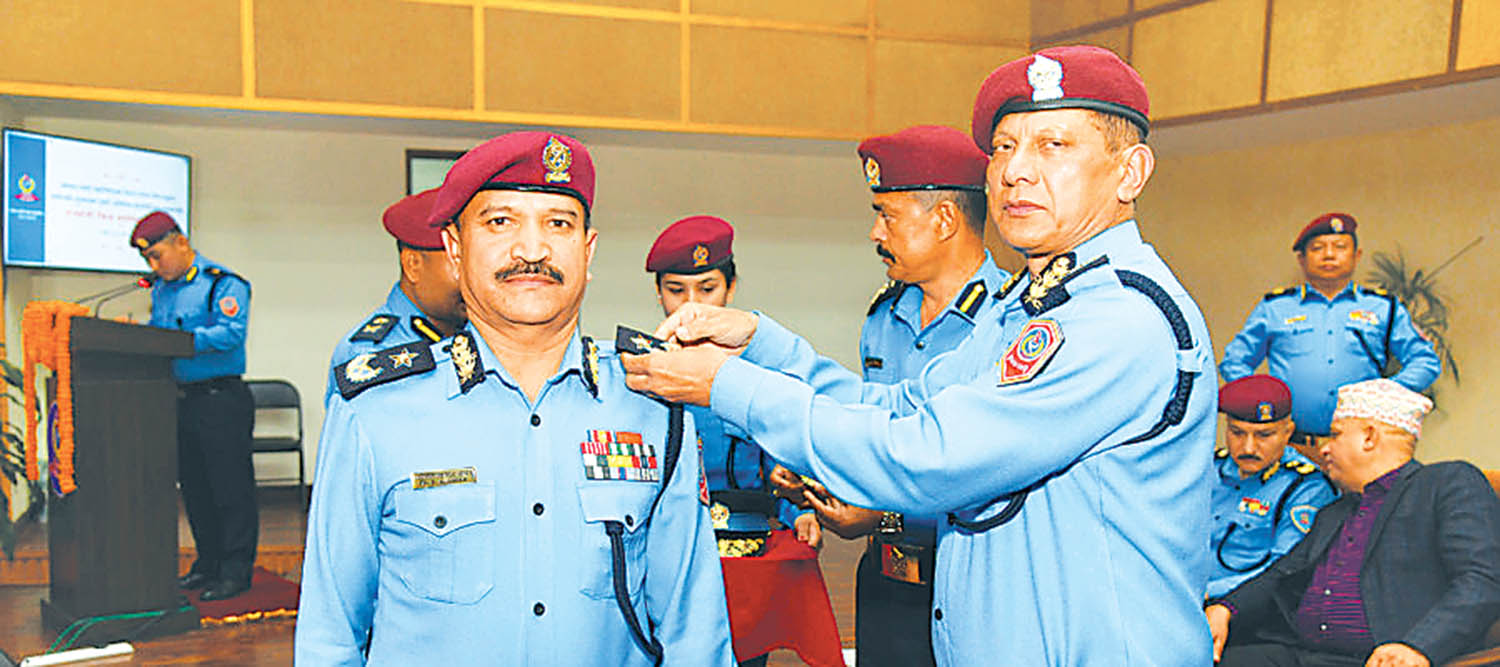
A year later, the appointment of Sarbendra Khanal brought another public rupture. Khanal, Ramesh Kharel and Pushkar Karki had joined the force on the same day, in February, 1990. The government appointed Khanal IG in April, 2018. Kharel resigned two days later, before Khanal received his insignia, saying he would not continue in an organisation where he felt humiliated.
The appointments of Thakur Prasad Gyawali and Shailesh Thapa Chhetri were relatively quiet. But the 2022 selection of Dhiraj Pratap Singh triggered another court battle. AIG Bishwa Raj Pokharel, who had been promoted to the rank 19 months earlier, challenged the government’s decision to appoint Singh, arguing that he had been passed over despite his seniority. AIG Sahakul Bahadur Thapa, promoted five months earlier, was also ahead of Singh in the promotion timeline. The Supreme Court upheld Singh’s appointment, after which Pokharel resigned.
Basant Bahadur Kunwar’s appointment involved intense lobbying and competition, though neither generated a comparable dispute. Deepak Thapa’s appointment and tenure were also relatively free of controversy.
The short tenure of Chandra Kuber Khapung, the 32nd IG, was different. He took charge in September 2025, just days before the Gen Z protests of September 8 and 9. Police faced severe criticism over security failures as demonstrators breached restricted areas and moved towards the parliament building, defying fires of tear gas and live ammunition. Nineteen young people were killed on the first day of the anti-government protest.
The inquiry commission led by former justice Gauri Bahadur Karki later pointed to weaknesses in police leadership and the security apparatus and recommended action. Khapung retired on November 12, 2025, after reaching the 30-year service limit, having led the force for about two and a half months. His retirement came under the shadow of the protest response and the commission’s investigation.
Former home minister Om Prakash Aryal argues that the organisation’s structure and laws also contribute to recurring disputes. “The police need a pyramid-shaped structure. Having many officers from the same batch competing for the second position creates problems,” he said. “When there are eight or nine AIGs, the structure is no longer a proper pyramid. The law should also allow the IG to recommend disciplinary action against senior officers.”
Gyawali says chiefs must also bring their senior colleagues into the leadership team rather than treating them as rivals. “It is natural for officers to compete before the IG is appointed. But once someone becomes chief, everyone should respect the leadership,” he said. “The chief must be able to include the second and third-ranked officers. Treating them as former competitors creates factions. Political leaders then give those factions opportunities, and when one group comes to power, the other is sidelined.”
Experts say uncertainty over tenure, repeated amendments to service rules and unhealthy competition among officers prevent police chiefs from carrying out long-term reforms. Rival groups can weaken discipline and morale, while a chief who fears being removed may avoid decisions that could upset political leaders or powerful colleagues.
Kiran Paudel is a journalist associated with Kantipur TV.