




You have reached your maximum number of saved items.
Remove items from your saved list to add more.
You've used all of your gift articles. 3 more will become available on the 1st of every month.
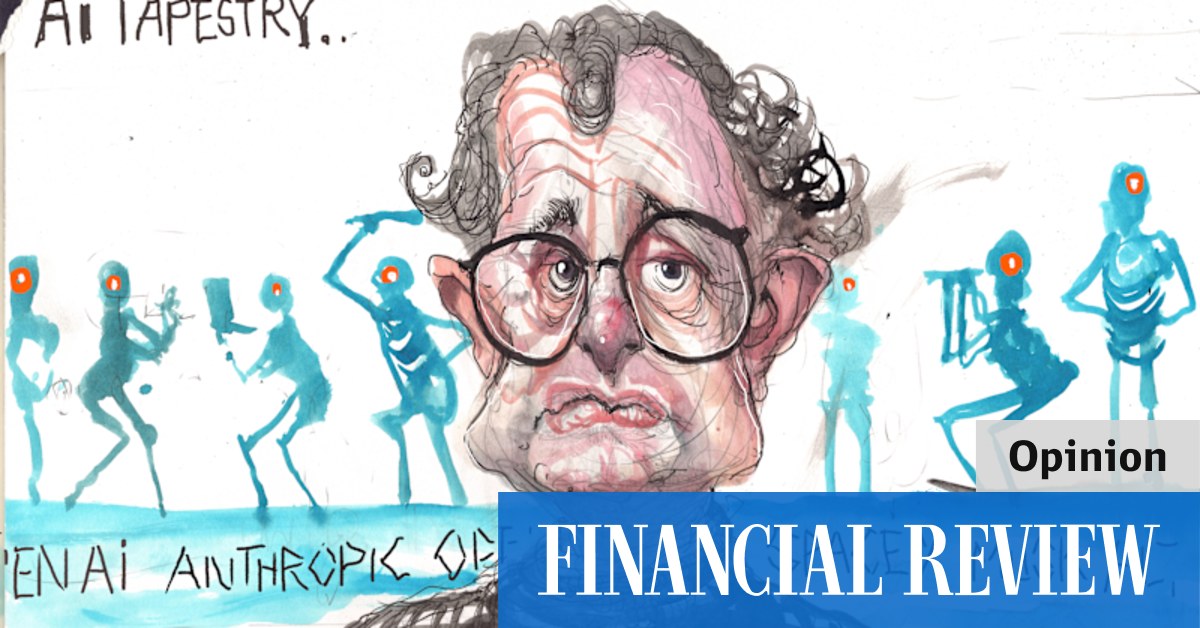
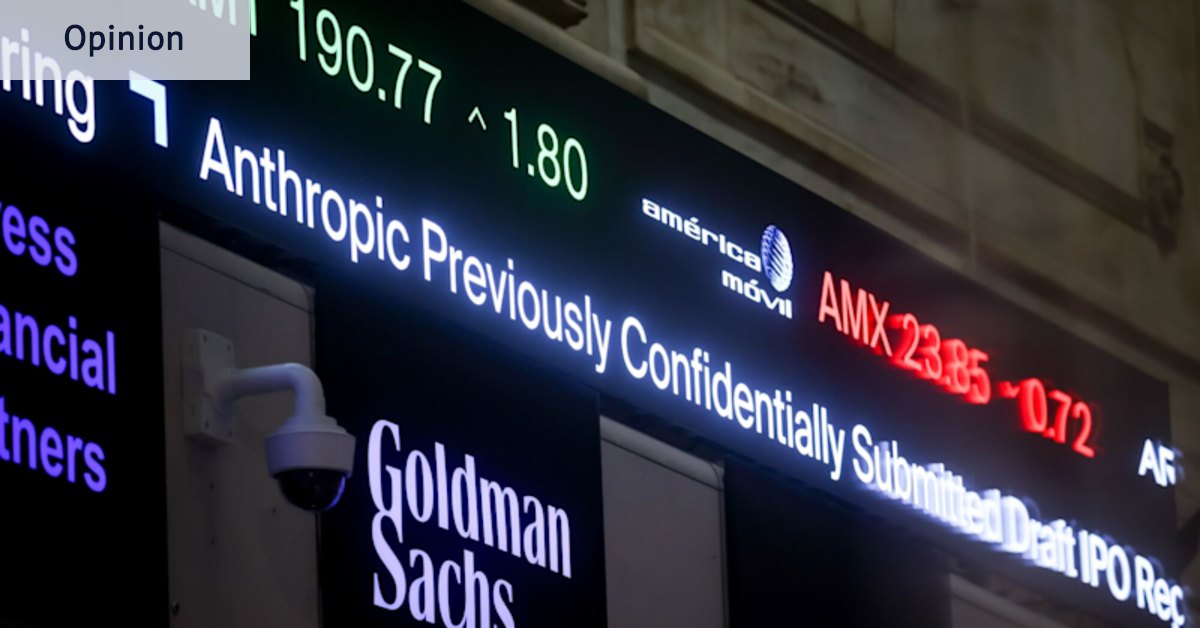
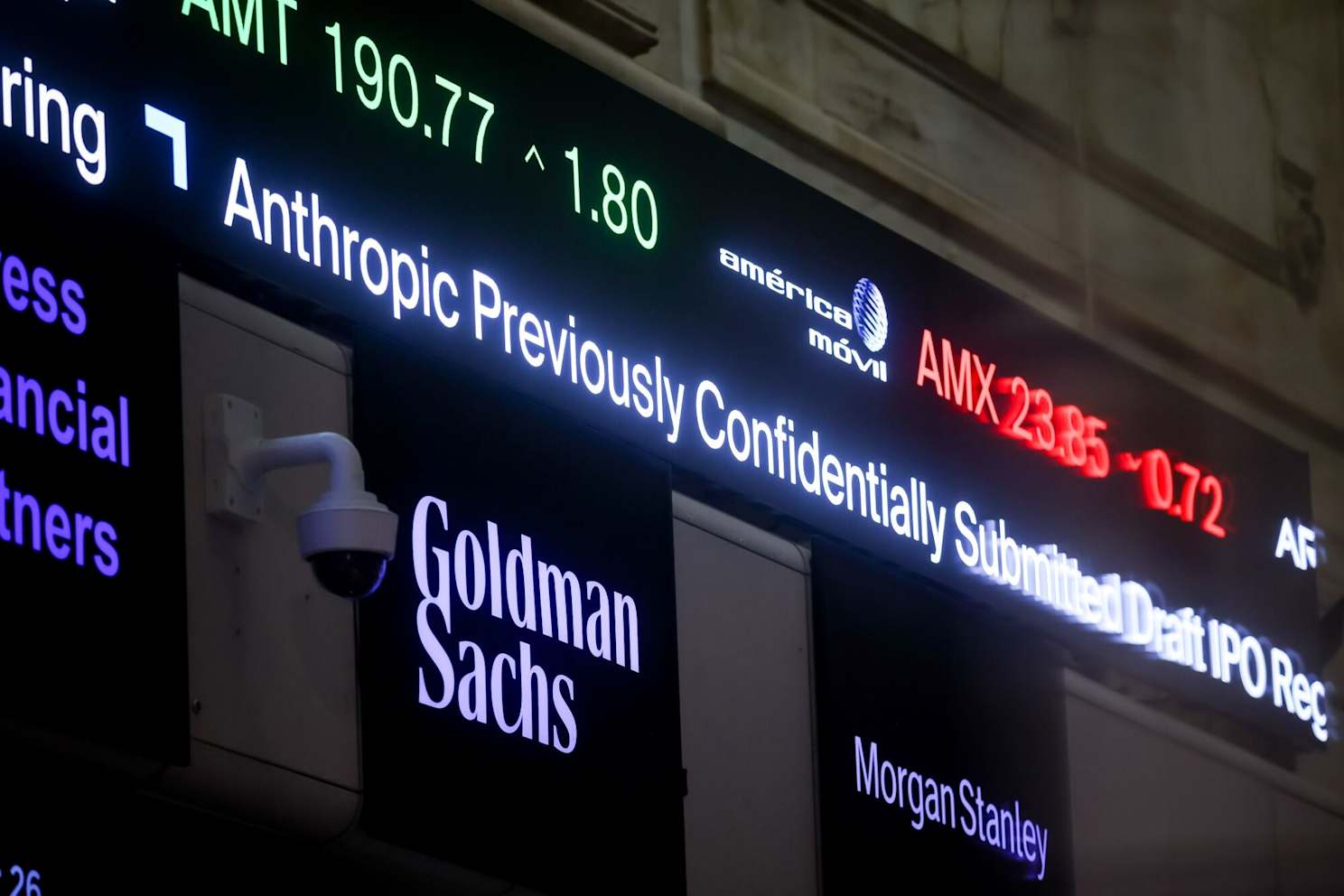
There’s something jarring about the way Anthropic’s initial public offering has developed. The size and pricing of the offering have gone up even as the value of the rest of the artificial intelligence sector is plunging.
According to Bloomberg, Anthropic will raise more than $US94 billion ($140 billion) by pricing the shares it is offering and issuing in its sharemarket float at $US83 each, which would give it a valuation, assuming full dilution of all the securities it has, of about $US1.5 trillion.
That’s less than the $US1.5 trillion-plus estimates of its market value earlier in the year, but it’s also comfortably above the $US70 to $US78 a share range at which the IPO was initially being marketed, adding roughly $US100 billion to its value to the top of that earlier range.
It’s also massively above the $US965 billion valuation attributed to the company when it raised $US65 billion in May, but, with demand for the IPO running at nearly seven times the volume of shares available, investors clearly haven’t been deterred by that escalation.
Anthropic, the company behind AI chatbot Claude , is the first of the frontier labs to float on the sharemarket. As the leading lab, it was always going to attract significant investor interest.
Its IPO, however, comes at a time when anxiety about the sustainability of the boom in artificial intelligence is surging.
Since early October, when the other leading frontier lab OpenAI disclosed that its annualised revenue run rate was significantly lower that it had been reporting earlier, there has been a major sell-off of AI-related stocks.
The company at the centre of the circular financing of the sector, Nvidia, which has had some very specific issues of its own in recent days, is down about 37 per cent from that point.
The “Magnificent Seven” big tech stocks are down almost 10 per cent and the tech-heavy Nasdaq index, which Anthropic is about to join, has fallen by a similar amount.
South Korea’s Kospi index, which has effectively provided a leveraged exposure to AI through the dominance of Samsung and SK Hynix and the volatility of memory pricing, has plummeted 27 per cent. Shares in Taiwan’s TSMC, the dominant manufacturer of advanced AI chips, have fallen 16 per cent. Leading US neocloud CoreWeave has seen its share price nearly halve.
While the share prices of AI-related stocks have been tumbling, fears of the stability of the complex and incestuous funding structures that underpin the sector have been rising.
In its latest financial stability review published this week, the European Central Bank referred to “parallels” with the sub-prime mortgage crisis that triggered the 2008 global financial crisis and the dot-com bubble in the late 1990s, and discussed the potential of AI to interact with other developments within the global financial system and become a threat to wider financial stability.
It made particular mention of the more than $US4 trillion in off-balance-sheet commitments of the biggest tech companies – potential liabilities that are much greater than those held on their balance sheets.
“AI financing remains opaque due to interlinked ownership structures and mutual purchasing and finance commitments inflating future revenues and heightening spillover risks from circular financing,” the ECB said.
“In this context, three closely linked sources of risk and vulnerabilities for euro area financial stability stand out.
“First, financial market pricing rests on expectations of extraordinary earnings growth for AI firms, while the outlook for these firms and the global economy remains surrounded by significant risks.
“This leaves markets exposed to the possibility of an abrupt repricing which might be amplified by a highly uncertain geopolitical environment where AI-powered cyber threats are rising,” the central bank said.
“Second, a challenging fiscal outlook in some major advanced economies could test investor confidence and lead to a further repricing of sovereign risk.
“Third, risks stemming from AI, geopolitics and sovereigns are exposing banks and non-banks alike to market, credit and funding risks which could be amplified by interconnection across sectors.
“In the current highly uncertain geo-economic setting, the potential for these risks to materialise simultaneously, possibly amplifying each other further, increases the risks to financial stability,” the ECB warned.
The AI boom is occurring within a geopolitical and geoeconomic environment where tensions and risks have been heightened by the wars in Ukraine and the Middle East, and by the build-up of government deficits and debt – and the rising cost of borrowings – in most of the advanced economies, particularly in the US epicentre of the AI boom.
US Federal Reserve Board governor Michael Barr gave a speech voicing similar concerns to the ECB’s in Italy this week, where he said the on-balance-sheet debt of the seven largest AI firms was expected to exceed $US800 billion this year, reminding him of the telecom investment cycle of the late 1990s and early 2000s – the dot-com and telecommunications boom and bust.
While the AI hyperscalers had yet to surpass their counterparts in that earlier boom in terms of capital expenditures and debt issuance, “the recent acceleration in their capital expenditures suggests they may soon do,” he said.
Both Barr and the ECB noted the opacity of AI-related debt, where cloud service providers and AI labs are borrowing from chip manufacturers to buy those same companies’ chips in deals that, the ECB said, “inflate the expected revenue” for both sides to the deals.
“Even if AI as a technology successfully transforms the global economy, the credit-driven AI boom may result in overcapacity, capital misallocation and credit losses for investors,” the ECB said.
Barr said that, for the investments in the build-out of AI to ultimately become economically viable, smaller firms will eventually have to replace the funding from their suppliers – the hyperscalers and chipmakers – with revenue from paying customers.
On Tuesday, during a quarterly earnings call, Nvidia’s acting chief executive Colette Kress said the company – which is at the centre of most of the circular finance deals – would be “disciplined and selective” in future. Kress is known to have been concerned about some of the deals ousted CEO Jensen Huang wanted to commit the company to.
If funding for the smaller companies in the sector were to dry up or become more expensive – and the spreads for even the biggest AI-related issuers have been blowing out in a rising rate environment – it could trigger cascading losses in a highly-interdependent industry. As the rate of capital spending outstrips the rate of revenue growth, the sector is vulnerable to any major setback and loss of confidence.
Neither the ECB nor the Fed seem to think that the AI boom is an immediate threat to financial stability, but the landscape continues to change at an accelerating rate.
The Fed, in its stability review, made the point that US companies have borrowed $US680 billion to build finance data centres and AI infrastructure so far this year, or about five times the $US130 billion of advanced computing debt issued in all of 2023. Outstanding debt related to advanced computing has leapt from 6 per cent of non-financial investment grade debt in 2023 to 31 per cent in the first 10 months of this year.
Hyperscaler spending is expected to be more than $US1 trillion next year, perhaps as much as $US1.5 trillion.
In aggregate, the hyperscalers have negative cashflows – they can’t generate enough cash to cover their AI spending – and therefore will have to increasingly tap debt and equity markets that already have very significant and still-growing AI concentrations.
The Fed’s latest survey of market participants found that 87 per cent cited AI as a risk to financial stability. Six months earlier, only 50 per cent nominated AI. Their concerns, it seems, centre on the fact that the growth in AI revenues isn’t yet sufficient to fund the development of new models and the building of data centres.
Anthropic, as the flag bearer for the leading (bleeding?) edge of the AI phenomenon, has outstripped the ability of private markets to fund it. It needs continuing access to the listed market environment to finance its ambitions.
The rest of the sector needs the Anthropic IPO to be successful, and to be seen as successful, if access to funding is to remain open and the potential threat to systemic financial stability is to recede.
The Market Recap newsletter is a wrap of the day’s trading. Get it each weekday afternoon .
You have reached your maximum number of saved items.
Remove items from your saved list to add more.
You've used all of your gift articles. 3 more will become available on the 1st of every month.