
C ry havoc. But Cameron Bancroft did not let anything slip, not after close to a decade of keeping his mouth firmly shut. It was a deliberate, considered and lengthy deed of revelation that the former Test opening bat chose to publish in the West Australian newspaper on Wednesday, claiming to finally fill in a wealth of detail around Australian cricket’s 2018 cheating scandal that so many others seem to have gone to such lengths to keep concealed.
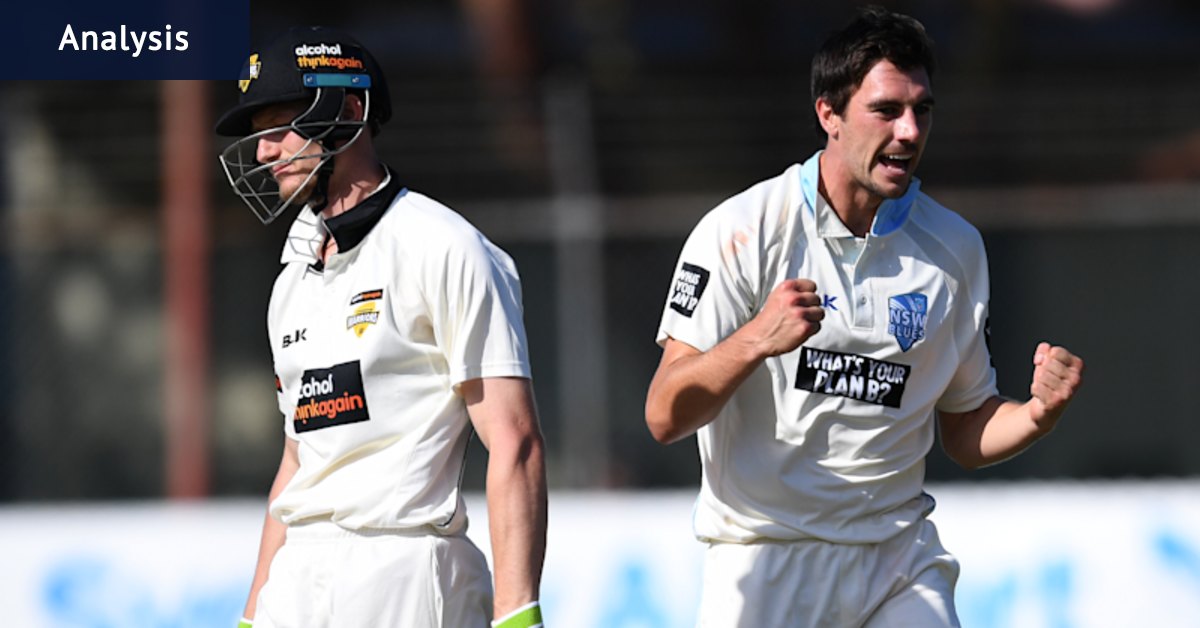
It was also a devastating repudiation of Pat Cummins, a teammate of equivalent juniority to Bancroft during their few months playing together, but now the Test captain, who had delivered his own manifesto in spoken form at a press conference last week. That version of events, in which Cummins was adamant that he had never been aware of any kind of ball-tampering in Australian colours, was what pushed Bancroft from silence to speech. “It made me feel angry, betrayed and alone,” Bancroft wrote. “What I saw, experienced and lived with not only him, but everyone else on that tour in South Africa is not the public account he gave in his press conference and in the years previously.”
After Bancroft’s claims, Cummins’ management issued a statement on his behalf which reiterated his position from last week. “Whilst we feel for Cam and everything he’s been through there’s nothing in the statement that hasn’t been answered by Pat in his press conference,” it read.
Usman Khawaja started this period of belated openness with a selectively vague version of events in his autobiography, and David Warner has backed up Khawaja since, but Bancroft has gone further than either of them could muster by giving full details and by naming names. He confirms that Warner was the instigator of using sandpaper on the match ball, per Cricket Australia’s sanctions at the time, a fact Khawaja’s book omitted, in keeping with its author’s stated sympathy for his childhood friend.
But Bancroft goes so much further in his claims. Darren Lehmann , the then head coach who has always denied knowledge, is named as being present in conversations about sandpaper use and of ordering the reserve player Peter Handscomb to remove the evidence from the field after Bancroft was caught. The bowling coach, David Saker, is named as the driver of the idea among the staff. Even the media manager, Kate Hutchison, is aware, and the one person in CA’s employ to speak against the practice. Not for the last time on that tour, she was ignored to devastating consequence.
As for fellow players, Bancroft describes his work illegally tampering with the ball as being discussed freely at a morning meeting with the entire team, while the degree of reverse swing generated is a continuing conversation point between Bancroft, the wicketkeeper Tim Paine and the team’s four seamers. Mitchell Marsh is named as being delighted that he, the slowest paced of the four, is getting extravagant movement, on his way to two crucial wickets in a session during the second Test of the series.
Finally, Bancroft admits to lying in his interview with CA investigators in 2018 to conceal this breadth of complicity, restricting blame to himself, Warner and the captain, Steve Smith , and restricting the scope of cheating to the third Test in Cape Town. The implication is either that those interviewed colluded ahead of time to get their stories lined up, or that someone along the line at CA distorted the results to limit fallout.
Public contempt is directed at Cummins, Mitchell Starc, Josh Hazlewood and Nathan Lyon, seen as potential liars as the only players to have publicly denied all knowledge. Bancroft leaves them one window: “I recognise there is a distinction between knowing a ball is reversing, suspecting it has been altered and knowing specifically that sandpaper has been used.” It will be interesting to learn if Hazlewood and Lyon, who have not spoken on the topic since 2021, are as effusive as Cummins and Starc this month.
Either way, initial scrutiny should skip them and start at the top, with the tour’s coaches. The batting coach, Graeme Hick, is the only other tour member to deny all knowledge. The fielding coach, Brad Haddin, hasn’t said a word. Lehmann told ABC radio after Bancroft’s publication that he was considering his response before absenting himself from the rest of its broadcast of the one-day international against England, while Saker has said nothing lately but gently implicated himself in 2021: “There was a lot of people to blame. It could have been me to blame, it could have been someone else … We all know that we made a monumental mistake.”
Beyond that? Khawaja thought he should be the next Test captain. Paine got that promotion, despite what Bancroft says he knew. Every player who agreed to nod and smile at the investigation’s distorted findings went on to benefit from careers carried out under the cloak of deceit, including Bancroft as he hoped his silence would buy an Australian recall, while coaches and staff moved on to other lucrative gigs. There is no right and wrong group here, but plenty of shame to share.
The “independent forum” that Cricket Australia proposed just before Bancroft dropped a bomb on it is better than the CA paralysis preceding it, but remains inadequate, being voluntary and private unless contributors and CA agree to release information. The cricket public has been denied the full story for too long. It may be an archaic idea but, for those Australians who retain a romantic predisposition, the Test team is a sacred thing. Those privileged to bear its badge are expected to make sacrifices, and the discomfort of offering truth is no less reasonable an expectation than one of physical toil on the field. The time for formal punishment is gone, but all those who lied while given the trust of a part in that team deserve to be known for what they’ve done. Let that be punishment enough.