The Pentagon has warned Ukraine’s western backers that strikes deep inside Russia are counterproductive and urged them to focus their military support on equipment for frontline combat. Germany immediately dismissed the warning as “stupid,” while Britain said the strikes are saving lives. The disagreement came as Ukraine’s supporters met at Nato headquarters on Tuesday to rally support for more arms and ammunition.
Speaking in Brussels, Pentagon policy chief Elbridge Colby said that “while the public conversation focuses on the spectacle of deep strikes designed to incur pain on the Russian population, our assessment is that such strikes have not been effective in driving an end to the war , nor do they contribute to blunting Russia’s advances on the front line.” He warned that deep strikes, “especially those that target civilian infrastructure such as Wildberries (the Russian equivalent of Amazon), have actually probably hardened the Russian public’s resolve and the Kremlin’s own willingness to escalate”. He said his comments did not mean “Ukraine should be forced to fight with its hands tied behind its back”.
Colby added that Ukraine’s army is “very effective” when it focuses on frontline fighting, using drones to slow Russian advances and hit their supply lines . Colby said the US believes “that focusing our support on the frontlines and on associated midrange strikes is the most effective way to enable Ukraine’s defence and thus to set the conditions for an end to the war”.
Asked whether he shared Colby’s position, German defence minister Boris Pistorius said “criticising strikes like that in Russia to destroy strategic military and military-used targets” was “quite a stupid thing” . “Instead of criticising that, we should rather criticise and talk about the terroristic strikes every night and every day on … energy, water, and heating infrastructure in Ukraine,” Pistorius said. British defence minister Wes Streeting took the same line, saying those strikes “helped to degrade Putin’s war machine, buying time and saving lives”. The clash laid bare a widening rift between Washington and its European allies over how Ukraine should wage the war.
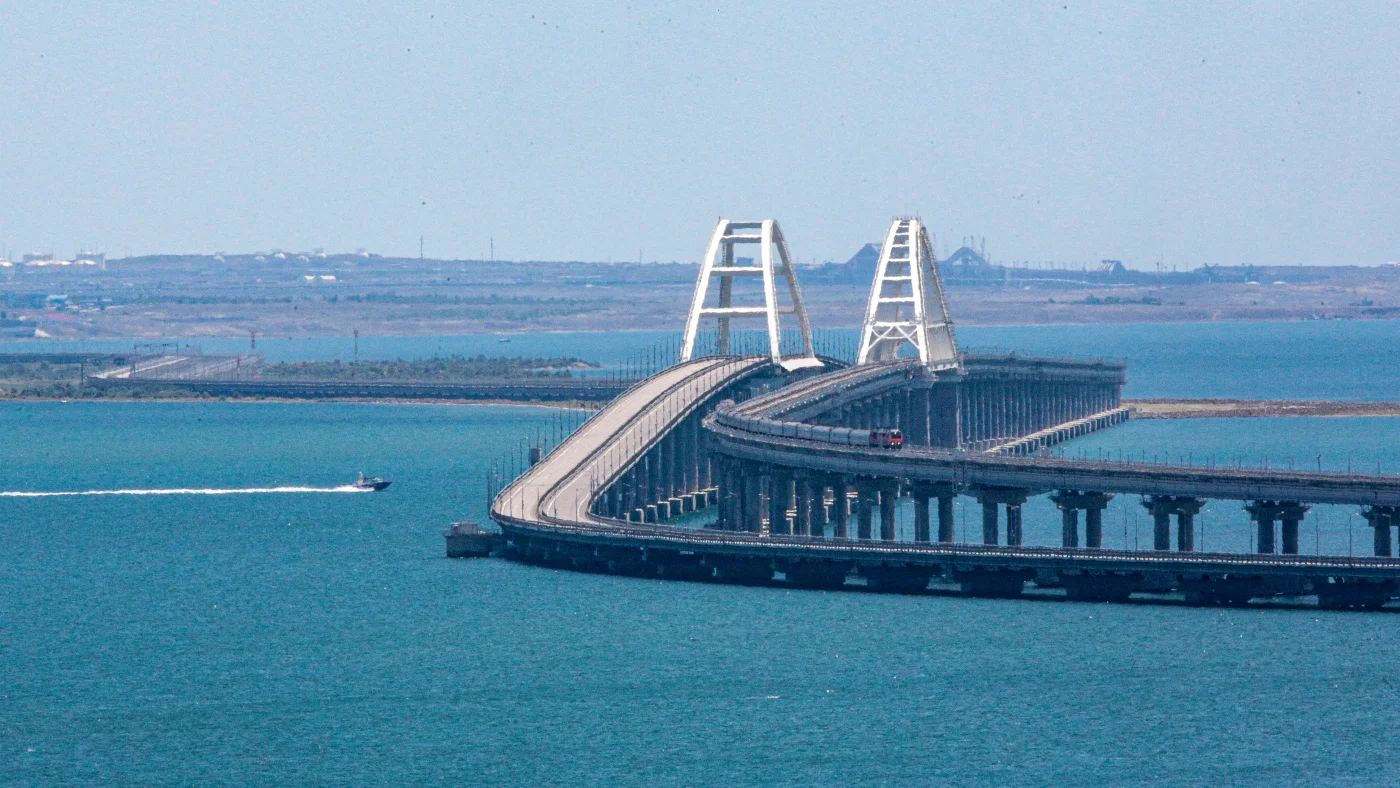
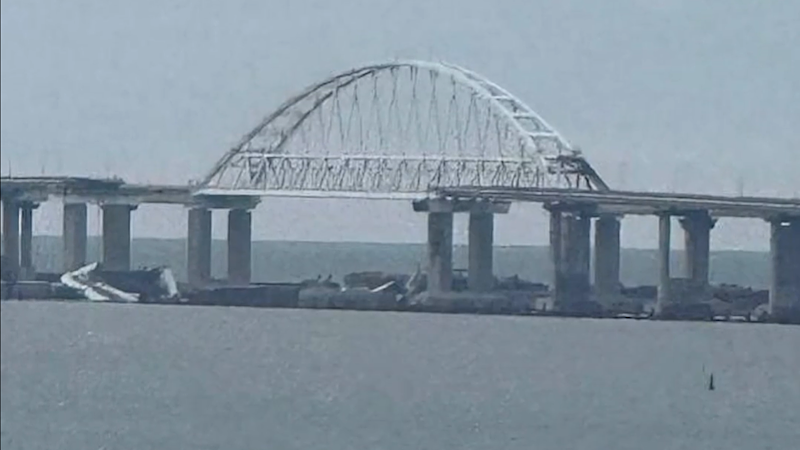
Ukrainian president Volodymyr Zelenskyy said the strike on the Russian-built Kerch Bridge linking Crimea to Russia was revenge for numerous Russian attacks on Ukrainian bridges, infrastructure and cities . “We have long been telling Russia: Enough of striking bridges, cities and villages, energy infrastructure, railways and grain ships. Enough of war. But every time Russia chooses further escalation,” Zelenskyy said in his nightly video address. Dan Sabbagh writes that hitting and demolishing the bridge showed that Kyiv still has cards to play in the war.
A European defence company says its missiles were the only foreign-made weapons used in Ukraine’s attack on the Kerch Bridge, a rare operational role for a western manufacturer in one of Kyiv’s most significant long-range strikes. Oleksandr Danyliuk, president of Dutch-headquartered startup Destinus, told Reuters seven of its Ruta cruise missiles hit the bridge during a multistage operation that Zelenskyy said took weeks to prepare.
Moldovan president Maia Sandu said on Tuesday a Russian drone flew over the capital Chisinau, and pledged to press for further sanctions against Moscow . Moldova’s pro-European government has long denounced Russia’s war in Ukraine and complained about violations of its airspace by drones it has identified as Russian, especially near its border with Ukraine. But drones have rarely come close to the capital. Sandu wants Moldova to join the EU by 2030.
Finland’s president Alexander Stubb urged European leaders to speak directly with Vladimir Putin , in an interview with the Financial Times. Outsourcing talks with Russia to the US was not a responsible course of action, he told the paper.
A senior American soldier assigned to Nato who was arrested in Britain last week on suspicion of spying for Russia has been transferred to US military custody , writes Nadeem Badshah.
The International Ice Hockey Federation (IIHF) said it had been targeted in a cyber-attack, days after it confirmed Russia would not take part in the under-20 world championships . The IIHF’s official website was still offline late Tuesday, hours after an image of Russian players celebrating had appeared alongside a caption which read: “Scared to face Russia? You banned the only team you can’t beat.” The image was removed from the site, which was later declared “temporarily unavailable” due to “maintenance.”