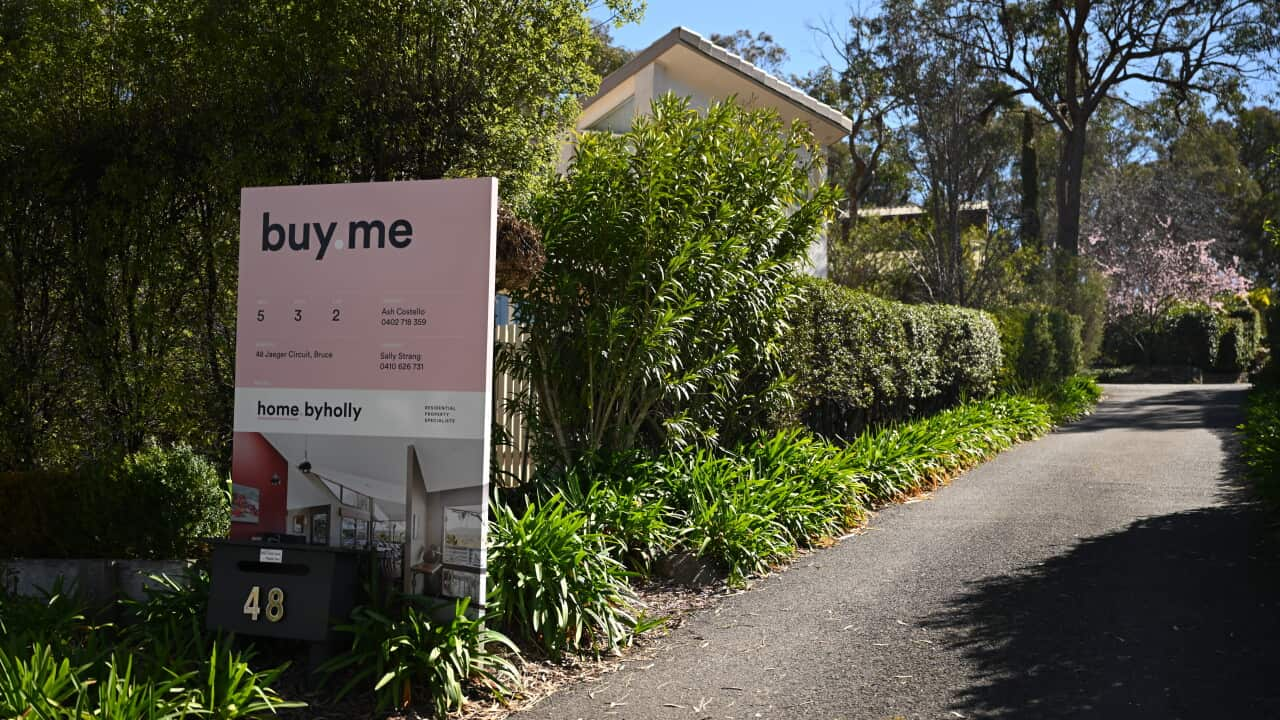
Escaping the city rat race has never looked better, with regional house prices falling as cautious investors flee.
National regional dwelling values fell two per cent in the past three months, almost double the rate of the previous quarter, according to market data released on Wednesday.
Queensland's regions led the decline, falling 2.7 per cent, followed by NSW at 2.1 per cent, Cotality's regional market update showed.
"Regional markets have held up better than the capitals, but they're not immune to the same pressures," the data firm's head of research Gerard Burg said.
The Gold Coast, Tweed, Bundaberg, Maryborough and Gladstone regions, which have all been hot spots for sea changers, led declines in Queensland.
Your trusted source for staying up-to-date with the world around you. Get free daily news updates and analysis, straight to your inbox.
Brad Barth, the principal at Belle property in Bundaberg, said the lower end of the market had taken the biggest hit, with the price of new homes remaining relatively stable.
It had been a marked slowdown after years of frenzied demand and population growth, Barth said.
"Because there was no stock, everything was almost coming up to the same level," he told the Australian Associated Press.
"You'd have a beautiful, neat home getting snapped up in a couple of days and one that was a lot rougher in a different spot.
"Someone who missed out on the neat home ... would then pay a similar price for the other home."
Regional value drops have not been as pronounced as metro markets, which had combined falls of 4.5 per cent.
A 30.6 per cent decline in investor lending was driven in part by curbs to negative gearing and Labor's capital gains tax discount, the Australian Bureau of Statistics said on November 11.
Rising interest rates were already sending property values downwards and investors retreating from the market at a greater rate than owner-occupiers.
A drop in NSW regional values was led by Ballina, in the Northern Rivers, Morisset–Cooranbong and Nelson Bay, in the Hunter, and Wollongong, south of Sydney.
Busselton, on Western Australia's south coast, had the steepest decline among the 50 largest regional centres, at 4.1 per cent.
At the other extreme, the state's mining hub Kalgoorlie-Boulder recorded the strongest quarterly growth at 3.4 per cent.
Regional South Australia and the Northern Territory were the only regional markets to record quarterly growth, up 0.1 per cent and 2.2 per cent, respectively, while Victoria experienced a modest decline of 1.5 per cent.
The report said local employment and economic confidence would determine which regional markets held up.
Barth said Bundaberg continued to represent good value.
"Teachers, nurses, doctors might be earning slightly less here, but then everything costs slightly less," he said.
"You've got beaches close by, you can buy 10-acre properties, go from the beach to cane fields, to the middle of Bundaberg.
"It's a pretty good place to live."