Anthropic’s founding lore is central to its safety-first sales pitch: Once upon a time, a handful of idealistic researchers defected from OpenAI to start their own company — one that would develop artificial intelligence more responsibly.
Five years later, that company is set to become the first of its kind to go public in one of the biggest initial public offerings in history. Anthropic is targeting a $1.4 trillion valuation when it begins trading this week, which would put it just behind SpaceX’s record $1.7 trillion valuation from its June IPO .
Much about Anthropic’s corporate journey is atypical. But many of its quirks can be understood through the lens of two related philosophical movements, known as “effective altruism” and “longtermism,” that have become especially popular among AI enthusiasts in Silicon Valley. A loosely defined ethical framework, effective altruism focuses on using math and logic to maximize the impact of charitable giving.
Longtermism posits that future generations’ well-being is “a key moral priority of our time,” as William MacAskill , the Oxford philosopher who popularized the term, puts it.
If catastrophic risk from AI is possible — as Anthropic has repeatedly claimed — then, the thinking goes, it is important for the “good guys” to control the technology. And if AI may be capable of unleashing a global utopia, it’d be a shame to wait.
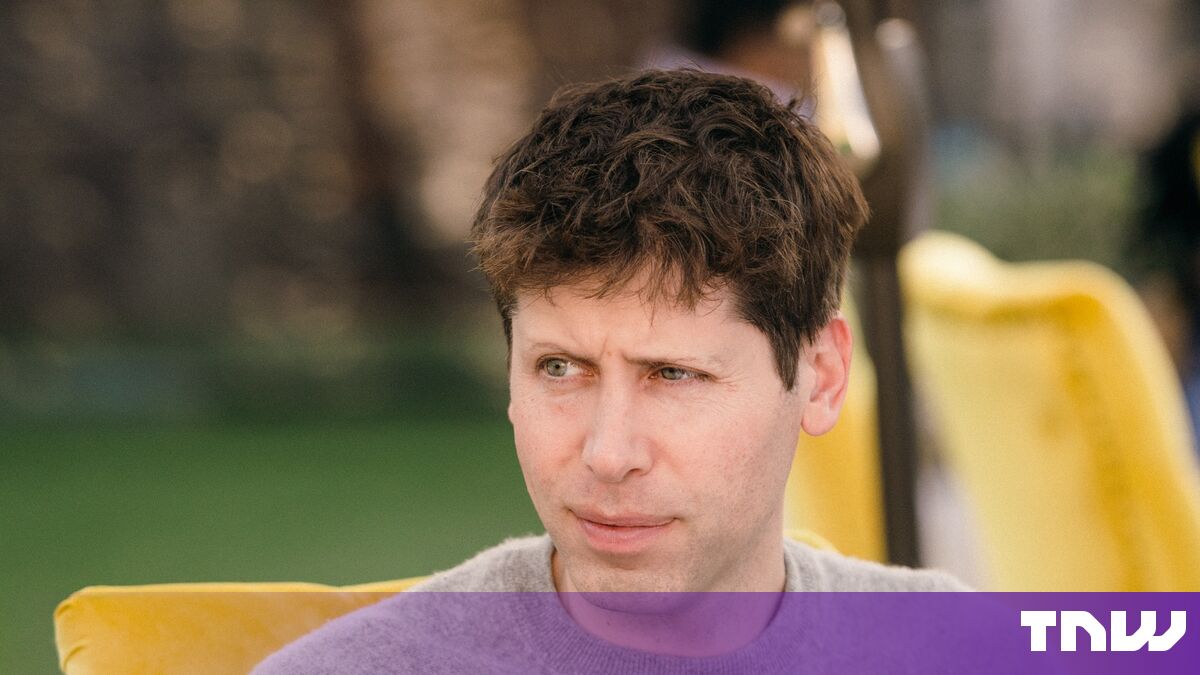
Anthropic’s preoccupation with safety is foundational: CEO Dario Amodei led an exodus from OpenAI in 2020 over what he later described as a lack of trust in OpenAI’s Sam Altman. The word “safety” appears more than 250 times in its 300-plus-page IPO prospectus; it registered as a public benefit corporation, legally binding it to balance shareholder interests with the public’s well-being; and its marketing has leaned into its reputation as the do-gooder of AI.
Of course, that’s all dependent on whether or not the public believes that Anthropic — or any of its many competitors in the industry — are the good guys. That’s a hope that may be harder to conjure amid the fallout from Nvidia’s founder and longtime CEO, Jensen Huang, resigning last week after admitting to two affairs — one with a subordinate at the company and another with a woman US officials say may be working with Chinese intelligence agencies.
Anthropic to seek $1.4 trillion valuation in blockbuster IPO
“A lot depends on the founders… Are they people of good judgment?” said Leif Wenar, a Stanford University philosophy professor and prominent critic of effective altruism, in an interview. “I think we should all consider how much of our future depends on the character of someone who thinks only he can save the world from the thing that he has created.”
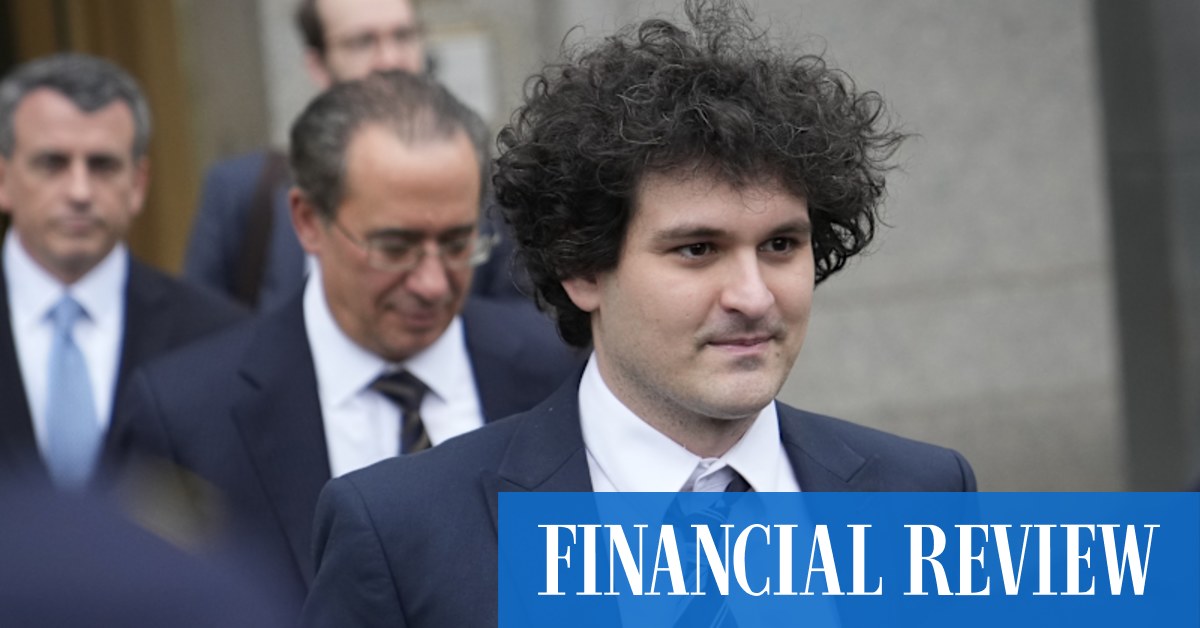
Anthropic and its founders have sought to distance themselves from the effective altruist label in recent years — especially after its most notorious figurehead, the former crypto mogul Sam Bankman-Fried, was sentenced to 25 years in prison after the collapse of his FTX exchange. But some Anthropic employees have well-established connections to the movement’s early years in the 2010s.
Amodei was one of the earliest signatories of the Giving What We Can Pledge , a commitment to donate 10% or more of one’s income to charitable groups, in 2010. That pledge was created by MacAskill and another Oxford professor who are credited with coining the term “effective altruism.” Amodei also blogged about his decision, as a Princeton graduate student, to donate $10,000 through GiveWell, an EA-aligned nonprofit that aims to evaluate charities based on cost-effectiveness.
Amodei told the New York Times in 2023 that he was “sympathetic” to the ideas of effective altruism but was against “dividing people up into tribes.” His co-founder and sister, Daniela Amodei, told Wired last year that she is not an expert in effective altruism and doesn’t “identify with that terminology,” though she is married to Holden Karnofsky, the co-founder of GiveWell who joined Anthropic’s safety team in 2025 . Amanda Askell, Anthropic’s resident philosopher in charge of teaching its chatbot, Claude, to act morally, is a prominent ethics researcher who has contributed to EA publications and was formerly married to MacAskill.
Many of Anthropic’s early investors also come from EA circles. Before his arrest, Bankman-Fried directed $500 million to the nascent AI startup in 2021. Another early Anthropic investor was Facebook co-founder and philanthropist Dustin Moskovitz, who along with his wife has directed some $8 billion to EA-aligned causes such as “malaria and lead poisoning, and to prepare for emerging threats like deadly pandemics and increasingly powerful AI systems.”
Anthropic, which is subject to a mandatory quiet period ahead of its stock market debut, declined to comment.
The movement has plenty of critics, who say, among other things, EA’s devotion to impartial, dispassionate calculations of social good can make it blind to the messiness of the human-level systems it is attempting to improve.
Wenar, the Stanford philosopher, said that while he has no reason to question the morality of Anthropic’s founders, he does worry generally about an “EA mindset” he often sees in his students.
While often earnest and well-intentioned, “EAs sometimes have a character flaw, and the flaw is thinking that doing good is all about them — that they’re going to be the hero that saves the world,” Wenar said.
Anthropic was already facing a difficult IPO environment . Even before the Nvidia scandal took center stage, AI stocks had been tumbling over concerns that newly empowered Democratic lawmakers would be less permissive to companies building data centers.
Lies, spies and sex are just one part of the Nvidia story. The real stakes are much bigger
The Nvidia fallout puts even more pressure on the deal. For years, the chip maker has served as a kind of central bank for the AI industry, guaranteeing deals for data centers, investing in AI startups and acting as a financial backstop for customers that bought its chips.
The scandal around Huang has cost the company more than $1 trillion in market value.
As Anthropic tests public markets, it will need to reassure the public that its founders, who will retain majority control of the voting shares, can be trusted as stewards of their own technology. On Friday, Amodei was front and center , working to make just that point.
“My hope is that we prove the skeptics are wrong and every disease you can think of — heart disease, Alzheimer’s, cancer,” he told JPMorgan Chase CEO Jamie Dimon at an event in New York. “It sounds starry-eyed, it sounds crazy. I really do believe it. I really do believe it can be done.”