As negotiations to form Israel’s next government continue, tensions across Israel have risen to an unprecedented high, evoking memories of the period leading up to the 1995 assassination of Prime Minister Yitzhak Rabin .
In a letter published last week, Rabbi Gedalia Axelrod, a former head of Haifa’s rabbinical court, invoked a principle in Jewish religious law known as din rodef, issuing a religious ruling that could be used to justify the killing of politicians accused of facilitating a government backed by Arab-led parties. The same principle was invoked by Yigal Amir to justify his killing of Rabin because he had signed the Oslo Accords with the Palestinians.
“The Torah obliges me,” Axelrod later told the Israeli news website Walla. “I knew it was not easy, but if the Torah obliges, then we go. We are Jews, we make sacrifices.”
Axelrod’s ruling has prompted widespread condemnation and demands for a criminal investigation. The Chabad Hasidic movement that Axelrod belongs to has also distanced itself from his remarks.
Twenty former senior Israeli security, military and public figures, including former heads of the country’s intelligence agencies, have called on the authorities to investigate Axelrod. Separately, left-wing member of parliament Ofer Cassif and his fellow lawmaker Michal Rozin have also demanded an investigation, warning of the growing risk of political violence taking hold across Israel.
The controversy comes after Israel’s parliamentary election in late October, in which parties representing Palestinian citizens of Israel won 19 of the parliament’s 120 seats. Parties opposed to caretaker Prime Minister Benjamin Netanyahu hold a majority in parliament, but several members of the opposition have refused to cooperate with the Arab parties.
For many in Israel, mention of din rodef , or the “law of the pursuer”, immediately evokes memories of the tensions and incitement that led up to Rabin’s killing on November 4, 1995.
Rabin’s widow, Leah, directly accused Netanyahu – who was then the leader of the opposition – of helping to foster that climate of hostility. She pointed to his presence at a rally a month before the assassination, at which protesters displayed an effigy of her husband dressed in a Nazi uniform.
Amir justified his assassination of Rabin by arguing that the prime minister’s pursuit of the Oslo Accords endangered Jewish lives, echoing the reasoning now employed by Rabbi Axelrod, who claims that an alliance with an Arab-led party would place Jewish lives at risk.
This conflation of politics and religion, while hardly unique to Israel, amounted to “political theology”, Israeli sociologist Yehouda Shenhav-Shahrabani explained.
“By political theology, I mean the way ideas about God, sacred authority and the chosen people shape political life,” he said of the rules governing who is entitled to rule, who is allowed to belong and whose life must be protected. “Sometimes these ideas are explicit, as in a rabbi invoking divine law against an elected politician. But they can also survive in apparently secular ideas about the nation, sovereignty and historical destiny.”
“Someone who accepts Arab participation in government can then be portrayed as betraying a sacred community, and violence against them can become, in the eyes of a believer, a religious duty,” he said of the rationale behind Axelrod’s ruling.
“The threat of political violence is really high,” Cassif told Al Jazeera. “We all remember what happened in 1995 and the atmosphere that preceded Rabin’s assassination. This time it’s worse. Then it was just a few extremists on the fringe; now it’s the mainstream. They’re being openly encouraged by a prime minister who, I think, is ready to consider or do anything to hold on to power.”
Cassif also pointed to far-right National Security Minister Itamar Ben-Gvir’s own role in the atmosphere of incitement before Rabin’s killing. In October 1995, the month before the assassination, Ben-Gvir was filmed brandishing the hood ornament torn from the prime minister’s car, telling journalists, “We got to his car, and we’ll get to him, too.”
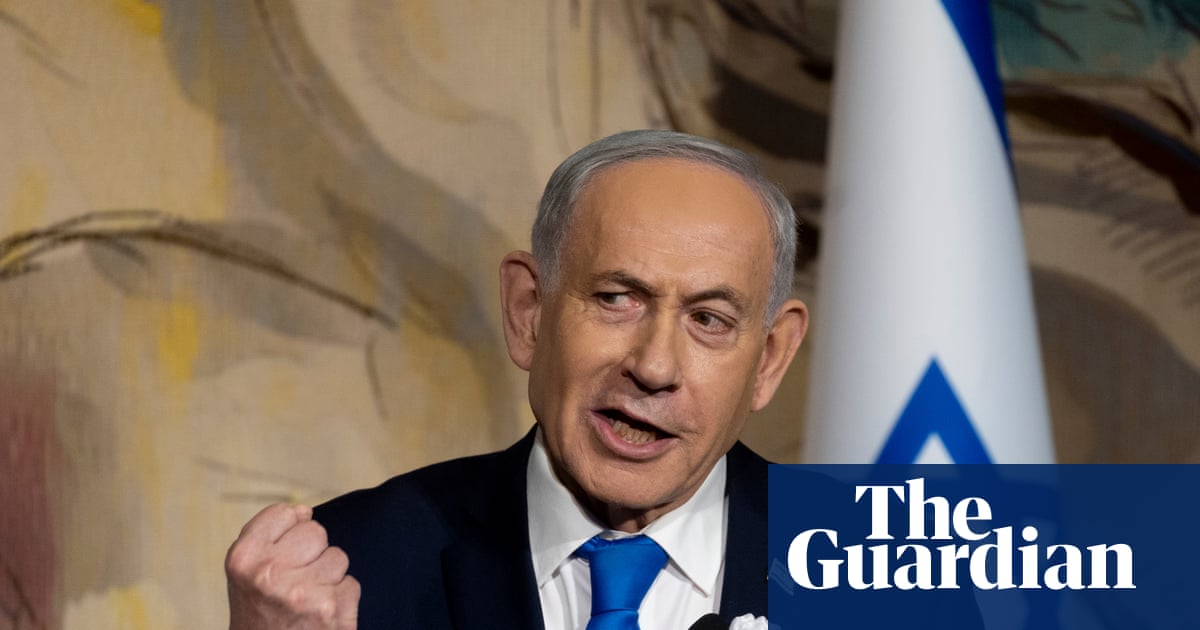
Fears of far-right violence have grown as coalition negotiations have dragged on. Netanyahu and his right-wing Likud party have repeatedly sought to vilify Arab-led parties, both in their campaign ahead of the October 27 election and in their statements since.
Netanyahu has accused the parties of allying with foreign and hostile powers. And he used the swearing-in of the new parliament on November 10, anticipated to be largely ceremonial, to brand the incoming Palestinian politicians “terror supporters, haters of Israel” and denounce opposition politicians considering working with them.
Days earlier, right-wing protesters gathered outside the Herzliya home of Gadi Eisenkot, the opposition leader now tasked with forming a government, accusing the former general and chief of staff of being a traitor. One protester accused Eisenkot of having murdered his own son, Gal, who was killed in Gaza in December 2023. Turning his attention to Eisenkot’s wife, Hannah, the protester told her she would be joining her son.
“Obviously, this is a tense time,” said political psychologist Daniel Bar-Tal of Tel Aviv University, who has made a study of political violence.
“The ultra-rightists will try to stop the process of changing regimes,” he said, drawing parallels with the January 6, 2021, attack on the United States Capitol by supporters of President Donald Trump. “Thus, it is a dangerous situation.”
“What Netanyahu is doing now is what he’s been doing for years: taking the Arabs, [and] the democratic Jews who work with them, and presenting them to the Israeli public as an overwhelming threat,” Cassif said. “Using minorities and their supporters as a scapegoat has always been a cornerstone of nationalist right-wing policy, and so it is in present-day Israel.”