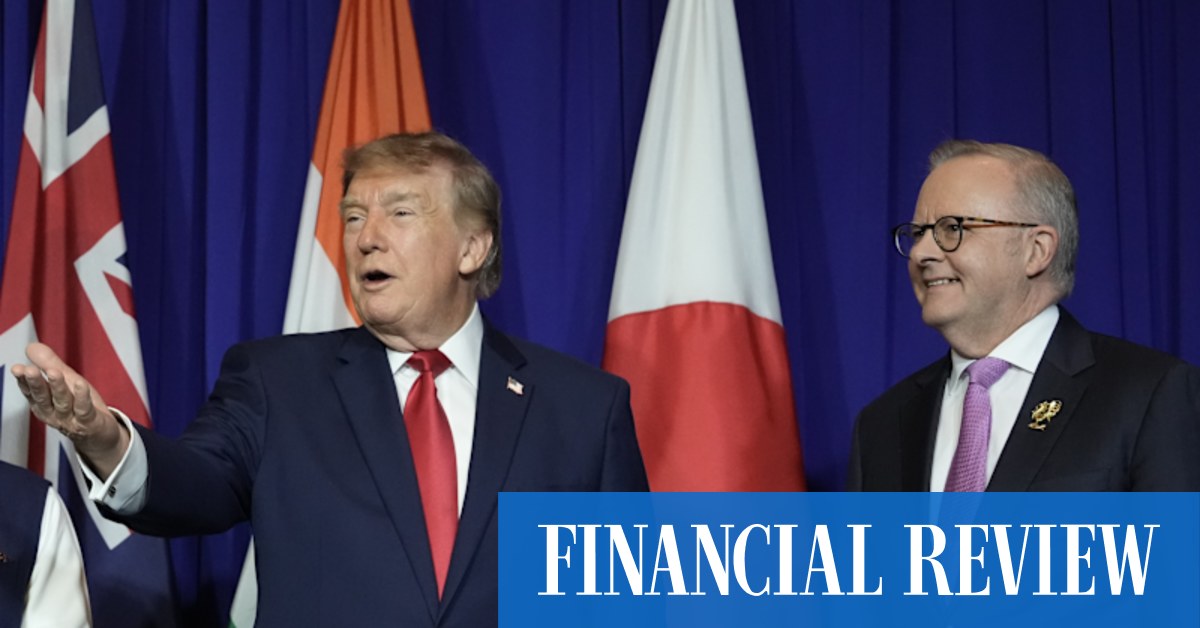
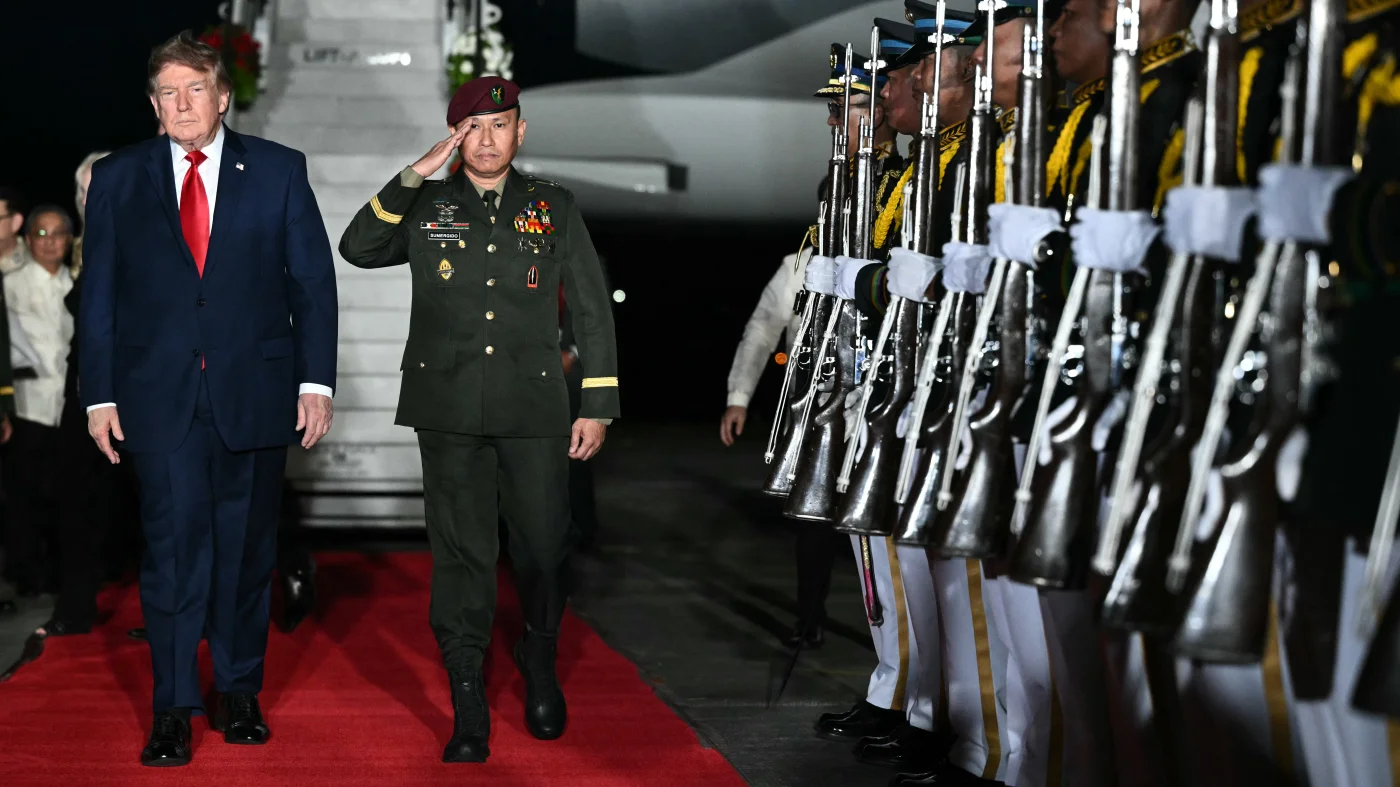
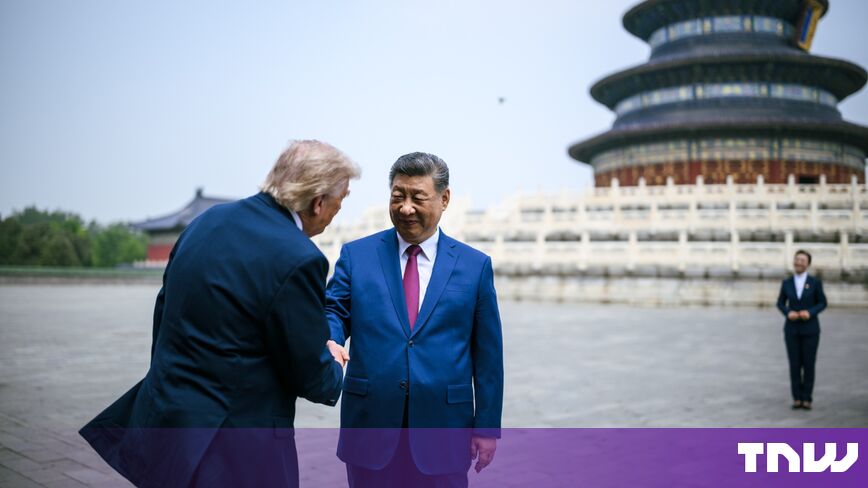
Three strongman leaders over age 70, 90% of the world’s nuclear weapons, two ongoing wars, one room, and no specific agenda. What could possibly go wrong?
What Presidents Donald Trump, Vladimir Putin and Xi Jinping will discuss during their unprecedented trilateral meeting in Shenzhen, China, on Thursday is far from concrete. But that is perhaps the point. A high-level summit like this would usually establish clear outcomes ahead of time, and be the culmination of months of intense planning and signalling.
But whatever preceded the Shenzhen meeting matters little with the inclusion of a wild card like Trump. Nuclear non-proliferation was flagged as a main focus, though little progress is expected – to say nothing of “safeguarding world peace,” another agenda item according to China. Then suddenly, Trump mentioned Iran, Ukraine, Nvidia, and even floated a meeting with North Korea’s Kim Jong Un.
It’s not abnormal for world leaders to go off script. Yet it has rarely been as risky as it will be Thursday. Especially when it comes to Ukraine.
Trump referred to Europe’s longest ongoing war Monday with both a slip of a tongue and sarcasm. He called Ukraine “my favorite subject” and added, “Ukraine’s losing – Ukraine-Russia is losing 25,000 soldiers a month” – almost edging Russia’s horrific losses out of his sentence. Ukraine is for Trump the irritant that got itself invaded, hasn’t accepted his hurried and compromising peace, and is always losing.
The Shenzhen meeting is a risky moment not because Kyiv and its European allies will suddenly buckle under whatever declarations emerge; they have grown sufficiently inured to Washington’s fickle nature. The danger is in Trump’s desire to be liked by powerful authoritarians, what is agreed to in private, and how that informs Putin’s confidence and Xi’s perception of Trump’s mental health.
Putin has, for free, got his moment on the world stage, allowing him to present Russia, for a day, as the global superpower it once was, rather than the one it is brutally struggling to become again.
Anxiety among European officials is palpable. “Trump listens to the last person he talks to, so that will be a driver for what he says,” said one European official speaking to CNN on the condition of anonymity. A European diplomat said it was: “Hard to see anything good on European security to come out of this meeting.”
Another senior European official said the optics of the trilateral were “of course awful for us,” but was less concerned a wider deal would be struck.
The first official called the meeting a “Putin dream,” ushering in his rehabilitation on the world stage, and added a key issue for Trump would be “who stands in the middle of the big boys takeaway picture.”
That picture of the three leaders after their meeting will speak a thousand words about Western decline. The man who invaded Ukraine unprovoked nearly five years ago, his bankroller in chief, and the US president who has reversed decades of US policy to pressure Kyiv to accept a bad deal, through limiting military aid.
A key risk is Trump agreeing with a Russian narrative, or fictional presentation of the frontline facts, and feeling obliged to adhere to a deal he has hurriedly made with the two strongmen he not-so-secretly admires.
Many of the European officials CNN spoke to harbor distant hopes that Beijing may emerge as a good-faith arbiter in the war. It is a view born of Xi’s apparent pressure on Putin to curtail nuclear saber-rattling , China’s stopping short of the full-scale arming of Russia during the war, and Beijing’s ambition to become the global superpower that can enforce effective change.
But this rosy view overlooks how urgently China needs Moscow to not lose this war, to prevent another key ally from suffering humiliation, and how the US has ridden roughshod over Iran and Venezuela this year – two Chinese allies whose degradation Beijing might like to see avenged by the collective West suffering a defeat in Ukraine.
The past month has delivered repeated blows to Ukraine and European NATO countries, dressed in the guise of the US peace process, led by Trump’s son-in-law Jared Kushner, and friend Steve Witkoff, two envoys who have limited diplomatic experience and even less diplomatic successes to their names. First, Trump struck a deal to buy Russian diesel, wiping away years of sanctions and opening the door to the replenishing of the Kremlin’s war chest. Then followed the mysterious stoppages in US intelligence sharing and Starshield services – vital to the nightly defense of Ukraine from Russian missiles – that the White House appears to have suggested either didn’t happen or shouldn’t have.
In a Kremlin meeting last month, Witkoff called Putin a “humanitarian” after he released retired American teacher and US military veteran Stephen Hubbard.
Then Kushner, after meeting Putin’s envoy in DC, recast the peace process as a bid for a new European security infrastructure, pandering to the Kremlin narrative that the real belligerent is NATO next door - and not Russia, who invaded one neighbour, Georgia in 2008, and another, Ukraine, twice in 20214 and 2022.
After further Starshield restrictions were placed on Ukraine during a peace summit, Kushner flew to Moscow hoping Putin would “give his blessing” to Europe joining the trilateral peace talks. He emerged saying Putin had done so, only to be flatly contradicted by the Kremlin. And finally, Kushner appears to have suggested NATO-type security guarantees if Ukraine gives up the rest of the Donbas region, Ukrainian President Volodymyr Zelensky said.
And, this is just the stuff that is publicly known. It is not too far-fetched to see the Shenzhen summit as the pinnacle of Trump’s settling into Moscow’s orbit. His actions in public show no other course. He even suggested Putin could have been “a lot tougher” on Ukraine, a statement that can only nod to Russia’s nuclear arsenal, given its nightly exhausting of its conventional armaments into Ukraine’s skies.
This will not be a feared Yalta 2.0, in which global powers carve up the world. The first Yalta summit in 1945 divided the world after the worst conflict in its history, between three victors whose empires either crumbled or bloomed afterwards.
Different men will attend Shenzhen. Trump and Putin are fighting different and failing wars of choice, and are the aging embodiment of their nations’ waning power. Xi has overseen a brutal, staggeringly efficient and swift rise of a global tech superpower, but still flinches away from conflict in his own potential war of choice – the invasion of Taiwan.
History had no choice but to listen to Truman, Stalin and Churchill after World War II. It might choose to tune out Shenzhen.
But the damage need not come in the form of Trump parroting Kremlin talking points when he emerges. Or Putin being given a space on the world stage for his false historical lectures on Russian victimhood and supremacy. Or Xi – probably the largest-scale authoritarian in history – appearing to be the reasonable, calm one.
The gift to Moscow is in how little opposition Putin will feel. The two most powerful men in the world are likely to give him an easy ride in private, and not demand an immediate ceasefire or durable peace in Ukraine. Pressure will instead be focused on Ukrainian and European concessions. The peace process may suffer yet another curiously pro-Russian reset that buys the Kremlin months more to try and seize tiny pockets of the Donbas, or let Ukrainian mothers and children suffer through another freezing winter.
There is little time left for these aging leaders – Xi is 73, Putin is 74 and Trump is 80 – to change the world. Perhaps this is just a blip in the autocratic curve of history. But the ticking clock makes the remaining two years of this US presidency particularly perilous.