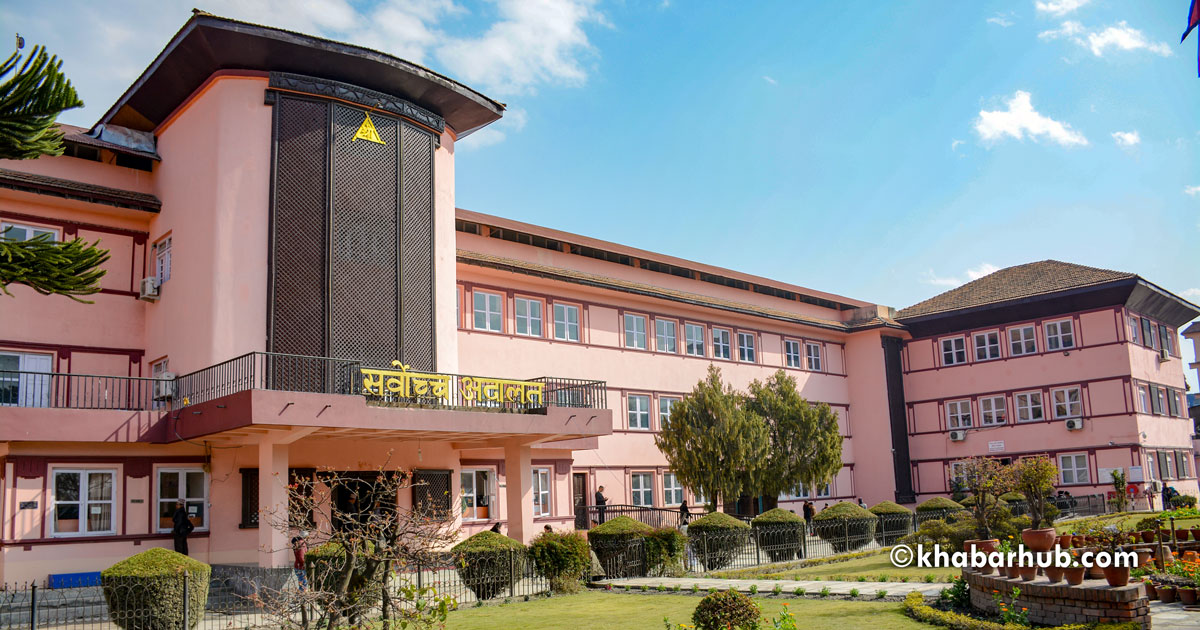
Kathmandu. The controversy linking middlemen (fixers) with Supreme Court justices has become uncertain. The investigation committee formed by the Nepal Bar Association under the convenership of former chairman Chandeshwor Shrestha to investigate the middleman Inam case, which has connections with Chief Justice Dr. Manoj Kumar Sharma and Justice Hariprasad Phuyal of the Supreme Court, is on the verge of dissolution as most of its members have refused to participate before the investigation process could move forward. On the other hand, the issue of impeaching the justices has not progressed due to the lack of consensus between Rastriya Swatantra Party chairman Ravi Lamichhane and Prime Minister Balen Shah. Although the full court of the Supreme Court has urged the concerned bodies to conduct an impartial and independent investigation without prejudice to the publicly raised questions and make the conclusion public as soon as possible, the investigation into the justices has not reached a conclusion. Once the investigation process was certain to move forward, the first and most serious question raised was about the continuation of the bench of the accused justices. Questions were raised about Justice Phuyal after he was seen meeting a middleman (fixer) at a hotel, and he went on leave until November 6. However, Justice Phuyal returned to the bench from December 1. As the names of other Supreme Court justices are also being mentioned along with Justice Phuyal, the investigation process has not been able to proceed impartially. Senior advocate Dr. Surendra Bhandari states that it is not appropriate for accused justices to sit on the bench until the questions raised are resolved. However, from Tuesday, all the justices against whom questions were raised have returned to the bench. In the past, the judiciary was held hostage for months when the bench was boycotted in the cases of former Chief Justices Gopal Parajuli and Cholendra Shumsher Rana. Although the full court has urged the 'concerned bodies' to investigate, the constitutional jurisdiction for investigating sitting justices of the Supreme Court is very sensitive and complex. Justice Phuyal's demand was to form an internal high-level investigation committee. If Phuyal's demand were to be met, an independent high-level judicial investigation committee could have been formed under the leadership of the seniormost justice of the Supreme Court or a former Chief Justice, in accordance with the Judicial Council Act and the Supreme Court Regulations. The committee could have conducted a digital forensic examination of WhatsApp conversations, checked CCTV footage from hotels, and fact-checked public banking details. Constitutionally, only the parliament has the authority to remove sitting justices and the Chief Justice of the Supreme Court from office. If the preliminary investigation or high-level investigation reveals prima facie evidence of judicial misconduct and corruption, the matter will enter the parliamentary investigation or impeachment process. Meanwhile, there is a disagreement between the Prime Minister and the Chairman regarding impeachment. Sources claim that Chairman Lamichhane is in favor of impeaching only the justices, while Prime Minister Shah is in favor of impeaching the Chief Justice, who has been dragged into the controversy, along with everyone else at once. Senior advocates say that if the trend of keeping justices under political influence by showing the threat of impeachment in parliament repeats, the principle of rule of law and separation of powers will be further weakened. Although the full court of the Supreme Court has taken the first step towards crisis resolution by demanding an investigation into the middleman case, they say this should not be limited to mere rhetoric and formality. How the judiciary moves forward will depend on how quickly, transparently, and impartially the investigation is completed. This case has revived the bitter reality of the report submitted by the committee led by Justice Harikrishna Karki in 2078 BS. This incident has confirmed how deeply the 'collusion of middlemen, lawyers, and justices' pointed out in the Karki report is rooted in the highest levels of the court.
Read full story at source ( english.ratopati.com )