WARNING: This article contains distressing content and references to violence against women.
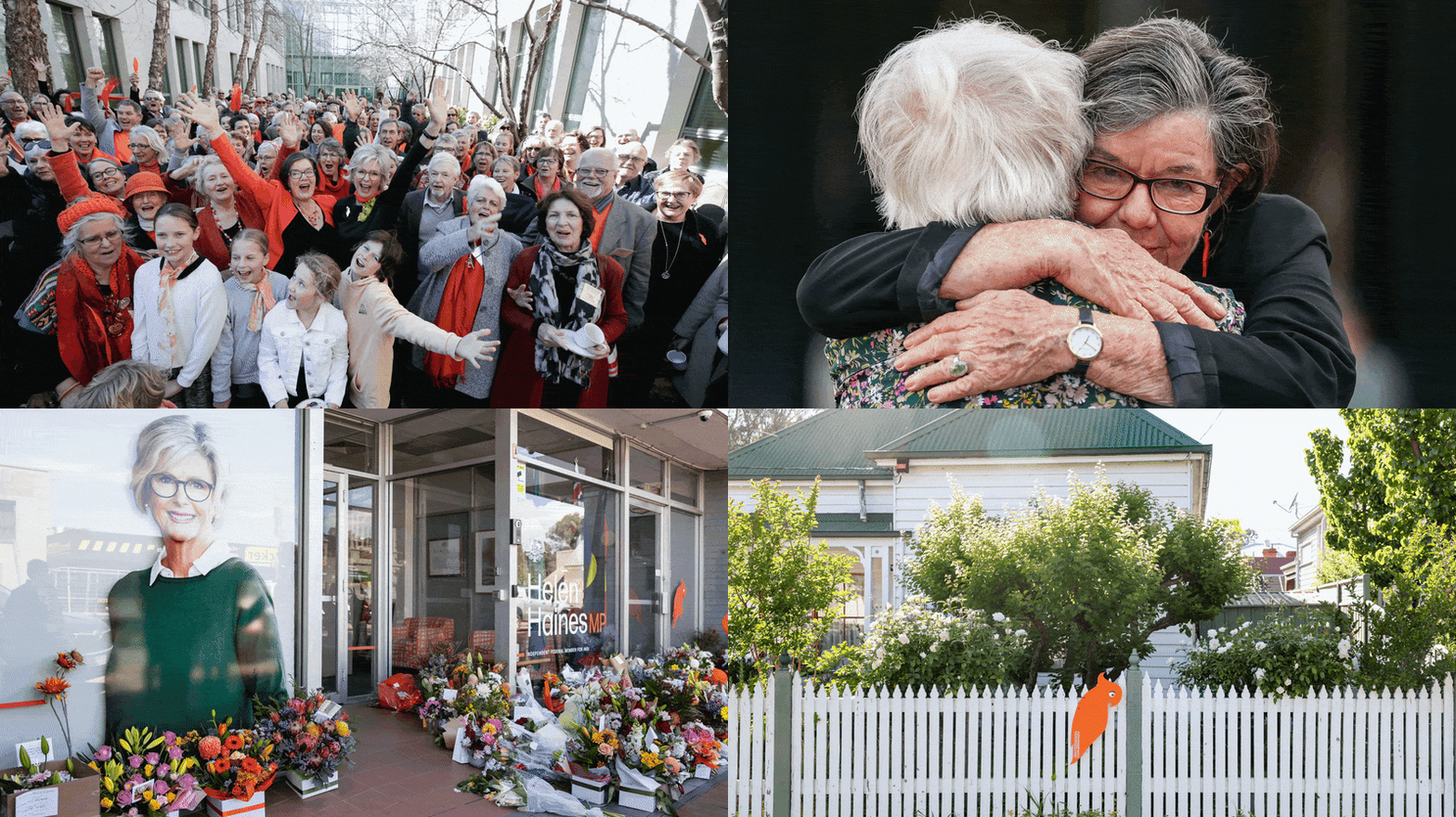
When Marie, whose name has been changed for privacy reasons, heard about the attack on Indi MP Helen Haines, she was shocked.
"How is this possible?" Marie told SBS News. "It's really confronting. Her life is irrevocably changed."
Police allege Haines was run down by 43-year-old Brendan Nugent outside her electoral office in Wangaratta, Victoria, on Monday afternoon. He has been charged with multiple offences including harming a Commonwealth official and drug charges.
She sustained serious injuries, has had both legs amputated and remains in hospital in a critical condition.
Your trusted source for staying up-to-date with the world around you. Get free daily news updates and analysis, straight to your inbox.
Marie, who is in her late 40s, is a survivor of gendered violence.
She said the increasing rate of violence against women being reported by the media is "retraumatising".
The psychological impact has forced the Canberra mother to delete her social media accounts and limit socialising.
"I don't feel safe in public anywhere anymore," she said, adding that she feels increasingly unsafe around men.
According to a 2024 survey from The Man Box, one in four Australian men aged between 18 and 45 admitted to having used physical and/or sexual violence against an intimate partner.
Marie said that, when she's alone with men, this statistic is firmly in her mind.
"I get into a lift at work, and if there are a group of men in the lift, I think 'it's one in four men – how many of them have assaulted a woman?'"
"I know it's not all men, but it's always a man [involved in such attacks]."
Australian Sex Discrimination Commissioner Anna Cody believes many women have been impacted by the attack on Haines.
"We see ourselves in Helen Haines, we see our vulnerability. [We have] that sense of 'it could be us'," she told SBS News.
"We know that women experience high levels of violence and there has been an escalation in the online and real-life expression of hatred towards women, the resentment towards women, and those messages have gained momentum in the last two years."
Cody described Haines as a "compassionate, strong, fierce, and really effective parliamentarian".
"I'm hopeful that this can be a reckoning point where we realise that speaking hatefully about any group, or any person, does translate into actual physical violence."
The Trauma Recovery Centre's head of programs and founder of Doctors Against Violence Towards Women, Karen Williams, told SBS News that Australian women are "rightly" feeling unsafe.
"The reality is that it isn't actually safe for women. You don't want to gaslight people into thinking they shouldn't feel unsafe," she said.
"These things are happening on a significant level. It's not a one-off, occasional thing ... These are not small risks; they're real.
"We are powerless against it really ... There is a level of fear that women just live with and regard as normal."
She said the news of Haines' attack could exacerbate that fear for many women.
"Community is meant to be a place where you feel safe... but events like what's happened with Dr Haines make people think our community itself is not safe," she said.
"Dr Haines is someone who should have the resources and protections, and even she isn't safe from violence."
While media reporting of violence against women can be triggering and retraumatising for some, Williams said it's "the only sort of information or education women are getting on the risks they're exposed to".
"Everything we ever hear about is only through the media," she said. "They have a very important role in explaining to people that these risks do exist because they do."
Williams believes reducing violence against women requires a "huge systems change" that begins with having "deterrents to harming women".
"There isn't a real deterrent. You can hurt women and get away with it ... and [perpetrators] know they can get away with it," she said.
She said that, until there is a "deterrent", people would "keep harming women".
For those experiencing distress, Williams recommends focusing on basic needs: physical exercise, eating well and creativity.
"We know from research that having physical capabilities does actually help, so getting out there and exercising and moving ... training your body to feel like you have some control over your body, feeling autonomous and empowered," she said.
"Music and creativity are also really important things for a person trying to regulate their nervous system."
Marie has begun gardening, alongside seeking professional support and counselling, grounding techniques and leaning on her support network.
"I want to be able to present, and I want to be able to enjoy my life again because I don't feel like I've had any capacity to do so."
If you or someone you know is impacted by family and domestic violence or sexual assault, call 1800RESPECT on 1800 737 732, text 0458 737 732, or visit 1800RESPECT.org.au . In an emergency, call 000.
The Men’s Referral Service , operated by No to Violence, can be contacted on 1300 766 491.