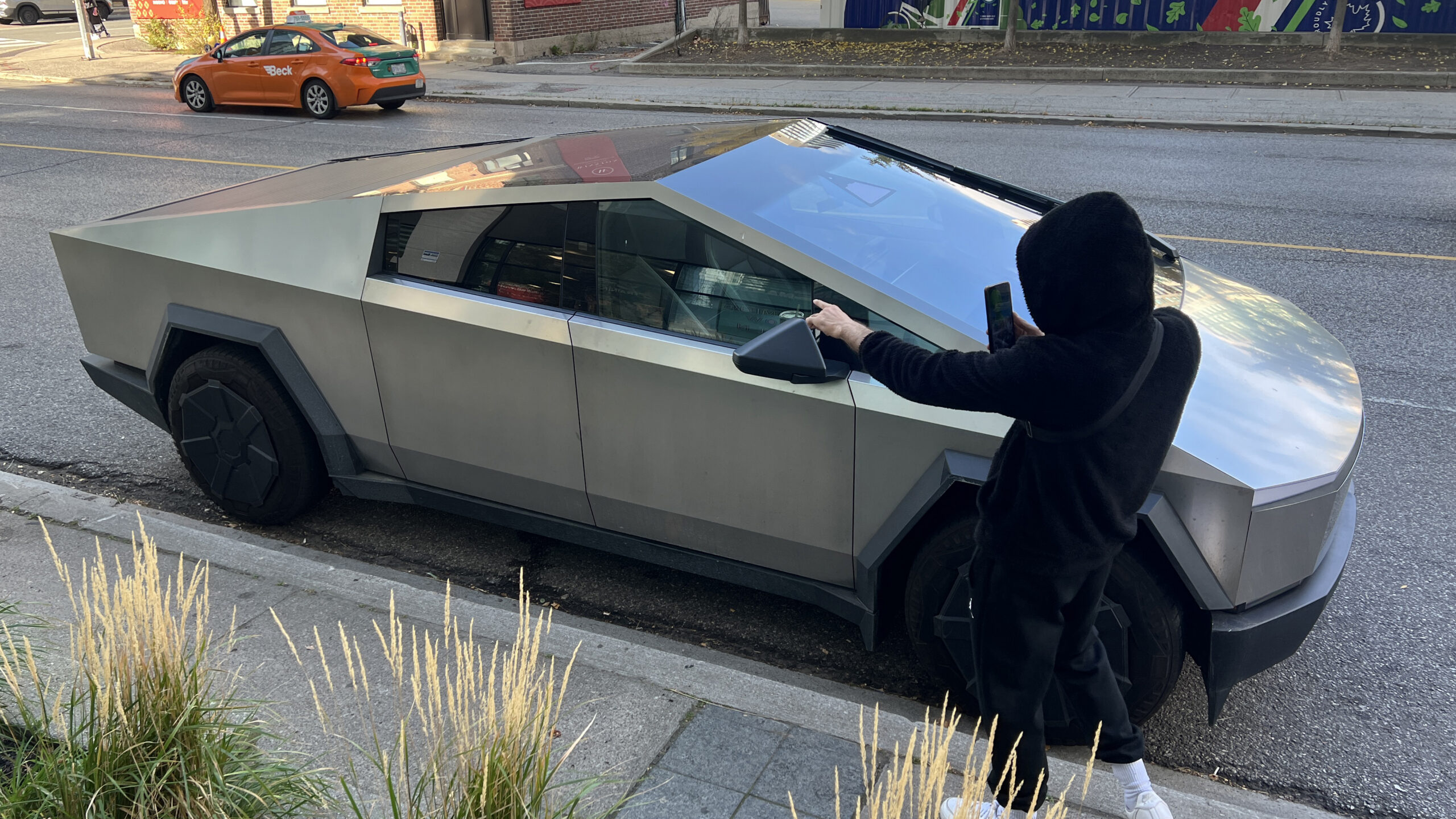
There is always a catch. Or in the case of Tesla ’s self-driving Cybercab , several.
Last Friday night, Tesla said it had invited “select customers” to purchase their very own Cybercabs. The two-seat, gold vehicle is unlike any other on the market: It lacks a steering wheel and brake pedals, and is primarily driven by software. (Other autonomous vehicle companies, including Alphabet's Waymo and Amazon’s Zoox , offer self-driving rides on ride-hail networks , but don’t let people buy their cars.) Tesla’s " limited release ” will supposedly offer some people (unclear how many) the opportunity to pay $29,900 to take delivery in December.
From there, though, the Cybercab will need constant cash infusions to stay on the road.
The business model raises questions about what people will actually get when they buy a Cybercab. “You’ll never really own the car,” says Ivan Drury, the director of insights at Edmunds. “It’s more like $30,000 to buy into a franchise.”
According to documents posted on Tesla’s website, the vehicle “will not operate” without what Tesla is calling an “autonomy subscription," a monthly fee that will start at $299. If owners don’t pay on time and in full, their self-driving cars won’t work. If they try to operate the vehicles in areas that don’t support the service—right now, they’re restricted to portions of cities in Florida and Texas—their self-driving cars won’t work. (That area can expand, contract, or “relocate” at any time.)
If owners do anything that Tesla deems "unauthorized or inappropriate," the company says it can suspend or cancel the subscription—and their self-driving cars won’t work. If the vehicle loses connectivity, the self-driving cars won’t work. (“Tesla is not responsible for carrier, spectrum, environmental, or other external outages,” its “autonomy agreement” says.)
Tesla also reserves the right to make an owner’s car not work at any time: It says it can, for any safety or security purpose, suspend or terminate access to Cybercab tech, or restrict operations by location, road type, weather, or “condition.” This is particularly salient because the Cybercab is also under investigation by US safety regulators , who are trying to understand why Tesla believes the vehicle meets safety standards without so many of the parts and systems required.
Tesla didn’t respond to a request for comment.
For years, automakers have seen increasingly software-dominated vehicles as an opportunity to get drivers hooked on the same special sauce that makes Netflix, Amazon, and Spotify so potent: monthly subscription services . Because these vehicles can receive over-the-air software updates, manufacturers can offer drivers new services as they make them. The upside is high, tech-style margins that keep rolling in, versus the razor-thin ones seen in car-making. A 2024 report suggested that connected-car features could one day be a $200 billion industry.
In some ways, the subscription model is working. Today, some automakers charge extra for remote start, security, internet connectivity, and advanced driver assistance features. General Motors said it made $2.7 billion in subscription-related revenue last year from fees drivers paid for its OnStar and Super Cruise services.
But some customers have also found the business model yucky, or even offensive. Why charge extra to “unlock” a feature that’s already built into a car? If an automaker can add a new feature at any time, can’t they also take it away? And if they can take it away, what does "ownership" mean? In 2022, BMW told drivers in select countries it would activate factory-installed heated seats for a monthly or one-time fee ; it eventually backed down after public outcry, pledging the company would no longer charge subscription fees for pre-installed hardware. (BMW is still pursuing a subscription model for some features.) “Consumers hate being nickel-and-dimed for subscriptions,” says Drury.
Tesla was an early mover in the subscription feature space and has offered connectivity and driver-assistance features for monthly or one-time fees for a decade. As the company has shifted away from making cars and toward robotics and autonomous vehicles , executives have made clear that charging for services is the future. (Its Robotaxi service currently picks up fare-paying passengers in parts of eight US cities.) So Tesla buyers may be particularly amenable to paying monthly to make their self-driving cars go.
In exchange for monthly fees, buyers will also get access to other services, too, including remote support , roadside assistance, tire, air filter, and windshield wiper replacements, and tire and camera inspections. (The agreement says that list might change, too.) Cybercabs will be able to “travel autonomously, unoccupied to a Tesla service center,” the company says. The fee doesn't cover insurance.
Cybercab buyers will have other restrictions. The vehicle is for personal use only. Even though CEO Elon Musk has repeatedly said owners will be able to put their vehicles on Tesla’s wider Robotaxi network to make money during downtime, and even has an online interest form for those who want to own and operate their own Cybercab fleets, the current ownership agreement prohibits that. Buyers are also prohibited from selling or transferring their vehicles without Tesla’s written consent. The company “advises against” children under 13 riding in the Cybercab, and prohibits children from riding without an adult present.
In a post on X , Musk showed no apparent compunction about the Cybercab business model, but did say the monthly price for autonomy “is too high.” He wrote that the price should be “more like ~$115/month.”
Airbnb hosts are furious they can no longer make guests do their chores
big story: cool kids write in all lowercase —does that make you mad?
I worked for a whole day using only the iPhone Duo
WIRED event: The technologies, people, and ideas transforming our world
10% Off Canon Promo Code + Up to 30% Off
20% Off Your First Order with VistaPrint Promo Code
Squarespace Promo Code 50% Off Core Plan
LegalZoom Promo Code 10% Off Sitewide