EDITOR’S NOTE: Call to Earth is a CNN editorial series committed to reporting on the environmental challenges facing our planet, together with the solutions. Rolex’s Perpetual Planet Initiative has partnered with CNN to drive awareness and education around key sustainability issues and to inspire positive action.
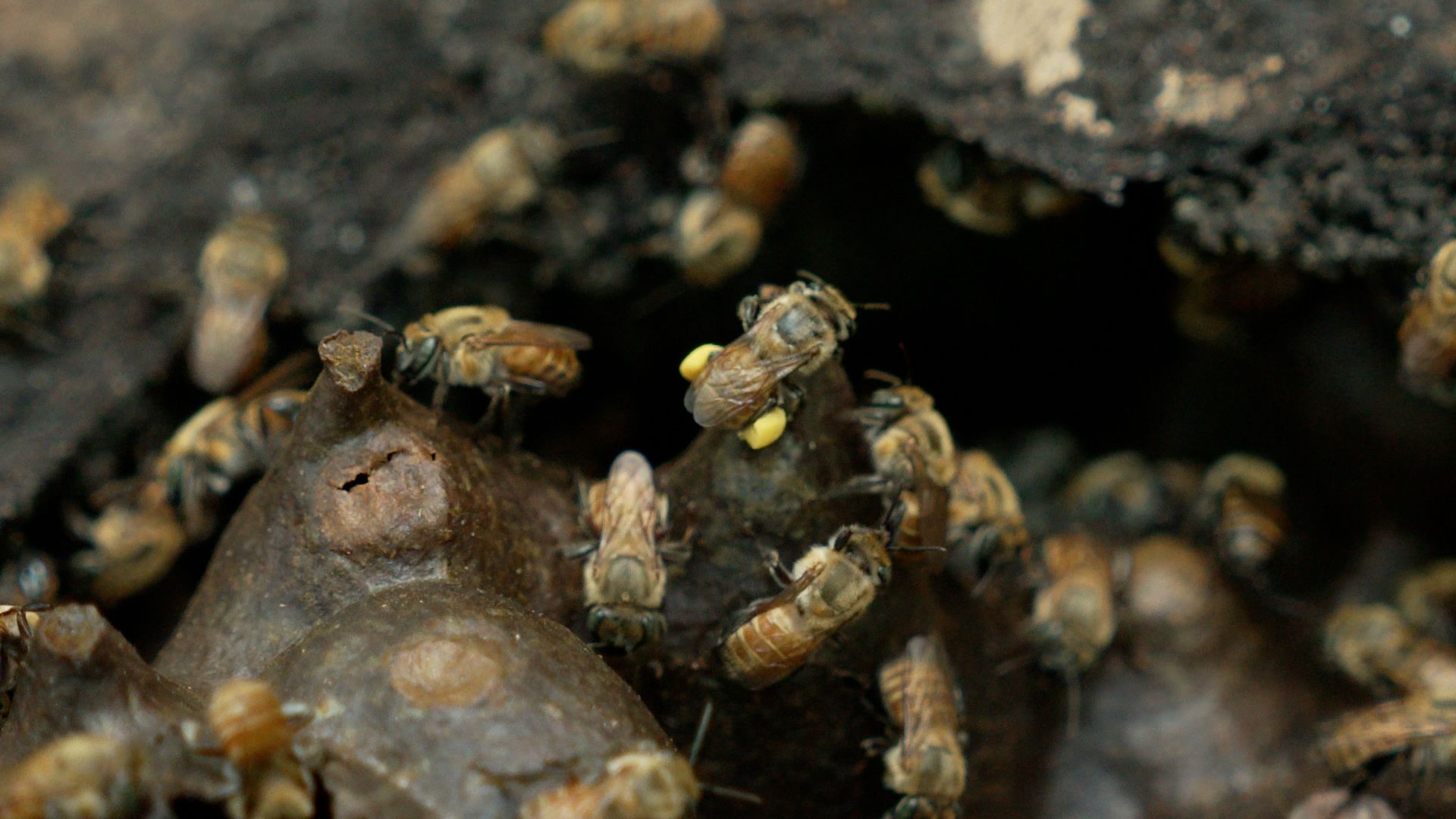
You might not have heard of stingless bees, but there are more than 600 species of them on the planet. Although some measure just 5 millimeters long, they are vital pollinators and last year in Peru, they became the first insects in the world to be granted legal rights.
The Declaration of Rights of Amazonian Stingless Bees, passed by two municipal governments, included the right to exist and thrive, the right to a healthy environment and the right to representation for the bees. It came after tireless campaigning by a coalition of environmental organizations, conservationists and Indigenous groups.
This photographer spent 396 days in the Amazon
Peru has more than 175 species of stingless bees, and they are considered a pillar of the rainforest ecosystem. For years, environmental and Indigenous advocates issued warnings about the rapid decline of their populations, due to deforestation, pesticides and climate change.
Rosa Vásquez Espinoza — a chemical biologist , author and founder of environmental nonprofit Amazon Research Internacional — along with her partner organizations, proposed legislation that would grant rights to the tiny pollinators. Espinoza’s pioneering work resulted in her being named a 2026 Rolex Awards Laureate.
Despite their name, stingless bees do have stingers — but their stings are either reduced or nonfunctional and cannot be used for self-defense. Instead, some species buzz loudly and bite to protect their nests, which are typically found in hollow tree trunks, in the ground or in other crevices, including human-made structures.
Espinoza began researching stingless bee species in 2020 but over time, her work evolved to include more than just a scientific approach.
“When we started our project, we learned that stingless bees were nowhere to be found in the law in Peru, yet they are the native species of Peru,” Espinoza said.
“Stingless bees have the right to be alive, to have access to a healthy flora, free of contaminants, pesticides or (invasive) species,” Espinoza said. “Stingless bees cannot defend themselves in court or against the threats they’re facing. But we as people can give voice to the voiceless.”
In recent years, there has been a growing international movement to recognize the rights of nature, including a successful 2022 campaign to grant legal personhood to the Mar Menor Lagoon ecosystem in Spain and to Peru’s Marañón River in 2024.
Inspired by those successes, the team designed the declaration to include rights for stingless bees to exist without pollution, climate change or human activity impacting their populations.
A collaboration between Amazon Research Internacional and global environmental law nonprofit the Earth Law Center, alongside local stakeholders EcoAsháninka, an organization representing thousands of Indigenous Peruvians, Reserva Comunal Ashaninka and Asociación de Meliponicultores Región Loreto, developed the declaration and pushed for its passage in two provinces, Satipo and Nauta , in October 2025 and January 2026, respectively.
Now, groups like Espinoza’s nonprofit and Indigenous Asháninka leaders will be able to raise violations of the bees’ rights in Peruvian courts.
Protector of the pink dolphins: Fernando Trujillo’s quest to save aquatic life in the Amazon
Constanza Prieto Figelist, the Latin America legal director at the Earth Law Center, said the legislation combined Espinoza’s scientific expertise with wisdom from the Asháninka people, serving as a connection across science, Indigenous culture and government.
“Since the beginning, we have been working with the communities — and so building this relationship with the community and translating this knowledge in a document can be a bridge,” said Figelist.
“I like to see it as a translation of Indigenous perspectives into the legal framework — the idea that nature is alive,” Espinoza said.
According to Espinoza, the declaration of rights will also support the Asháninka people, who have traditionally protected the bees and rely on their pollination to help produce food and medicinal plants, as well as using their honey in traditional medicine.
Figelist said the next step for the team is to implement an action plan for the new legislation.
Espinoza’s organization, the Asháninka people and the local municipal governments are working together to translate the insects’ rights into enforcement. She added that the stakeholders will need to determine when and how the rights outlined in the declaration are violated — for example, the penalty for chopping down a tree that’s home to a protected beehive.
Espinoza hopes the municipal government will approve these regulations this year. Both she and Figelist emphasized the importance of the collaboration between their team and the municipal government.
Figelist emphasized that this legislation is a “first step” for the long-term protection of the bee species.
“We cannot just expand — we need to really settle the basis of implementation first,” Figelist said.
Other provinces in Peru interested in the legislation have since contacted Espinoza’s team, and two municipalities in the Cuzco Region, Pichari and Unión Ashaninka, have approved it as local law.
Espinoza said the team has also heard from organizations from 14 countries across six continents who want to use similar laws to protect their own native bee species.
No court cases involving the law have been heard to date, she said, but added she’d already seen proactive efforts by Peruvian authorities and local communities. These include conducting workshops to expand stingless bee conservation and beekeeping; integrating stingless bees into curricula in schools; and establishing local markets to boost the livelihoods of Indigenous people protecting stingless bees.
“It gives me a lot of hope that we can be a lot more intentional and integrative of our approaches,” Espinoza said. “We don’t just have a shiny win, but long-term, sustained efforts.”