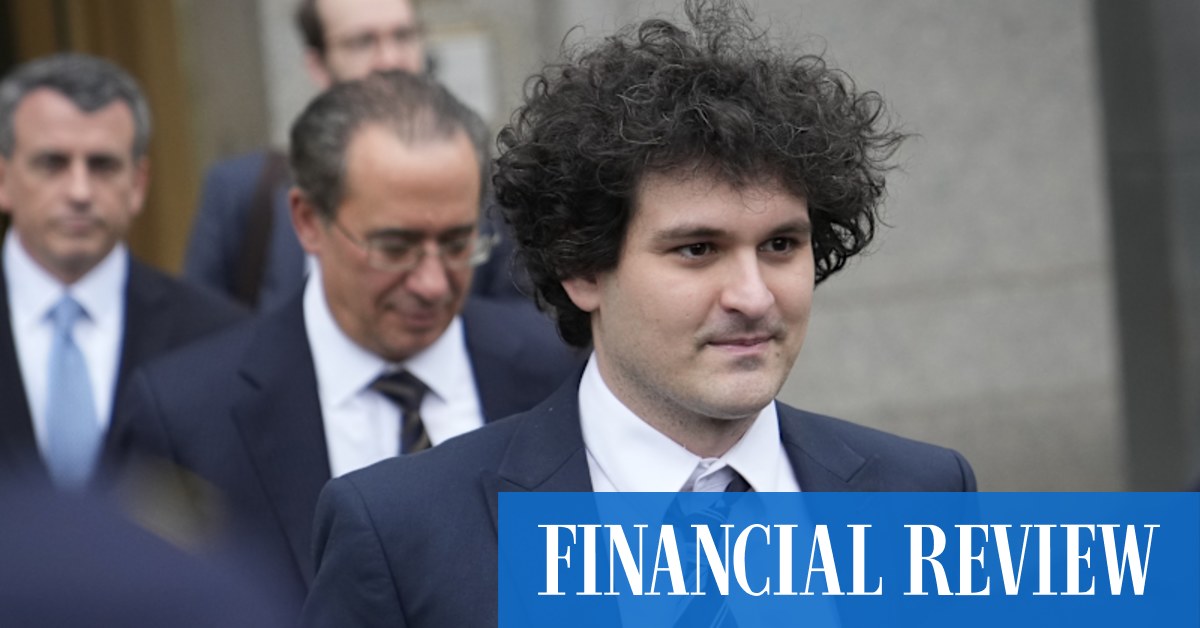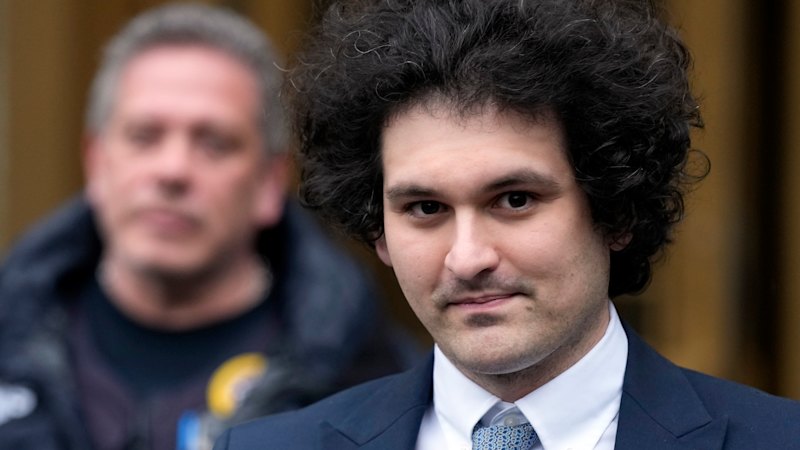
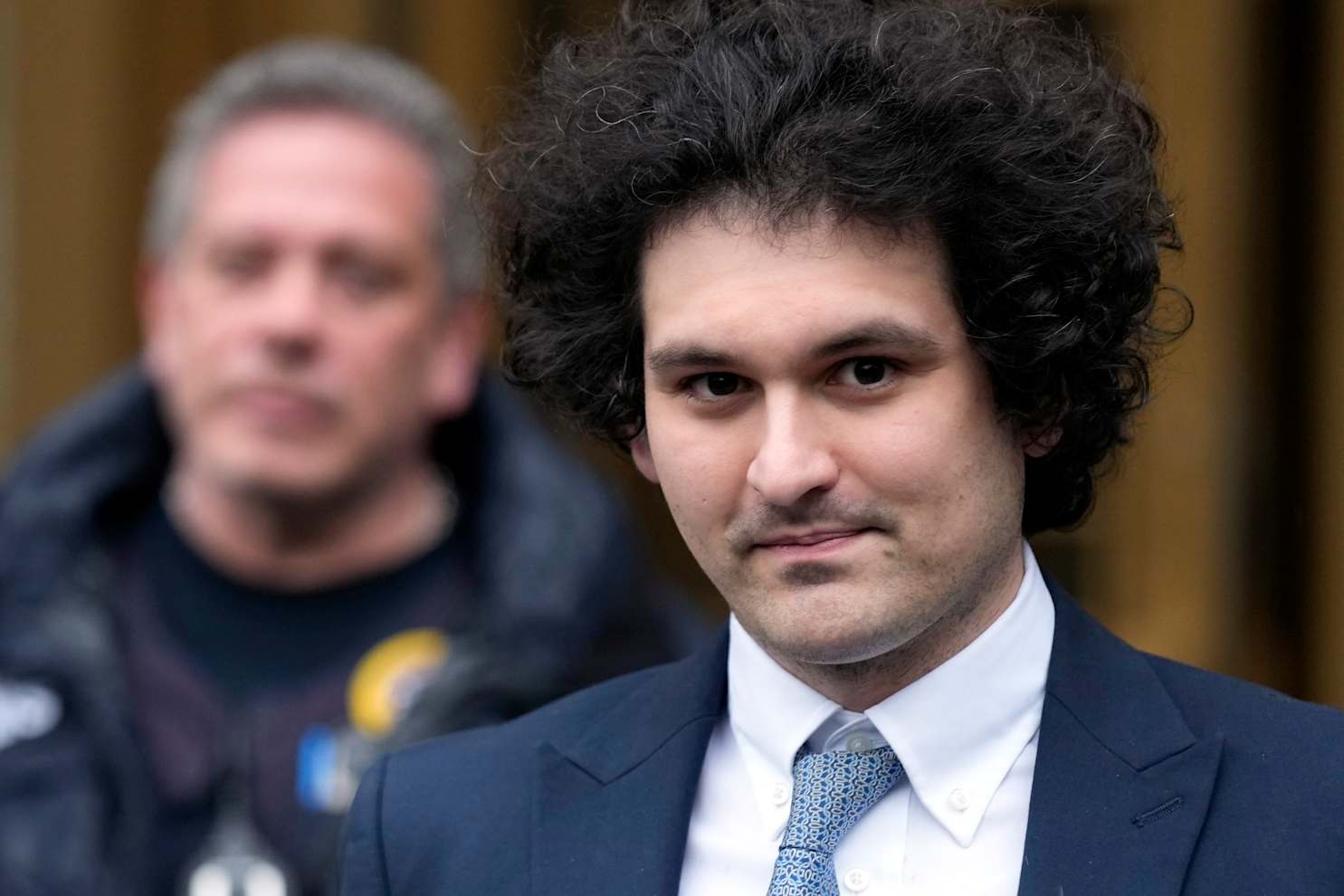
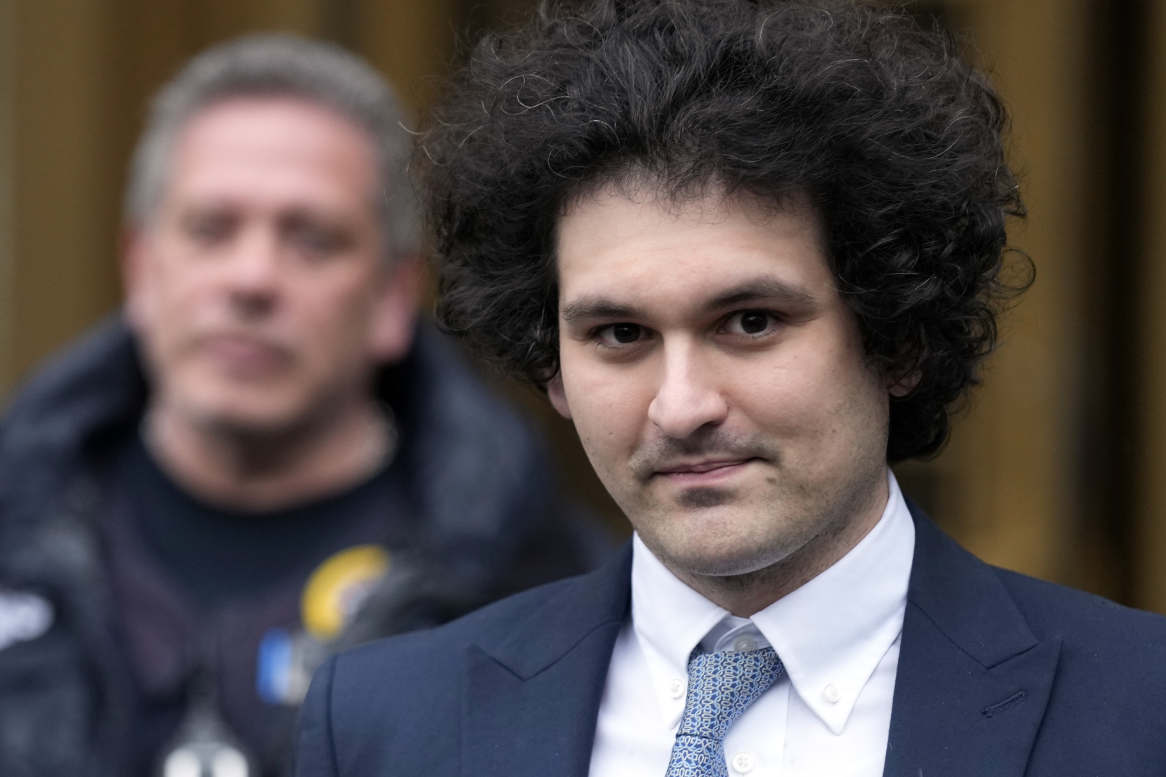
Sam Bankman-Fried, the convicted cryptocurrency fraudster , lives in a 30-person unit at the federal prison in Lompoc, California, a barbed-wire compound about a million miles away from his former life as a technology billionaire in the Bahamas.
For the most part, Bankman-Fried, 34, tries not to think about all the “could-have-beens,” he said on a recent call. But one has become difficult to ignore.
In late 2021, the heyday of his FTX crypto exchange, Bankman-Fried spent $US500 million ($742 million) on a 13.5 per cent stake in a little-known artificial intelligence startup called Anthropic. This week, Anthropic is set for an initial public offering that is expected to value the company at $US1.4 trillion, potentially one of the largest Wall Street debuts in history.
At that valuation, Bankman-Fried’s investment, diluted over several years, would now be worth an eye-watering $US35 billion — about the size of FTX’s entire business at its peak.
But the shares are gone. They were tied up in bankruptcy court until 2024, when executives overseeing the scattered remains of FTX sold the Anthropic stake for $US1.34 billion — a tiny fraction of its current value.
For Anthropic, the fate of those shares is an odd quirk of history. For Bankman-Fried, it’s a source of extreme frustration and resentment. Even after a fraud conviction , a failed appeal and a succession of public humiliations, he is still trying to prove his innocence, arguing that FTX had sufficient resources to avoid bankruptcy.
“There’s no point in obsessing over regrets,” he said. “But it’s certainly something that I’ve spent, despite that, a fair bit of time thinking through.”
In September, Bankman-Fried submitted the longest of long-shot appeals to the Supreme Court, where he cited the Anthropic investment. He claimed that the judge in his trial had improperly prevented him from arguing that FTX had enough money to repay its users.
But none of his arguments was ever likely to overcome the basic facts of FTX’s collapse, an epic financial fraud that drew instant comparisons to Bernie Madoff’s Ponzi scheme. Bankman-Fried gave up control of FTX in November 2022, after a run on deposits exposed an $US8 billion hole in customer accounts. A year later, he was convicted on seven counts of fraud and conspiracy. He had used the missing money to buy luxury real estate, donate to political campaigns and invest in startups like Anthropic.
Ultimately, the return on those investments proved irrelevant, as far as guilt and innocence were concerned. In US District Court for the Southern District of New York, Judge Lewis A. Kaplan memorably compared Bankman-Fried to a “thief who takes his loot to Las Vegas and successfully bets the stolen money.” He sentenced him to 25 years in prison.
“Mr. Bankman-Fried conveniently skips over the fact that he misappropriated and gambled with customer moneys,” John Ray, a corporate turnaround expert who oversaw the bankruptcy, said in a statement. “We are proud of the integrity and impact of the work we have done with our large team of committed professionals.”
A spokesperson for Anthropic declined to comment.
Before FTX filed for bankruptcy, Bankman-Fried was worth an estimated $US24 billion, giving him tremendous influence in business and politics. His company was one of the world’s largest crypto exchanges, a venue where customers could buy, sell and store digital coins.
Bankman-Fried was also a leading practitioner of “effective altruism,” a philanthropic movement that focuses on combating threats that might emerge decades or centuries in the future. Like many effective altruists, Bankman-Fried was concerned about the dangers of out-of-control AI long before it became a major talking point in American politics.
Those views aligned him with Dario Amodei, the CEO of Anthropic, who moved in the same effective altruist circles. Amodei started the AI company after leaving a rival, OpenAI, in late 2020 amid disagreements over how to make the technology safer.
Bankman-Fried said he spoke with Amodei not long after that, when FTX was based in Hong Kong. “I was one degree removed and knew a number of people who knew him,” Bankman-Fried recalled. Amodei struck him as “really intelligent, dedicated, very knowledgeable.”
In April 2022, Anthropic announced the investment from Bankman-Fried and two of his FTX colleagues, drawing little notice at the time.
“We cared about AI companies being responsible, and preparing for AI to help rather than hurt society,” Bankman-Fried said on the phone from prison. “Anthropic seemed far more committed to that than the other major companies.”
Then in fall 2022, FTX plunged into crisis, exposing a giant theft of customer money. Three weeks later, OpenAI released its ChatGPT chatbot, setting off an AI frenzy.
Within a year, Bankman-Fried had been convicted, while Anthropic was raising billions of dollars from high-profile investors like Amazon. It had recently released a popular chatbot, Claude.
As Anthropic turned into one of Silicon Valley’s hottest startups, the fate of Bankman-Fried’s shares became a subject of intense debate in Delaware bankruptcy court.
When FTX failed, Bankman-Fried had handed control to Ray, who had managed the unwinding of Enron. Working with the law firm Sullivan & Cromwell, Ray set out to raise funds to pay back FTX customers in full. Bankman-Fried had left a messy assortment of corporate assets, including obscure digital coins, properties in the Bahamas and shares in other companies.
Ray’s team started looking for buyers. A wide-ranging sale is typical in any corporate bankruptcy, where the job of the estate is to maximise recoveries as efficiently as possible. But some customers wanted FTX to sit on the Anthropic stake for longer.
“I wish they held onto it,” said Sunil Kavuri, an FTX customer who testified at Bankman-Fried’s sentencing. “I foresaw that it would be one of the most valuable assets.”
It didn’t help that Ray came across as misinformed about the potential value of the shares. In an interview with author Michael Lewis, he dismissed the company as “this thing called Anthropic.”
“It’s just a bunch of people with an idea,” Ray said. “Nothing.”
In the end, FTX sold the Anthropic stake at about $US30 per share to a few dozen investors, who paid $US1.34 billion, according to court filings. The buyers included a business entity linked to Mubadala, the United Arab Emirates investment fund; the nonprofit Ford Foundation; and the trading firm Jane Street, which once employed Bankman-Fried.
A spokesperson for the FTX estate said the sale of the Anthropic stake was “conducted through a court-supervised process and achieved market value at the time”.
“Billions of stolen funds were misappropriated and invested, without customer consent,” the spokesperson said. “There was no way to know at that time whether those investments would succeed or fail and many did fail.”
Representatives for Jane Street and the Ford Foundation declined to comment. Mubadala did not respond to a request for comment.
A bankruptcy estate has significant leeway to decide when and how to sell its assets. Under the circumstances, FTX’s handling of the Anthropic shares was reasonable, said Lindsey Simon, a professor at Emory University School of Law.
“At the time, there was no news about an IPO,” Simon said. “Now we know that they became extraordinarily valuable. But what if they had turned into nothing?”
In May 2024, the estate announced that FTX’s creditors were set to receive as much as $US1.18 for every dollar they lost when the exchange failed — more than a full repayment. But that has not quieted the complaints.
The promised returns were pegged to the value of crypto at the time FTX collapsed, when the market was in a deep slump. If customers held bitcoin on FTX on the day the company filed for bankruptcy, they would be compensated in line with the coin’s price at that moment — not its current price, which is several times higher.
“It was our money, and we didn’t give him rights to use our money,” Kavuri said. “It sucks.”
These days, Bankman-Fried has only limited contact with the outside world. He exchanges messages with a network of journalists, friends and relatives, who have kept him up-to-date on AI developments. Bankman-Fried can access the prison phones for 15 minutes at a time, before each call automatically ends.
Over several conversations this fall, he kept returning to Ray and the bankruptcy lawyers.
“I’m sure you could’ve come up with a way for them to manage it worse,” he said, “but I can’t think of one off the top of my head.”
Bankman-Fried was repeating grievances that have been repeatedly rejected in court. But does he ever ponder an alternate universe where FTX didn’t implode and the Anthropic shares made him incredibly wealthy?
“A little bit,” he said, starting to answer. “I try not to spend too much time. …”
This article originally appeared in The New York Times .
The Business Briefing newsletter delivers major stories, exclusive coverage and expert opinion. Sign up to get it every weekday morning .
You have reached your maximum number of saved items.
Remove items from your saved list to add more.
You've used all of your gift articles. 3 more will become available on the 1st of every month.