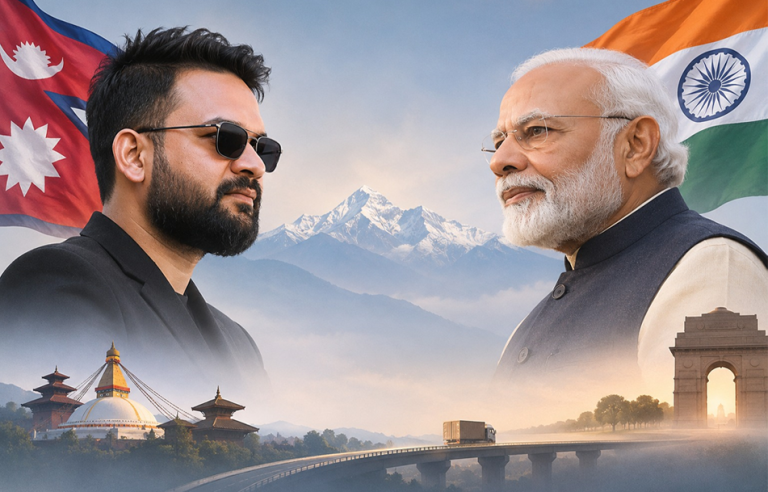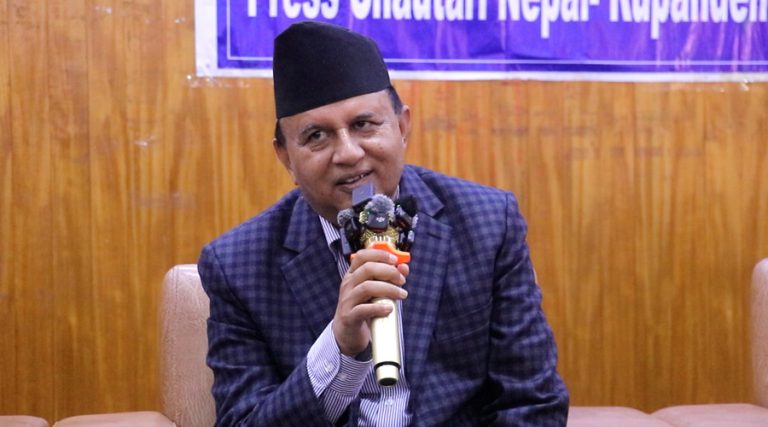
The anticipated visit of Nepal's Prime Minister Balen Shah to India could provide a timely opportunity to bring greater purpose and direction to one of South Asia's most consequential bilateral relationships. India and Nepal are connected by geography, history, culture, religion, and a uniquely open border that allows an extraordinary degree of movement and interaction between their peoples. Few neighbouring countries share such deep societal links. Yet, despite these natural advantages, the relationship periodically encounters friction over boundary disputes, treaty-related concerns, trade and transit issues, water resources, infrastructure delays, and security matters.
The challenge is neither a shortage of goodwill nor a lack of converging interests. Rather, it is the tendency for manageable disputes to overshadow the broader strategic value of the partnership. The task before New Delhi and Kathmandu is therefore not to reinvent the relationship but to modernise it through stronger institutions, clearer mechanisms and a greater emphasis on implementation.
The most politically sensitive issue remains the Kalapani-Lipulekh-Limpiyadhura boundary dispute. Given the strong domestic sentiments attached to these territories in both countries, an early settlement is unlikely. Nevertheless, the dispute should not be allowed to hold the wider relationship hostage. India and Nepal should institutionalise regular Foreign Secretary-level negotiations, supported by continuous technical engagement through the Boundary Working Group. Joint verification of historical records, geospatial mapping and field surveys should provide the basis for future discussions. At the same time, local border mechanisms should be empowered to resolve practical issues relating to land use, cultivation and access so that local grievances do not escalate into bilateral controversies.
The second issue requiring careful attention is the 1950 Treaty of Peace and Friendship. While the treaty remains the foundation of the special relationship, there is growing recognition, particularly in Nepal, that some provisions warrant review in light of contemporary realities. The objective should not be to dismantle the existing framework but to modernise it.
Economic cooperation must constitute the next pillar of a renewed partnership. Rather than focusing solely on trade volumes, both countries should prioritise creating shared value through deeper economic integration. Faster customs procedures, digital clearances, harmonised standards and improved logistics would reduce transaction costs and facilitate cross-border commerce. Equally important is the development of integrated production networks in sectors where Nepal enjoys comparative advantages, including tea, cardamom, medicinal plants, agro-processing, and selected manufacturing industries. Combining Nepali production strengths with Indian capital, technology and market access would generate benefits for both economies.
Connectivity remains central to this objective. Significant progress has been achieved in rail links, petroleum pipelines, integrated check posts and transmission corridors. However, the emphasis now should be on timely delivery. A joint project-monitoring mechanism should regularly review implementation bottlenecks, while future planning should adopt a corridor-based approach linking transport infrastructure with logistics, warehousing, and trade facilitation. Connectivity must ultimately be measured not by the number of agreements signed, but by the economic activity generated.
Energy cooperation offers perhaps the greatest strategic opportunity in the relationship. Nepal's vast hydropower potential complements India's growing demand for clean and reliable energy. Recent advances in cross-border electricity trade demonstrate what is possible when policy and economics align. The next step should be the establishment of a predictable longterm framework governing approvals, investments and power purchases. Greater integration of transmission networks, seasonal electricity trading and coordinated grid management would strengthen energy security for both countries while supporting regional sustainability goals.
Water cooperation should similarly evolve beyond project-specific negotiations. Climate change has increased the urgency of managing Himalayan river systems in a more coordinated manner. Flood control, irrigation, hydropower development, environmental protection and disaster resilience should be addressed within a broader basin-wide framework. Real-time hydrological data sharing and improved flood-warning mechanisms would provide immediate and tangible benefits to vulnerable communities on both sides of the border.
Security cooperation must preserve the openness that distinguishes India-Nepal relations while addressing emerging challenges. Joint efforts should focus on trafficking, narcotics smuggling, organised crime, and document fraud through intelligence-led cooperation and local coordination mechanisms. The objective should be better management, not greater restriction, of cross-border movement.
Reopening Gorkha recruitment into the Indian Army merits timely consideration, given its two-century legacy as a cornerstone of India-Nepal military, economic, and people-to-people ties. Nepal's earlier decision to pause recruitment reflected understandable concerns regarding tenure and long-term welfare under the original Agnipath framework. However, the recent reset - introducing a two-year service extension and removing the cap on permanent absorption constructively addresses these core apprehensions. This evolving context offers an opportune moment for both nations to engage in dedicated dialogue on welfare safeguards, insurance, and post-service pathways for those who do not make it for permanent absorption.
Finally, both countries must invest in the constituencies that will define the next generation of bilateral relations. Academic exchanges, startup partnerships, joint research programmes, digital innovation initiatives and youth networks should become increasingly important components of engagement. The future of India-Nepal relations cannot rely solely on historical memory; it must also be built on shared aspirations. India and Nepal do not need a dramatic reset. They need steady, sustained and practical cooperation. If both sides can manage differences with maturity, modernise outdated arrangements, and focus on delivery rather than symbolism, the relationship will emerge stronger than before.
The author is a veteran of the 4th Gorkha Rifles of the Indian Army and an analyst on public policy, geopolitics, and strategic affairs