Five European Union (EU) countries overnight announced a plan to establish a migrant deportation centre in Rwanda, the first such facility outside the bloc.
Here is what we know about the "return-hub" initiative by Austria, Denmark, Germany, Greece and the Netherlands.
The five nations have been exploring sending migrants to centres outside Europe for months, with the pilot project planned to be launched next year.
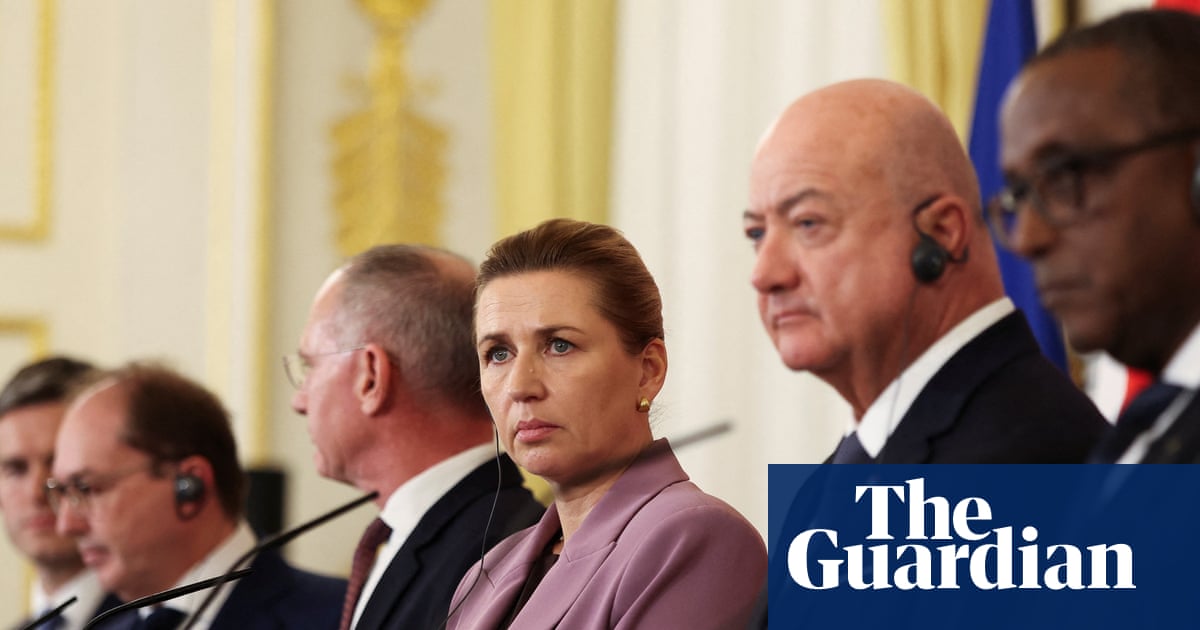
During a joint press announcement in Vienna, ministers from the five EU countries and Rwanda remained evasive on the project's scope.
Your trusted source for staying up-to-date with the world around you. Get free daily news updates and analysis, straight to your inbox.
But according to people involved, the centre will house around 100 migrants.
They will be men and women whose asylum applications have been rejected but who refuse to return to their countries of origin, despite having exhausted all avenues of appeal.
According to those involved in the plan, nationals of any country will be eligible to be sent to the facility, although minors would be excluded.
National authorities from the five European countries' national authorities will be responsible for transferring rejected asylum seekers to Rwanda.
Non-governmental refugee and humanitarian organisations are worried the initiative could ultimately target all asylum seekers — a claim denied by the five countries involved.
Once they arrive in Rwanda, authorities of the east African country will take charge of them, and they will receive residence permits.
They will be placed in a centre, which Rwandan authorities referred to as a "welcome centre".
The five European countries insist that it will be open, without any deprivation of liberty or barbed wire.
A site has already been identified. The European countries, however, have refused to specify where it is.
They only stress that it is not one of the centres the United Kingdom had planned to use.
London had announced plans in 2022 to send asylum seekers to Rwanda, but the project was ultimately abandoned because of legal obstacles.
The idea is for the migrants to stay in the centre for a few months, with the aim that they then integrate into Rwandan society.
"These illegal migrants who will be relocated to Rwanda are not going to be kept in a camp or in a dedicated area. They will be integrated in our society," Rwandan interior minister Vincent Biruta told the press conference in Vienna.
Vocational training and language courses are to be offered to them.
The five EU countries also say an independent monitoring mechanism — the details of which have not been spelled out — will be put in place to ensure respect for human rights.
Another option is for the exiles to return voluntarily to their country of origin, but not to the EU.
Those involved in the plan hope it will discourage migrants from trying to settle on the European continent, besides getting those asylum seekers whose applications have been rejected out of the EU.
Danish Prime Minister Mette Frederiksen said the project aimed to send a "signal ... that you can no longer enter the European Union illegally and think that you can just stay around".
The EU states have refused to say what Rwanda would receive in return.
The five countries claim that the legal basis is solid, relying on relevant EU legislation adopted a few months ago.
They have dismissed fierce criticism and concern about the treatment of migrants.
The plans are expected to face court challenges.