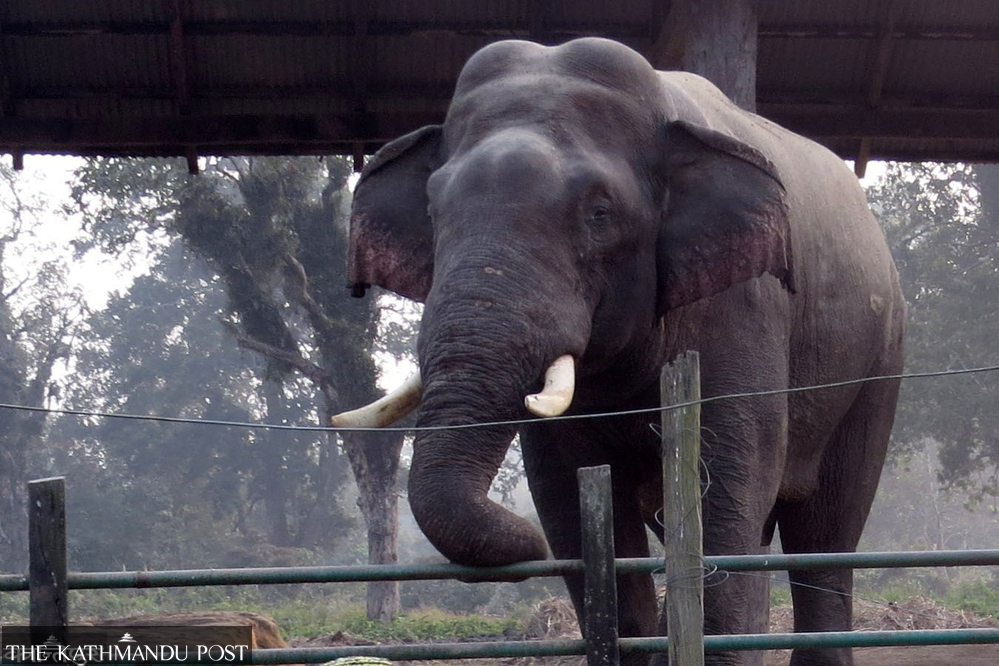
At least six wild elephants have died across Nepal, from Chitwan to the eastern region, over the past two months, raising concern among wildlife conservationists about the growing threats to the animals.
The deaths include equal numbers of male and female elephants. Ronaldo, a well-known elephant in Chitwan, was among those that died during this period.
Three weeks ago, an elephant from a herd that had travelled from Parsa National Park was found dead in the Murtiya area of Sarlahi. A preliminary examination indicated that the animal had died from an injury to its trunk.
The elephant had travelled from Parsa to Sarlahi with a herd of about half a dozen. Its death has once again highlighted the challenges of protecting elephants as they move beyond the boundaries of protected areas.
Ashok Ram, chief conservation officer at Parsa National Park, who holds a doctorate in elephant research, warns that Nepal’s wild elephant population could decline if the deaths continue at the current rate.
Elephants naturally travel long distances, driven by their need to find food and grazing grounds, he said. Other reasons include males moving in search of females during the mating season, seasonal journeys along traditional migratory routes passed down through generations, and elephants becoming separated from their herds.
There have been numerous instances of elephants travelling from India through Jhapa in eastern Nepal to Parsa and Chitwan national parks. More than a dozen elephants from Parsa National Park are currently in the national forest areas of Sarlahi, Ram said.
Elephant movements tend to increase during the rice harvest season as the animals search for food, he added.
Conservation officials say human activities are a major factor behind wild elephant deaths. As conflict between people and elephants intensifies, ensuring the animals' safety has become increasingly challenging.
Elephants generally avoid people and try to stay away from human settlements, Ram said. However, they can remember people who have repeatedly harassed or attacked them and may retaliate even after a long period, he added.
Ram warns that Nepal's wild elephant population could gradually decline unless their migratory routes, habitats and safety are addressed in time.
Parsa National Park alone is estimated to have between 60 and 65 resident wild elephants. Protecting them requires more than securing the national park itself. Their traditional movement routes and the wider landscapes they depend on must also be protected.
Shankar Acharya is the Parsa correspondent for Kantipur Publications.