T he public has been stocking up on bottled water, tinned food and wind-up radios since the government launched its Be Ready campaign last month. But it’s not the public’s willingness to prepare that should worry us. What’s missing is the government’s willingness to provide candid information about the escalating nature and frequency of the threats we face, and a coherent resilience plan that can be activated from the top of government to local, community and household levels.
In July, the then security minister, Angela Eagle, admitted to the House of Lords national resilience committee, of which I am chair, that the government did not want to “ frighten people ”. But shielding the public from uncomfortable realities risks leaving them ill prepared for the very emergencies they need to withstand.
We need a cabinet minister responsible solely for resilience, as in Denmark and Sweden, where dedicated ministers oversee resilience and civil defence. This would establish clear responsibility and accountability at the highest level of government.
Central government may advise people to stock up on food, water and cash. But if you’re a single mum on benefits, living on the 10th floor of a tower block where the lift doesn’t work, this looks like wishful thinking.
National and local registers of volunteers and civil reservists – and easier data-sharing between public bodies – are needed to identify and support vulnerable people in an emergency. Systems such as this need to be built and tested far ahead of a crisis, not cobbled together in recovery mode. The government should also scrap proposals to switch off digital terrestrial TV , which would weaken access to crucial information exactly when it was needed most.
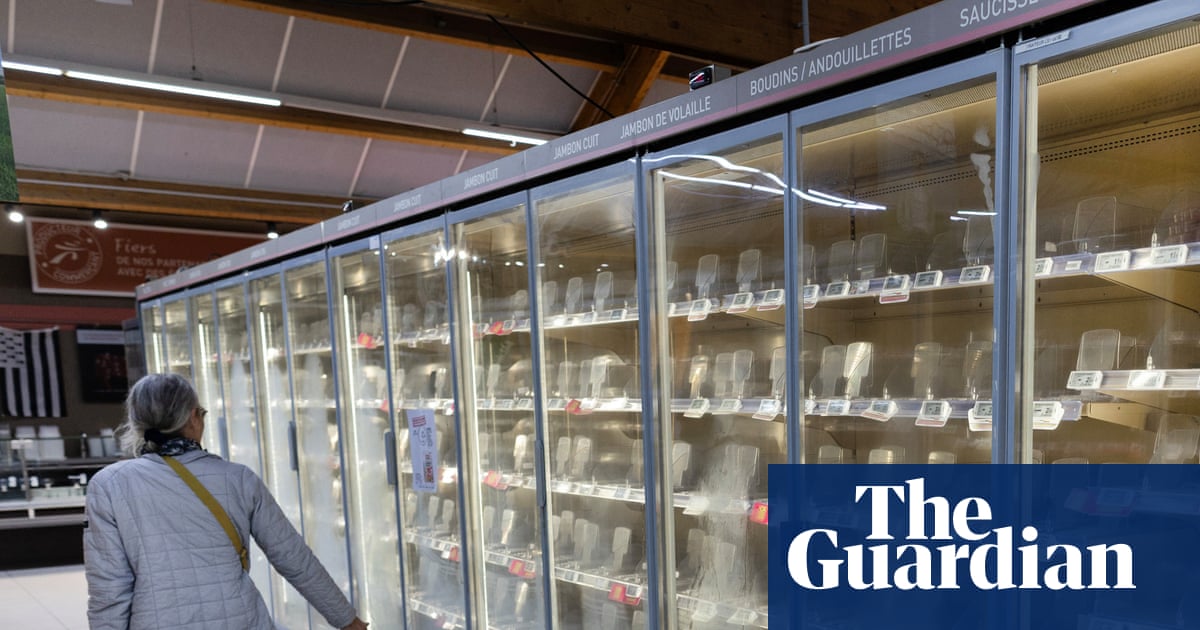
We are awash with action plans , strategies and frameworks on resilience. The trouble is, they don’t relate to each other or adequately account for simultaneous crises. A cyber-attack can quickly morph into a power cut, then a shutdown of transport, then empty food shelves in the shops.
The UK is acutely vulnerable due to supply-chain dependencies for critical products such as food, medicines and fertiliser. About 95% of food sold in the UK is controlled by 12 retailers, while we remain heavily dependent on overseas supplies of antibiotics and other medicines. The government must invest in rebuilding domestic capacity, especially for life-saving medicines, to reduce the risk of critical shortages during a crisis.
During our committee’s inquiry, we heard evidence about escalating “grey zone” hostility against the UK from Russia , China and Iran in the form of cyber-attacks, proxy acts of violence and sabotage of undersea cables on which our communications and energy depend. There have been 90,000 cyber-attacks on UK defence networks in a single year, and they are estimated to cost UK businesses £14.7bn a year.
Governments across Europe are contending with these hybrid threats , aware of the potentially devastating social and economic impacts if they are realised. Experience from Sweden and Finland shows the value of honest communication to the public about such dangers. When Sweden distributed the latest update of its crisis and war preparedness booklet to households in 2024, 82% of those surveyed welcomed the initiative and 63% planned to strengthen their own preparedness. Not being straight with the public risks cynicism, suspicion and people drifting towards unreliable sources instead.
As well as giving local, voluntary, community and faith organisations a formal role in resilience planning, backed by sustainable funding, the private sector must also be embedded. About 80% of our critical national infrastructure is privately owned , yet businesses are too often sidelined in government resilience planning. Providers of essential goods and services should be required to regularly stress-test their facilities, operations and supply chains against major disruptions.
Preparedness should become an everyday, common-sense mindset. Practical resilience skills, from first aid and emergency decision-making to coping with power cuts, water shortages and communications failures, should be taught alongside critical thinking and information literacy at school. The government must use a variety of communication channels to get its message across: public broadcasters for some, social media for others. Ministers are right to say that the whole of society needs to “be ready”. But so does the whole of government.
Jean Coussins is an independent crossbench peer and chair of the House of Lords national resilience committee