Jeepney drivers, a critical part of the Philippines' transportation system, protest the high fuel prices prompted by the war in the Middle East ahead of the ASEAN summit. ( Reuters: Eloisa Lopez )
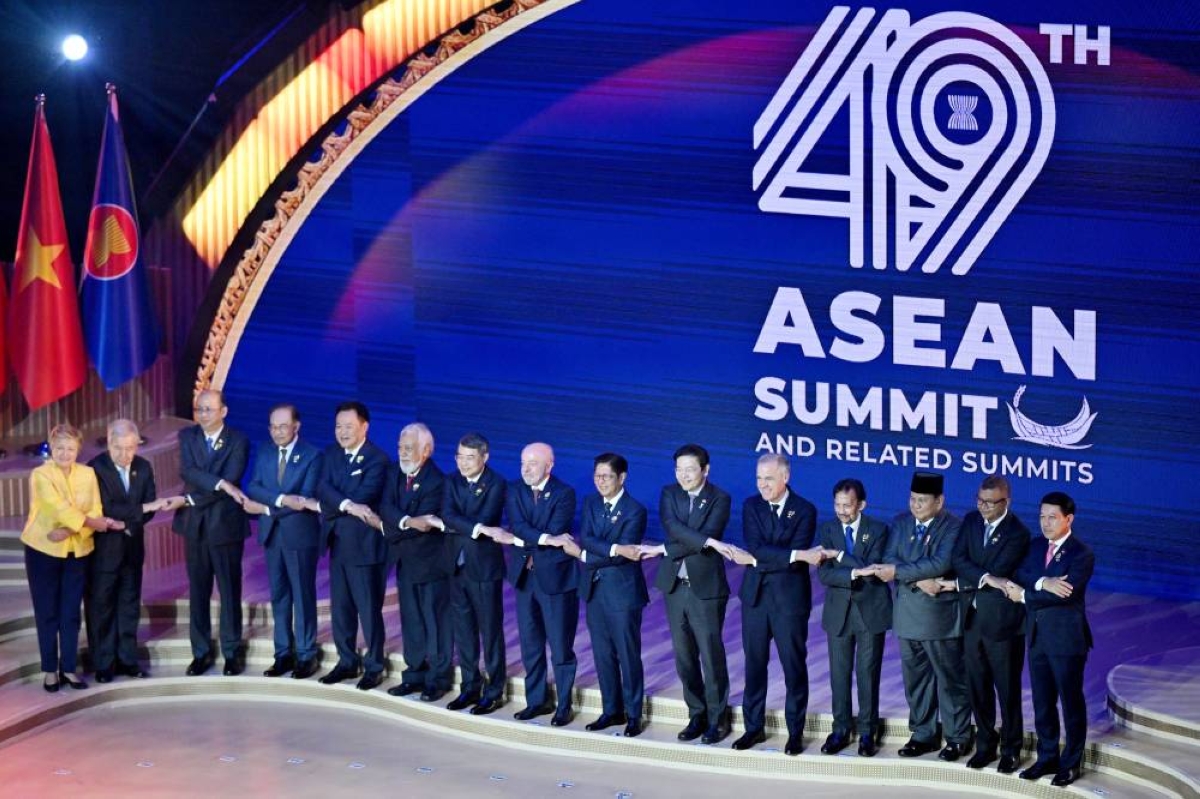
World leaders are in the Philippines today, engaging in a flurry of high-level diplomacy amid a destabilised global order and rising geopolitical tensions.
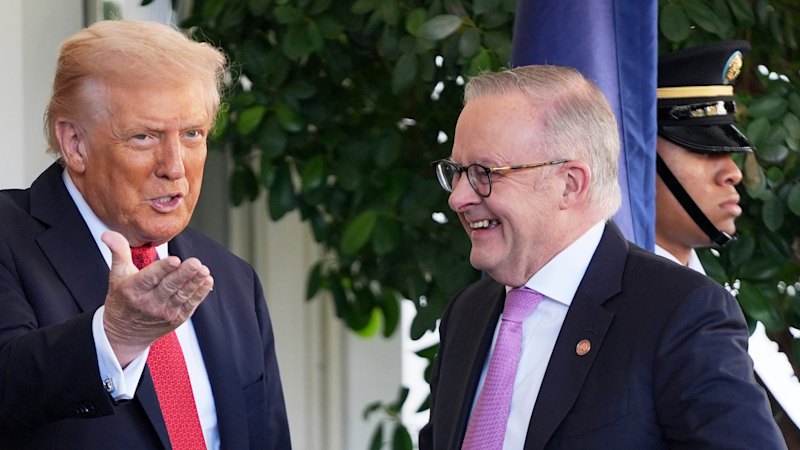
This year's Association of Southeast Asian Nations (ASEAN) summit in Manila will set the tone before US President Donald Trump and other leaders head to China for APEC talks.
There's also potential for a meeting of the Quad, the strategic partnership between India, Japan, Australia and the United States that's seen as a means to check China's growing influence across Asia.
A meeting of the Quad is also likely; the strategic partnership between India, Japan, Australia and the United States that is seen as a means of checking China's growing influence across Asia.
With numerous global challenges, these issues are set to dominate the ASEAN agenda.
The war in the Middle East is making it much more expensive to refuel in car-centric Manila. ( Reuters: Eloisa Lopez )
The war in Iran and the ensuing chaos in global energy markets are front of mind for leaders, as much of South-East Asia is heavily reliant on oil and gas from the Middle East.
Hunter Marston, South-East Asia program director at the Lowy Institute, said the energy issue has been "massive".
"It's triggered protests … and has caused enormous headaches for political leaders," he said.
"ASEAN this year has been emphasising progress towards a strategic petroleum reserve and the ASEAN power grid.
"These are both signals of the recognition that ASEAN needs to do something to shore up its regional resilience and its ability to withstand external shocks."
Theresa Lazaro is the Philippines' Secretary of Foreign Affairs. ( ABC News: Tim Swanston )
For decades, ASEAN nations have been investigating ways to connect electricity infrastructure across nations to bolster energy security.
Philippines Foreign Secretary Theresa Lazaro told the ABC that discussions are underway to advance these regional energy resilience projects.
"Of course, it's a very expensive and protracted issue, but I think it's really about time that we have to implement this ASEAN energy grid," she said.
The Philippines has faced repeated incidents over competing territorial claims in the South China Sea. ( AP: Aaron Favila )
While competing territorial claims in the South China Sea have always been a key issue for ASEAN nations, these disputes will hit close to home this year.
The Philippines has experienced numerous maritime confrontations with China over the contested waterway.
China claims almost all of the South China Sea through its "nine-dash line", a claim a tribunal at The Hague found to have no basis under international maritime law a decade ago.
Despite this, China is accused of employing low-level acts of aggression below the threshold of armed conflict, including blasting Philippine Coast Guard vessels and fishing boats with water cannons.
ASEAN has been trying to negotiate a Code of Conduct with China to de-escalate tensions and provide a framework for dealing with disputes.
The Philippines was hopeful it would be finalised by the end of this summit, although that now appears unlikely.
China's claims in the South China Sea cut through the majority of its neighbours' claims. ( ABC News graphic: Jarrod Fankhauser )
Mr Marston wasn't sure if the final code of conduct would reduce tensions or the risk of escalation.
"It's not clear that this will constrain China's behaviour in the South China Sea," he said.
"(But) it has tied ASEAN member states and Beijing together in the process of negotiations."
Mr Marston said the code doesn't hold China "accountable" and China had previously violated the United Nations Convention on the Law of the Sea despite being one of the first countries to sign up.
Meanwhile, Australia signed a defence agreement with the Philippines this month to further support its coast guard and navy.
Myanmar's military took power following a coup in 2021. ( Reuters: Ann Wang )
More than five years after Myanmar's military junta seized control of the country in a coup, the conflict between the military, pro-democracy resistance groups and ethnic armed organisations continues to rage on.
An estimated 100,000 people have been killed and millions displaced, according to UN officials.
Elections held earlier this year helped junta leader Min Aung Hlaing become president; however, they were widely dismissed by critics as a "sham".
ASEAN adopted a "Five-Point Consensus" shortly after the coup, calling for an end to violence, dialogue, mediation, humanitarian assistance and visits by an envoy.
Despite criticism of the plan's implementation, ASEAN has stuck with it.
Ms Lazaro recently visited Myanmar as an envoy, describing the "situation" as "deplorable".
"We are of the view that we should do more," she said.
Aung San Suu Kyi was detained following a coup in 2021. ( Myanmar State TV )
Ms Lazaro didn't meet with former Myanmar leader Aung San Suu Kyi but was told she was "doing well".
The 81-year-old was moved to house arrest earlier this year and was visited by a delegate of the International Committee of the Red Cross.
Myanmar's leader, Min Aung Hlaing, and high-level junta politicians are barred from ASEAN meetings to pressure the military-backed government to implement the Five-Point Consensus.
But analysts believe some ASEAN countries, which have been re-establishing bilateral ties with Myanmar, have been undermining these efforts.
Ms Lazaro said those countries were "just recalibrating their bilateral relationships" rather than undermining the consensus.
The US has also been holding secretive talks with Myanmar, possibly to gain access to its enormous reserves of rare earth metals, pivotal in the manufacturing of modern technologies.
At this year's summit, discussions are underway between ASEAN nations over whether to end the ban on Myanmar's military-backed leaders attending the meetings.
Motorists on the Kahayan Bridge travel through a haze as wildfires shroud the area. ( Reuters: Usep Hariadi )
A Super El Niño weather pattern is in full swing across South-East Asia, projected to peak in late 2026 and early 2027.
The intensity of the weather phenomenon has brought drought, extreme heat and agricultural disruptions across large parts of the region.
In Indonesia, it has underpinned the worst forest and land fire season in more than a decade, worsening underlying conditions as "slash and burn" fires are lit to clear land for plantations.
The fires have at times blanketed large swathes of Indonesia and travelled across borders, covering Malaysia, Singapore and the Philippines in toxic smoke.
The smoke has caused diplomatic tensions between Indonesia and Singapore, with Singapore at times among the top 10 most polluted cities by air quality.
It has pushed the ratification of a proposed cross-border haze-pollution authority up the agenda, with Indonesia's neighbours keen to take further action.
Firmus is one of many AI companies investing in countries like Singapore. ( Supplied: Firmus )
This summit also comes amid global public uncertainty over the growing capability of artificial intelligence (AI).
The grouping is expected to sign a digital economy framework, something ASEAN says is the first region-wide digital economy agreement.
ASEAN is projected to become the fourth-largest economic bloc by 2030, with a relatively young population, so how it manages future digital transformation could impact the rest of the world.
This year's ASEAN comes right before APEC, where major AI leaders like the US and China will meet.
Some ASEAN countries, like Malaysia, Singapore and Indonesia, have seen considerable investment in data centres, which have supported their economies during challenging global economic conditions.
"As far as ASEAN is concerned, I think we look positively on (AI)," Ms Lazaro said.
"President Marcos wanted to really emphasise AI in the very first summit in May, but we were sidelined because of the Middle East Crisis."
US President Donald Trump will reportedly use his visit to ASEAN to press South-East Asian countries to join the US-led 'Pax Silica', an initiative that seeks to reduce the reliance on China in the AI supply chain.