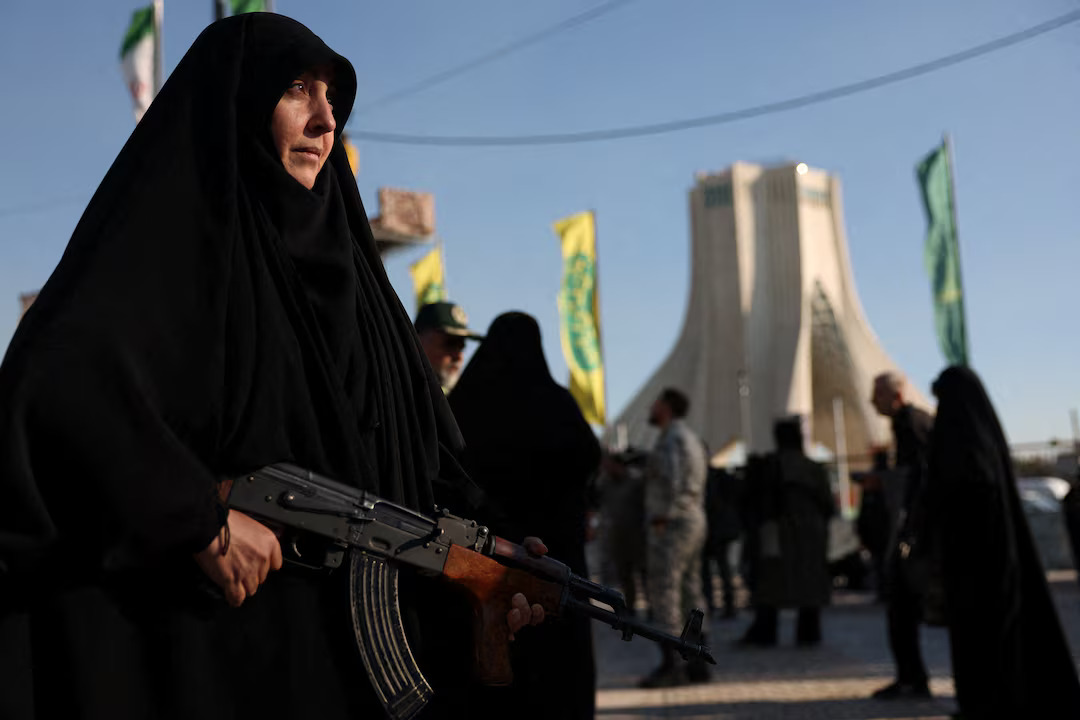
Gulf states have been worried for weeks that Iran may again begin to target them in an effort to force a resolution to the nine-month regional conflict on its terms.
In the last few days, that anxiety has deepened with two attempted drone attacks on Bahrain, an American ally which hosts major US military facilities, while Tehran has also warned the Gulf states not to “reopen old wounds.”
Iran appears to be raising the stakes as it struggles to prevent more Gulf oil and gas from getting through the Strait of Hormuz and as its economy labors under the United States’ blockade and the cumulative effect of international sanctions.
The Bahrain Defense Force said Sunday it had “intercepted and destroyed” several Iranian drones, after a similar interception on Friday.
Iran’s Islamic Revolutionary Guard Corps (IRGC) had earlier claimed an attack on a US helicopter base in Bahrain. CNN has reached out to US Central Command for comment.
The targeting of Bahrain has accompanied a more belligerent tone out of Tehran – towards Iran’s neighbors, the consequences of renewed US or Israeli strikes and the state of negotiations with the US.
Iran was incensed by suggestions from the six-member Gulf Cooperation Council (GCC) last week that it would have to pay its neighbors compensation for attacks on their territory, something Iran itself is seeking in any deal with the US.
“How can countries that actively participated in military aggression against a neighbouring country and made their airspace, territory and waters available to those who attacked Iranian territory speak of seeking compensation from Iran?” asked foreign ministry spokesman Esmaeil Baghaei in a news conference on Sunday.
“What about Iran’s inherent and legal right to defend itself?”
In a reminder that Iran does not forget the past, Baghaei said the Gulf states “must be careful not to reopen old wounds,” referring to their support for Iraqi dictator Saddam Hussein in the war with Iran in the 1980s.
Iran wants the Gulf states “to pay the price for a war they did not choose, then give up their right to accountability and compensation. This is an equation that cannot be accepted,” said Ebtesam Al-Ketbi, of the Emirates Policy Center think tank, on Sunday.
A sign of growing unease about the prospect of renewed hostilities came last week when the GCC announced an advanced headquarters in Kuwait for its unified military command and the deployment of forces to the facility.
The organization’s secretary general, Jasem Mohamed Al Budaiwi, said the move showed “a firm Gulf commitment to safeguarding the security and sovereignty of the GCC states” following what he called “heinous Iranian attacks.”
Iran has also stepped up attacks on shipping in the Gulf, with almost daily claims – few of them substantiated – that tankers have struck mines as they’ve tried to transit the Strait of Hormuz.
For Tehran, the increase in Gulf energy exports to close to pre-war levels in recent weeks, and the sharp decline in oil prices, deprive it of vital leverage in negotiations. The International Energy Agency said Gulf oil exports - excluding Oman - reached 18.4 million barrels a day in October, about 26% below prewar levels.
At the same time, Iran has been unable to export any meaningful amount of its own crude for more than two months.
The Iranian regime is demanding an end to the US blockade, the progressive removal of international sanctions and an unfreezing of billions of dollars in frozen assets as conditions for resuming negotiations with the US.
But US President Donald Trump appears content to let the economic squeeze on Iran take its course, anticipating that Tehran will have to soften its terms and recognizing the Gulf states want to avoid another round of conflict.
“At the request of the nations that I am looking to protect, we are doing it a little bit longer way, a bit more civilly,” Trump said Thursday. At the same time, he canceled efforts by Vice President JD Vance to resurrect talks with Iran, declaring: “We don’t need a deal with Iran. Those days have long since passed.”
Indeed, Iran’s economic pain appears to be deepening even as senior officials in Tehran insist it can withstand the pressure and can access hard currency to support the rial, whose value has fallen drastically since the conflict began.
One perpetual sign of hardship is the long lines seen at gas stations in many parts of Iran.
Esmail Saghab Esfahani, a vice president, admitted last week that there was a supply problem and that Iranians could no longer count on fuel stations to cover what they need.
Some residents of the port city of Bandar Abbas blocked traffic on Thursday to protest against petrol shortages. The speaker of the Iranian parliament, Mohammed Bagher Ghalibaf, suggested officials stop talking about the fuel issue, always sensitive in Iran.
And yet there are no public indications the regime is ready to compromise.
Baghaei was asked Sunday whether Iran would accept a temporary suspension of uranium enrichment or a reduction in enrichment levels in negotiations with Washington.
“No. We are not at that stage at all. During this period, we are not discussing any details related to the nuclear issue, nor have we held any such discussions.”
Ghalibaf said Sunday it made no difference whether Washington wanted negotiations or war.
“If the Americans make another mistake this time, the capabilities and will of Iran’s armed forces will determine the geography of the battlefield.”
Iran has frequently warned that another chapter in the conflict will see it broaden targets to infrastructure across the region, including subsea cables.
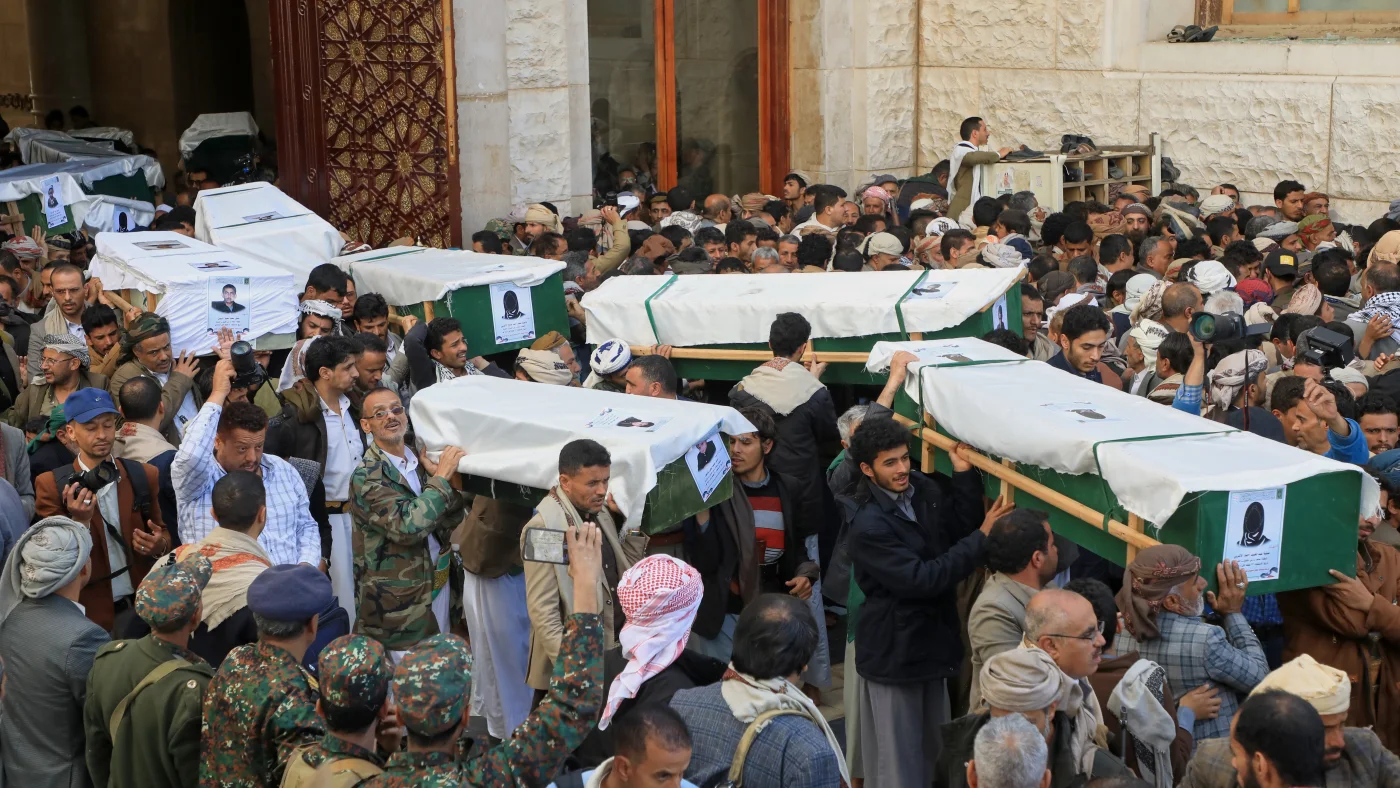
Additionally, its Houthi allies in Yemen fire ballistic missiles at Saudi Arabia almost daily and appear to have put Saudi-backed government forces under renewed pressure in the south of Yemen, forcing them to retreat from near the Red Sea in a setback in their campaign.
The result is an unstable limbo across the region.
“The United States may believe it can maintain the blockade for an extended period, but Iran sees it as a direct threat to its economy, sovereignty, and national security,” wrote Israeli analyst Danny Citrinowicz, a senior fellow at the Institute for National Security Studies on X.
The US “cannot assume that time alone will force Tehran to surrender. Iran has repeatedly demonstrated its willingness to absorb enormous economic costs rather than abandon what its leadership considers fundamental national interests.”