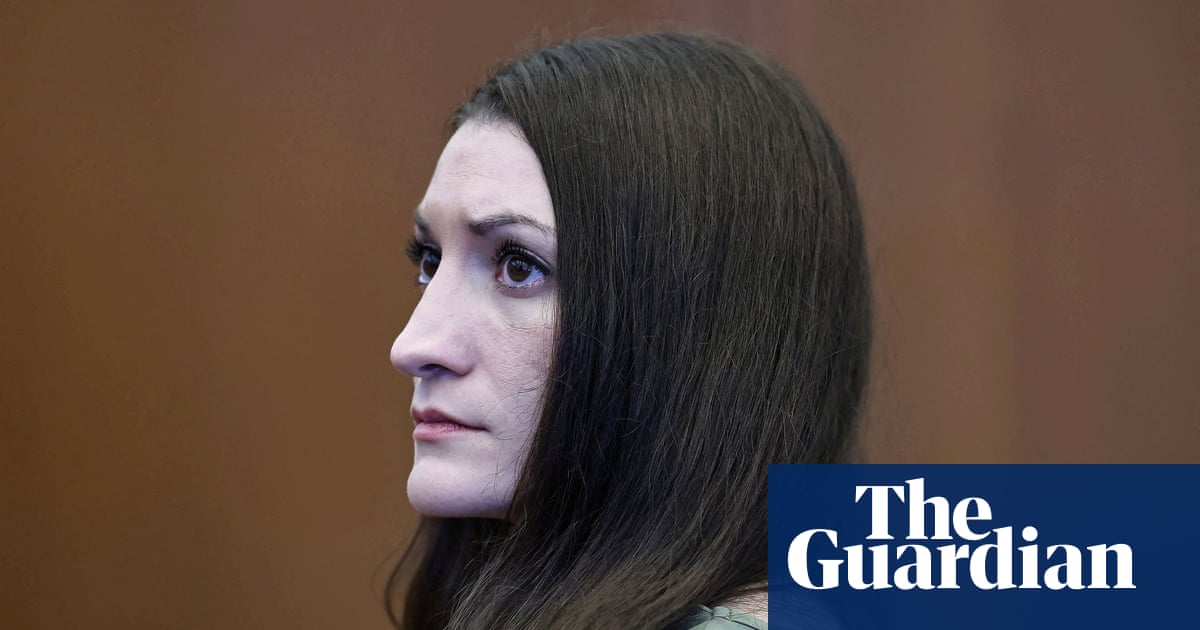
Lindsay Clancy will attend a pivotal court appearance Monday that should reveal if and when the Massachusetts mother will again stand trial for killing her three children.
In the weeks since Clancy’s first trial ended with a hung jury , prosecutors have not explicitly stated if they will retry Clancy. Plymouth County District Attorney Timothy Cruz said he intends to decide by Monday, heightening anticipation for the announcement and raising questions about what charges Clancy may face.
But experts cautioned his choices will not be set in stone and could be altered by prosecutorial decisions or plea negotiations before the start of the trial – which could also shift, even after the court sets a date.
“Monday will be significant in that it would be a signal about the prosecution’s big picture decision about whether it wants to pursue criminal charges as opposed to dismissing them,” Daniel Medwed, a professor of law and criminal justice at Northeastern University School of Law, said.
“But what happens on Monday is the beginning, not the end, because a lot of different things could happen in the run-up to trial,” he said.
Clancy, 36, stood trial earlier this year on three first-degree murder charges for the deaths of her children : 5-year-old Cora, 3-year-old Dawson and 8-month-old Callan. At trial, her attorney did not deny she killed the children, but argued she should not be held criminally responsible because she was suffering from postpartum psychosis when she fatally strangled them and then attempted suicide in January 2023.
Judge William Sullivan declared a mistrial in September after a jury of nine women and three men were unable to reach a unanimous verdict. Several jurors later said in interviews a lone holdout prevented the panel from finding Clancy not guilty by lack of criminal responsibility.
Prosecutors have since been noncommittal about a potential retrial, drawing the ire of Clancy’s attorney Kevin Reddington, who accused them of “(spinning) everyone in the breeze” at a hearing earlier this month.
Sullivan – who is inching closer to his mandatory retirement in June 2027 – has pressed the parties to reserve a date for a potential trial and floated March as a viable option.
“Once that’s set, it is a goal towards a time frame that all the parties are working towards and preparing for, but there are things that can come up that can change that too,” Boston-based criminal defense attorney Elyse Hershon told CNN.
“One or both sides could be asking for a continuance at some point in the future.”
Though prosecutors have not explicitly stated whether they intend to retry Clancy, they have repeatedly said their office is focused on obtaining justice for the young victims.
“We’re here at this courthouse today because those children are not,” Cruz told reporters outside the courthouse after the judge declared a mistrial, adding one of the most important functions of a prosecutor is to “speak for the victims who are no longer here.”
At a hearing earlier this month, Assistant District Attorney Jennifer Sprague skirted a question about prosecutors’ intent to retry the case, telling the judge a retrial would “depend” on his rulings on several pending motions. “We’re not at that point yet,” she said.
A timeline of Lindsay Clancy’s postpartum struggles, killings and legal case
Cruz echoed that, telling reporters outside court his office would make a “very methodical determination” once they received the judge’s rulings.
Sullivan has since ruled on those motions – including denying a defense motion to dismiss the charges by arguing a second trial would violate her rights protecting her from double jeopardy – leaving the door open for prosecutors to pursue a retrial.
“There are two roads (for Cruz) at this moment: drop charges or indicate that you’re willing to retry her,” Medwed said.
While a prosecutor’s primary responsibility is to seek justice, Medwed said they typically also weigh other factors, including the resources required for trial and the sentiments of the victims’ families, when deciding whether to bring a case to trial.
“Another consideration, of course, is the likelihood of achieving your objective, which is a conviction,” he told CNN. “And given the result last time, where it was 11 to one by all accounts, presumably Cruz’s office is thinking: What would we do differently?”
If the district attorney seeks a retrial, he must decide whether to pursue the same charges of first-degree murder against Clancy. At trial, prosecutors argued in their opening statement Clancy committed first-degree murder because she “acted intentionally, rationally and swiftly” when she fatally strangled her children in their Duxbury home.
However, the 12 jurors – who were able to consider lesser charges of second-degree murder and manslaughter – were unable to reach a unanimous verdict after more than 38 hours of deliberations. In interviews after the trial, several jurors spoke about their frustrating conversations inside the deliberation room and the single holdout who prevented the panel from finding Clancy not guilty by lack of criminal responsibility.
Prosecutors may now be considering whether another panel would reach the same conclusion, a possibility that could nudge Cruz to consider lesser charges that a jury may be more likely to convict on, such as second-degree murder or manslaughter.
“They might think, by aiming for a murder one prosecution, did it potentially antagonize the jury? And maybe if they aimed for manslaughter, is it possible that that could resonate with the jury?” Medwed said.
However, Hershon expects the “aggressive, hard-charging” district attorney to announce he’s sticking with the first-degree murder charges.
“He will try first-degree any time that he can. I do not see him getting dissuaded by public support for Clancy or the focus on a failure of the mental health system,” she told CNN. ”He’s focused on the three children.”
Any charges announced Monday could be changed before trial or resolved through a plea deal. But experts previously told CNN an agreement seems unlikely, given the difficulties the parties would have in finding common ground and Reddington’s insistence he would not agree to any deal in which his client would serve jail time.
The possibility of a plea deal would be even more remote if Cruz announced he was again pursuing first-degree murder, Hershon said, since a viable agreement would likely involve lesser charges that would be a “big jump down” from the Commonwealth’s most severe murder charges.
“I don’t expect that he would announce he’s charging forward, and then for him to back off of that,” she said.