


You have reached your maximum number of saved items.
Remove items from your saved list to add more.
You've used all of your gift articles. 3 more will become available on the 1st of every month.
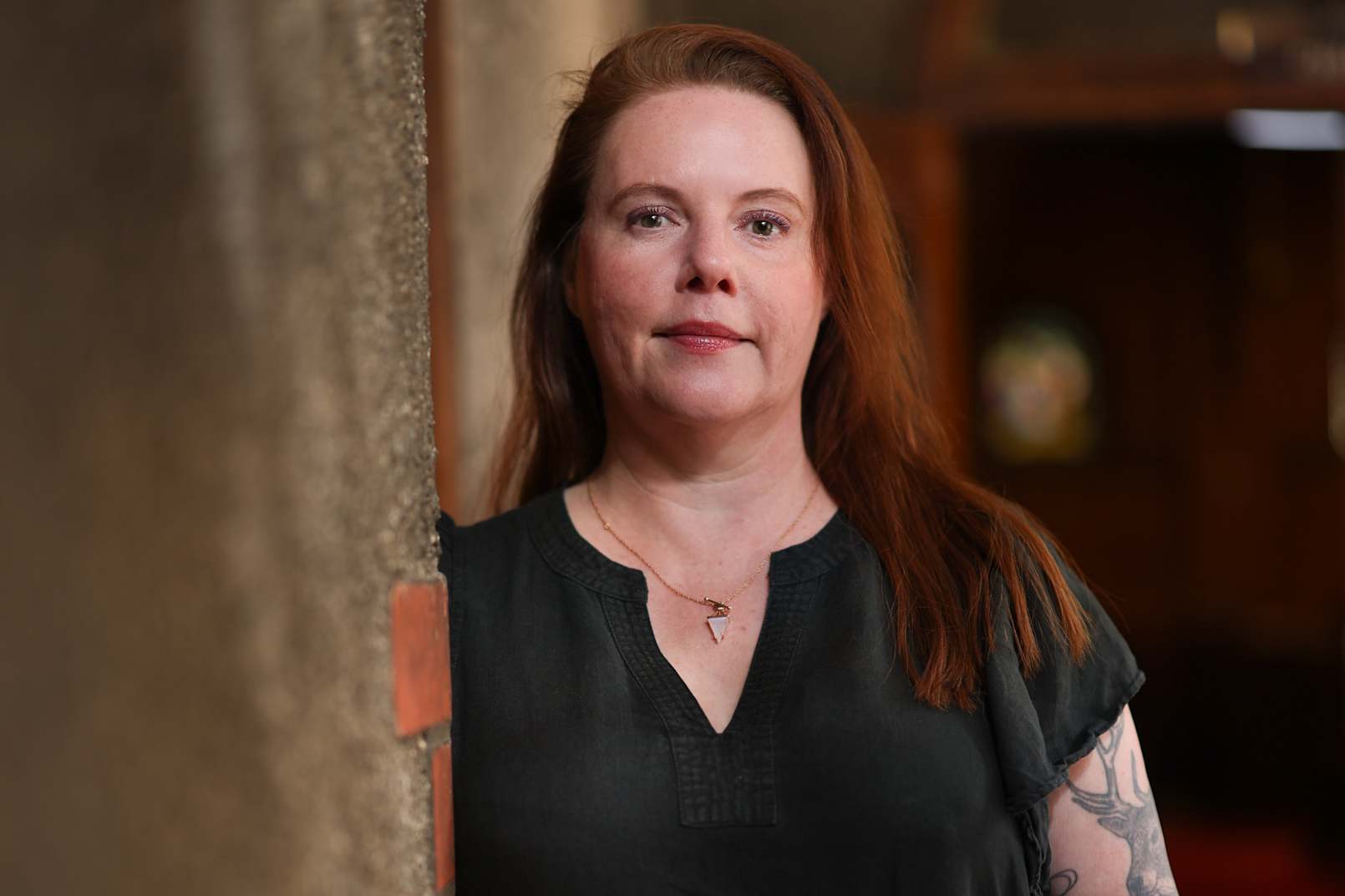
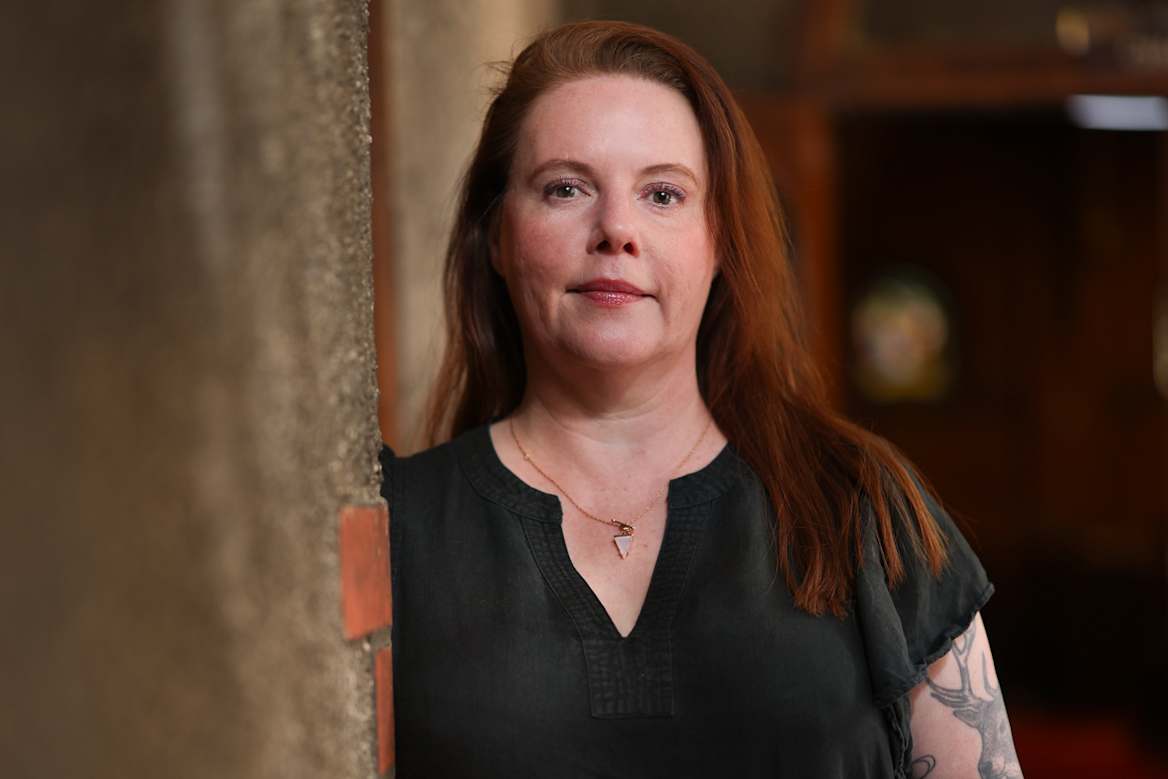
An unlikely source provided gold for writer Favel Parrett during a trip to Norway for her latest book: op shops. The postcards, photos, books and toys she found there revealed a world of insights into her characters’ reality.
Parrett was in Trondheim, a town in central Norway, for a writer’s residency, during which she’d planned to write a series of short stories. Upon arriving and finding her studio was located inside a former school, everything changed.
“I walked into the building and I saw the bow on the side of the staircase all the way up where kids had walked in single file, and I just was like, ‘Oh no, this is a novel.’ ”
Lovely photographs, mounted on white cardboard and taken by professionals, dating back to the 1930s, in op shops and junk shops alike, caught her eye.
“I didn’t realise the significance of them until I got home, and I was like, ‘Oh my goodness, these are my characters,’ ” she says. “I feel like they were real. I feel like everything that happened to me in Trondheim was just telling me this.”
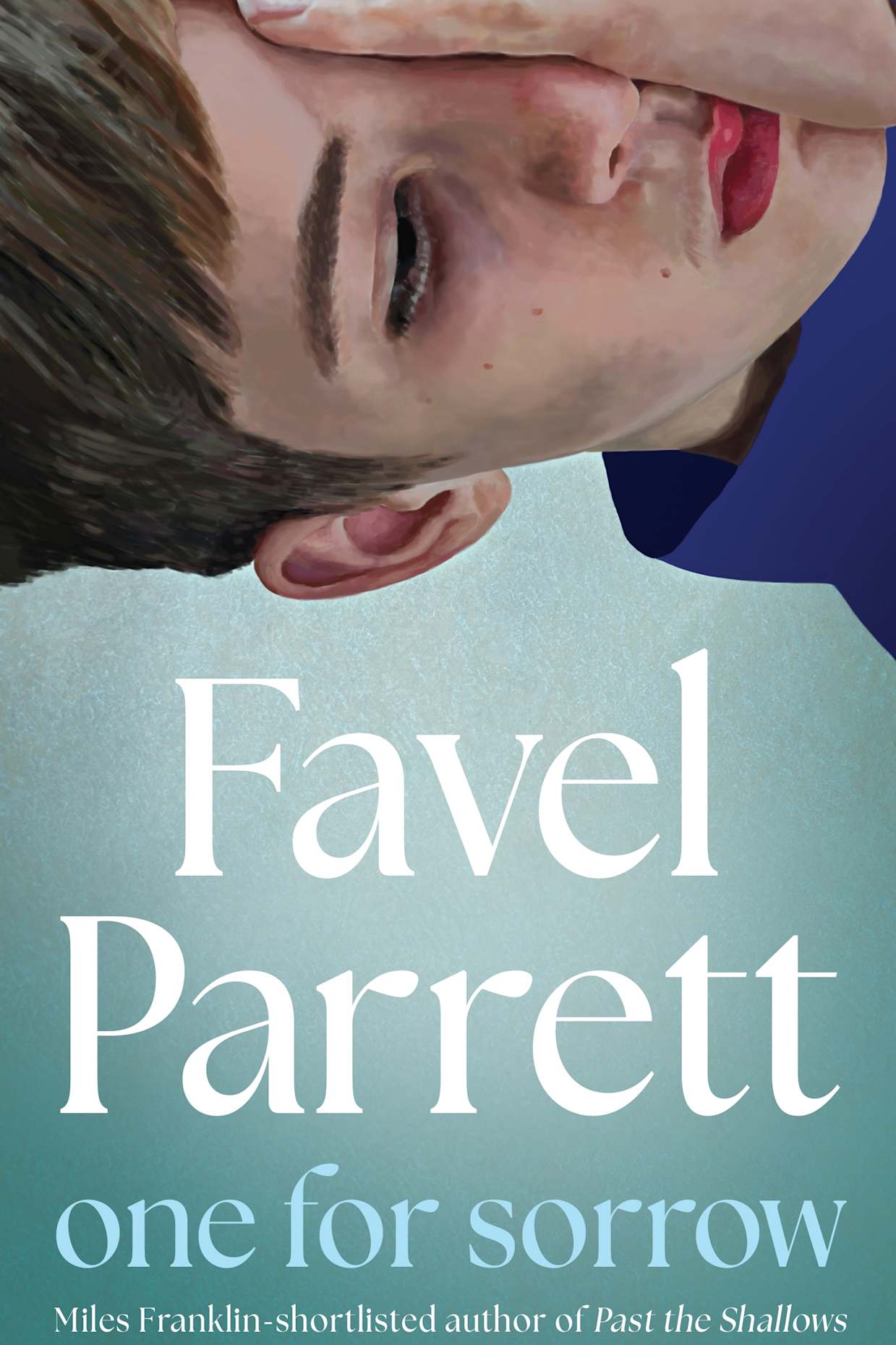
The outcome is One for Sorrow , the poignant story of a boy named Einar Halvorsen, from a poor family, who falls in love with learning, thanks to a new teacher who nurtures curiosity and wonder about the world. Love and grief, knowledge and resistance, family and belonging are explored, as well as bigger ideas around class, society and convention.
Despite being partially set during the Nazi invasion of Norway, Parrett does not see the novel as a war story. “I wanted it to be about this working-class suburb and this love story and the story of this child and a teacher. But the occupation is happening to them, so they have to adjust to that,” she says.
Einar’s mother and the teacher have an affair, which is revealed early in the book. They meet and it’s immediately clear there is a connection. “His Mum has lost a child, she’s not been able to grieve. She’s just stoic, she’s had to get on with things. She’s married to a lovely man, they don’t love each other,” Parrett says.
“It’s survival: he’s older, he’s got a good job, they’ve got a good apartment. She feels safe, lucky but very unhappy. She’s not very loving to her son - she loves him but she’s caught up in grief and rage. And the teacher’s drawn to that, and then I’m like, OK, well, what does she need? She needs physical love in a way she’s never had. I want her to have that. More than the teacher – he’s lonely but she needs that more than anything, and I’m so glad she had it.”
Many of the book’s themes are timeless and universal.
“There’s a bit in the book where [Einar’s mother] says to the teacher, it doesn’t make any difference to me, the occupation, because I’m still at the mercy of men and their decisions for me,” she says.
“He’s never thought about that before. She’s at the mercy of whether her husband has a job or not. She has no control.”
The working class is really key to this book, according to the Miles Franklin-nominated author. The love of learning and reading and the world it opens up for Einar is perhaps the greatest love story in the book. His beloved teacher Johan suggests to him that there’s more to the world than he knows and that books – and indeed writing – are a portal to that broader reality.
As part of her research, Parrett visited folk museums in Norway, which revealed a trove of information. Random snippets about life in the late 1930s, when the book is set, proved invaluable.
Trondheim was one of the poorest parts of the country in the early 20th century, the home of industry, with a large working-class population. Many families lived in one-room apartments, made up of a kitchen and one other room, which at night became the bedroom for everyone.
Children often had porridge for breakfast and then again for dinner, says Parrett, while on Sundays they might have boiled potatoes and salted fish. Many students whose parents worked at the chocolate factory lost their teeth because they took bread spread with chocolate instead of butter for lunch. Concerned citizens argued that something had to be done, which eventually led to free annual dental visits for those children. “But I was like, ‘Oh my god, my character Gunnar, his Dad works at the chocolate factory, Gunnar’s losing his teeth.’ ”
When working on her last novel, There Was Still Love, based on the story of her grandmother’s migration to Australia while her sister remained in Czechoslovakia, Parrett would write for five hours a day.
She says the process was much the same for One for Sorrow , though this book took longer: about two years of gathering material followed by “the putting it together”. It’s an unusual way to describe writing, but it reflects how she worked – the manuscript wasn’t written in chronological order. Instead, as different events unfolded, she would write about them, piecing the scenes together later.
At about 43,000 words, it is her shortest novel – just crossing the threshold of a traditional novella – and she wondered if her publishers might question the length. Not at all, they told her; it was perfect.
Shortlisted for the Miles Franklin Award for her debut novel, Past the Shallows , Parrett has also written two children’s books, Wandi and Kimmi . Both are named after dingoes, an animal she has championed for years while educating visitors about the much-maligned native species as a volunteer at the Dingo Sanctuary in Victoria’s Macedon Ranges.
Speaking about There Was Still Love , she discusses her intensive editing process of drafting and redrafting. That spareness lends simplicity to the text, making it all the more powerful. “It’s like an iceberg underneath; what’s on the page is a lot of work and feeling,” she said at the time. “I think drafting does give you that – the invisible work is there underneath.”
After writing each morning in Trondheim, Parrett would walk in the afternoon, exploring the town, the nearby fjord and the surrounding forest. Her detailed knowledge of the location was honed through a second residency, which enabled her to get inside the heart of the place.
Several scenes are drawn directly from experience. During her second visit, the director of the residency studios called to say a former student, now in his 70s, had arrived. Parrett joined him as he wandered through his old school, where in one classroom, he became emotional, explaining he’d had one particularly awful teacher and, as a result, hated school. “And then I got a new teacher and everything changed ...” He was really tearing up and he said, ‘I won’t come back to Trondheim again. This is my last trip.’ ”
Parrett went back to her apartment and wrote the experience down. “I thought, ‘I think this is the start of the book,’ ” she says, as it is.
The op shop photos prompted her to wonder where they’d been taken. The cost of having a portrait taken meant it would have been rare for the working class: one particular image of a couple, the woman older than the man, captured her imagination.
“Then magically, I found a Norwegian reading book for Einar’s year from 1939 at a junk shop, so it literally would have been the reading book that every school in that year had ... That to me is crazy. It was so exciting … and because [I was] learning Norwegian, it’s the standard I could read.”
Parrett speaks of her characters as though they are old friends, while the broader story feels almost channelled directly through her.
She seems slightly amazed by the serendipity of it all. “I just feel like all of this happened, and I think, because I’ve got the reading book from 1939 and the photographs, I’m like, yeah, these people are real. The book I’ve got is Einar’s book; I’ve got it now, obviously, somehow. And I’ve got the brooch that [the teacher] gave [Einar’s mother]. I found that in a junk shop. To me, it happened, and, of course, it didn’t. But maybe it did, I don’t know. It’s incredible.”
One for Sorrow by Favel Parrett is published by Hachette ($35).
The Booklist is a weekly newsletter for book lovers from Jason Steger. Get it delivered every Friday .