Headquartered in a curved glass skyscraper that boasts commanding views over Singapore’s Marina Bay district, Megaspeed International is just the type of fast-growing tech start-up that Asia’s wealthy city-state has been keen to attract.
In three years, the corporate entity has gone from an inactive Chinese gaming subsidiary to one of Asia’s biggest buyers of cutting-edge semiconductors from the US.
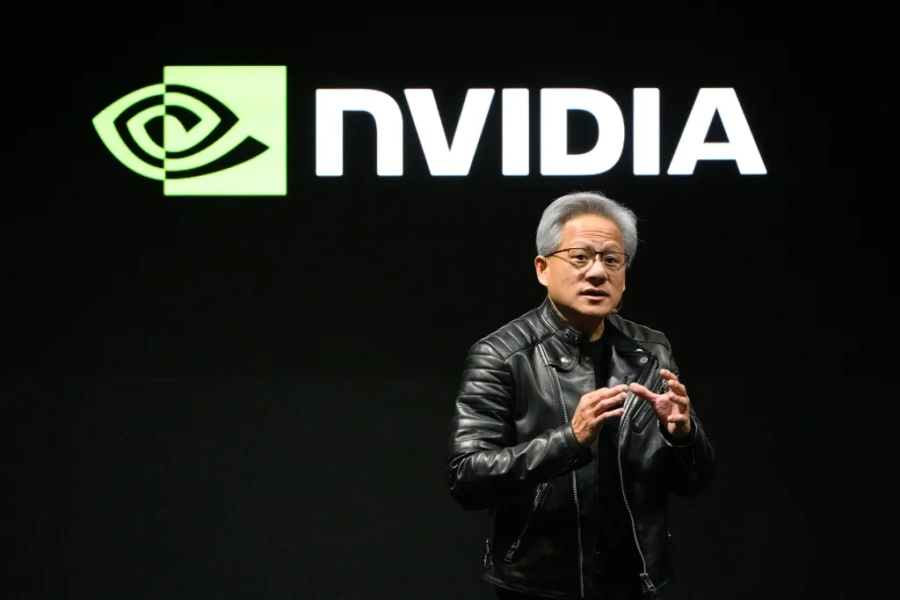
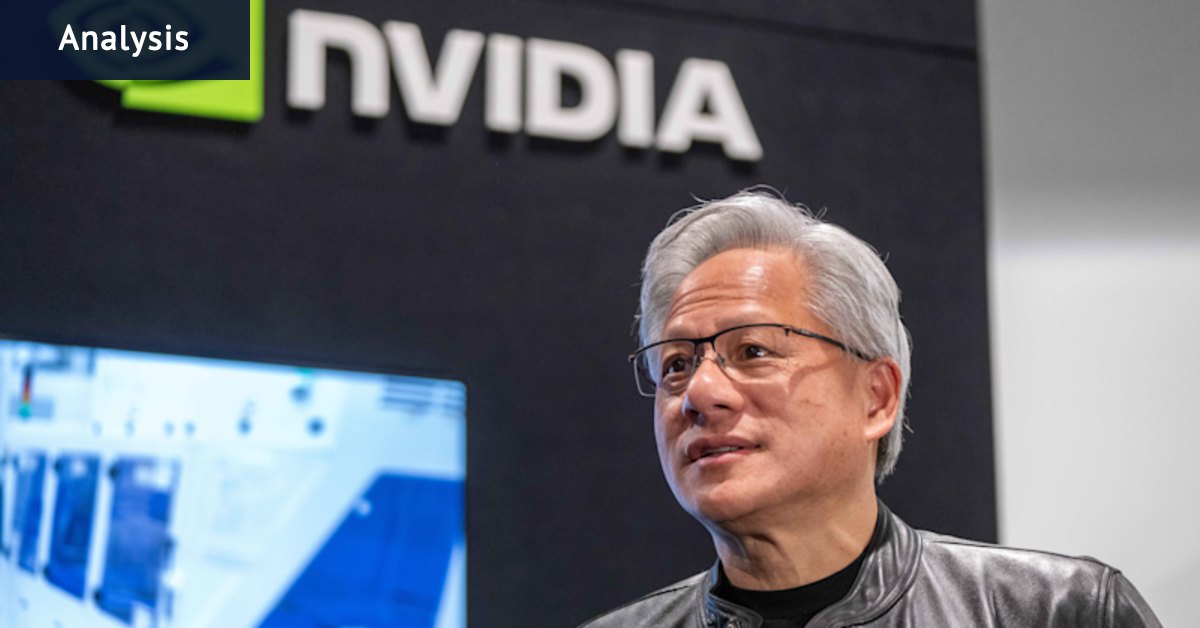
But its rapid rise has also propelled it to the center of an alleged spy scandal that’s now engulfing Nvidia , the $4 trillion company behind the world’s most advanced chips.
At the same time, suspicions that Megaspeed may be exploiting a loophole in US export controls is exacerbating a rift within the US government on how to best keep China from accessing its most sensitive technologies.
Nvidia CEO Jensen Huang resigned on Thursday after admitting to having an affair. Congress has also called on him to testify behind closed doors about his romantic relationship with Alice Huang, no relation, whom US officials believe to be a Chinese intelligence asset. Beijing has said the claim is a “groundless” attempt to smear China.
Also known as Huang Le , the 43-year-old Chinese executive played an integral role in establishing Megaspeed, according to corporate documents and media reports. CNN has made continued efforts to reach her for comment.
But as Megaspeed quietly instilled billions of dollars of Nvidia chips in data centers across Southeast Asia, it came under the scrutiny of the Singaporean government, as well as US officials concerned that the company was passing those chips on to unauthorized Chinese buyers.
“Chips are the absolute ground-zero of all other technology,” said Alex Capri, a senior lecturer in the business school at the National University of Singapore. “The appetite for Nvidia’s chips in China is absolutely insatiable… Nvidia chips are still far and away the best.”
But US export controls have fettered Chinese access to its most advanced semiconductor technology, spawning a shadow industry of complex transactions, shell companies and chip smuggling – of which Megaspeed is now under suspicion by US authorities and lawmakers of helping enable.
On Thursday, Megaspeed CEO Tan Yong Pong said in a statement the company has cooperated with inspections by the US Department of Commerce and has retained a US law firm to independently verify its compliance with export controls.
“Megaspeed takes its compliance obligations under US export control laws extremely seriously. Compliance is a fundamental priority for the company, and Megaspeed is committed to working constructively and transparently with the US government,” the statement said.
In 2022, the US began restricting sales of semiconductors to China, including Nvidia’s most advanced. While the controls were meant to curb China’s tech industry, they also spawned opportunities for intermediaries willing to help circumvent them.
US officials believe Megaspeed may be one of those.
Incorporated in 2015 as 7Road International, an offshoot of a Chinese gaming company, the company’s name changed to Megaspeed in March 2023, and Alice Huang became a director through November of that year. Since then, trade records show Megaspeed has purchased more than $4 billion in chips and equipment from Nvidia.
Capri, who also wrote the book, “Techno-Nationalism: How It’s Reshaping Trade, Geopolitics and Society,” said Megaspeed’s business model, in which it builds data centers and rents out its computing services, gives Chinese companies another point of access to advanced US chips.
“If you put me on the restricted list to drive a Ferrari, and I say ‘Okay, well I can’t buy a Ferrari, I can’t import a Ferrari, but I can just go to a car dealership and rent a Ferrari,’ right? And do whatever I want with the Ferrari,” he said. “That’s an issue. It’s the car dealership that you have to control.”
Corporate filings show connections between subsidiary entities of Megaspeed and Chinese e-commerce giant Alibaba, including the pledging of collateral. CNN has sought comment from Alibaba.
In other cases, Chinese buyers have been able to procure sensitive components of their own, often done through a web of ghost corporations and brokers through which the chips – sometimes concealed in other electronics or containers – can reach end users in China, experts said.
Based on indictments and investigative reports, research institute Epoch AI estimates that anywhere between 290,000 to 1.6 million advanced US semiconductors were sent to China in violation of export controls last year.
“This is a pipeline that has developed that benefits from the fact that there is minimal scrutiny on US air data, that you can bring things into Singapore, Malaysia, Central and Southeast Asia and then move those goods, sometimes through Thailand, into China,” trade data investigator William George told CNN.
“It is incredibly hard to look at this and not see a Chinese state-sponsored network for bypassing US export control networks,” he said.
Singapore also initiated investigations into Megaspeed and its controllers, including Alice Huang, for potential false declarations relating to the company’s server purchases and their final destinations.
In a statement, Singapore’s Ministry of Home Affairs said there was insufficient evidence Huang that had committed any related offenses, but she had been barred from re-entering the country after providing inaccurate information “to downplay her role” at Megaspeed. The other investigations are ongoing.
The exact scale of Chinese chip smuggling is impossible to quantify. However, its existence has become something of an open secret in the industry, as well as an indication that US efforts to keep adversaries from securing high-stakes technology still have fundamental flaws.
A May report from the short seller Culper Research claimed that despite tightening trade restrictions, Chinese end-users still account for about 20% of Nvidia chip sales via illegal diversion and intermediaries in Southeast Asia.
Jensen Huang, who has accompanied US President Donald Trump to events with Chinese leader Xi Jinping twice this year, has lobbied for the US to relax controls on Chinese chip imports. The US government ultimately approved several buyers for less-advanced Nvidia chips, known as H200, while collecting a quarter of the revenue.
However, blacklisted companies have continued to obtain sensitive semiconductors as well.
They include Northwestern Polytechnical University, based in Xi’an, the capital of China’s Shaanxi province, one of the nation’s leading universities with military ties, known collectively as the “Seven Sons of National Defense.”
Northwestern Polytechnical University has been on the US Department of Commerce’s Entity List since 2001, yet it bought four H200 chips last month for $250,000, according to procurement records published on its own website that have since been deleted.
Northwestern Polytechnical University did not respond to a phone call from CNN seeking comment.
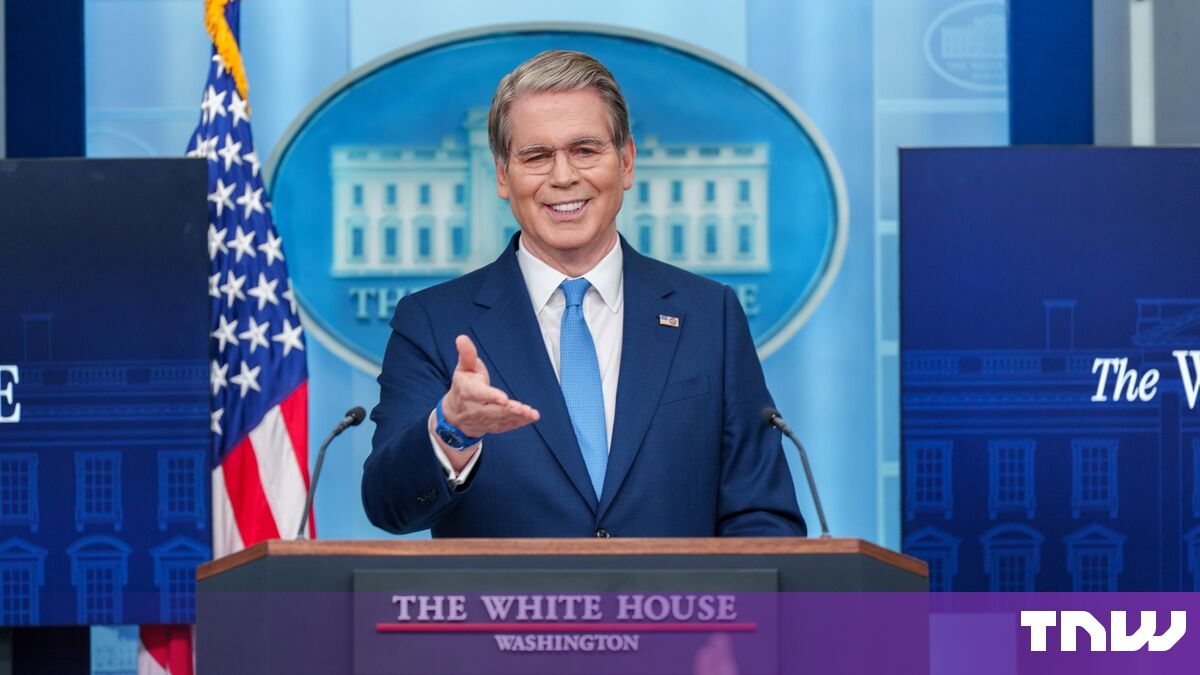
Despite investigation by the US, Megaspeed has not been labeled a national security threat or subject to limitations on chip purchases — a decision by Commerce Secretary Howard Lutnick that led to a confrontation by Treasury Secretary Scott Bessent last week, two people familiar with the matter told CNN.
Meanwhile, Democratic lawmakers, whose party recently won control of the House and Senate, are calling for greater oversight for US exports of advanced chips, days before Trump’s due to meet Xi for the third time this year in the Chinese tech hub of Shenzhen.
A growing number of chip smuggling cases has fueled calls for harsher legal enforcement outside the US as well. The Taiwanese government is seeking to criminalize unauthorized exports of advanced AI chips to China, as prosecutors there charged nine people in a scheme to sneak Nvidia chips into China through Japan, Indonesia and Hong Kong.
“There’s going to have to be new standards that are going to have to be enforced around traceability and transparency,” Capri said. “This is really going to be the beginning of a major crackdown, and actually moving on to the next phase of export control enforcement.”
CNN’s Yong Xiong, Isaac Yee and Wayne Chang contributed reporting.