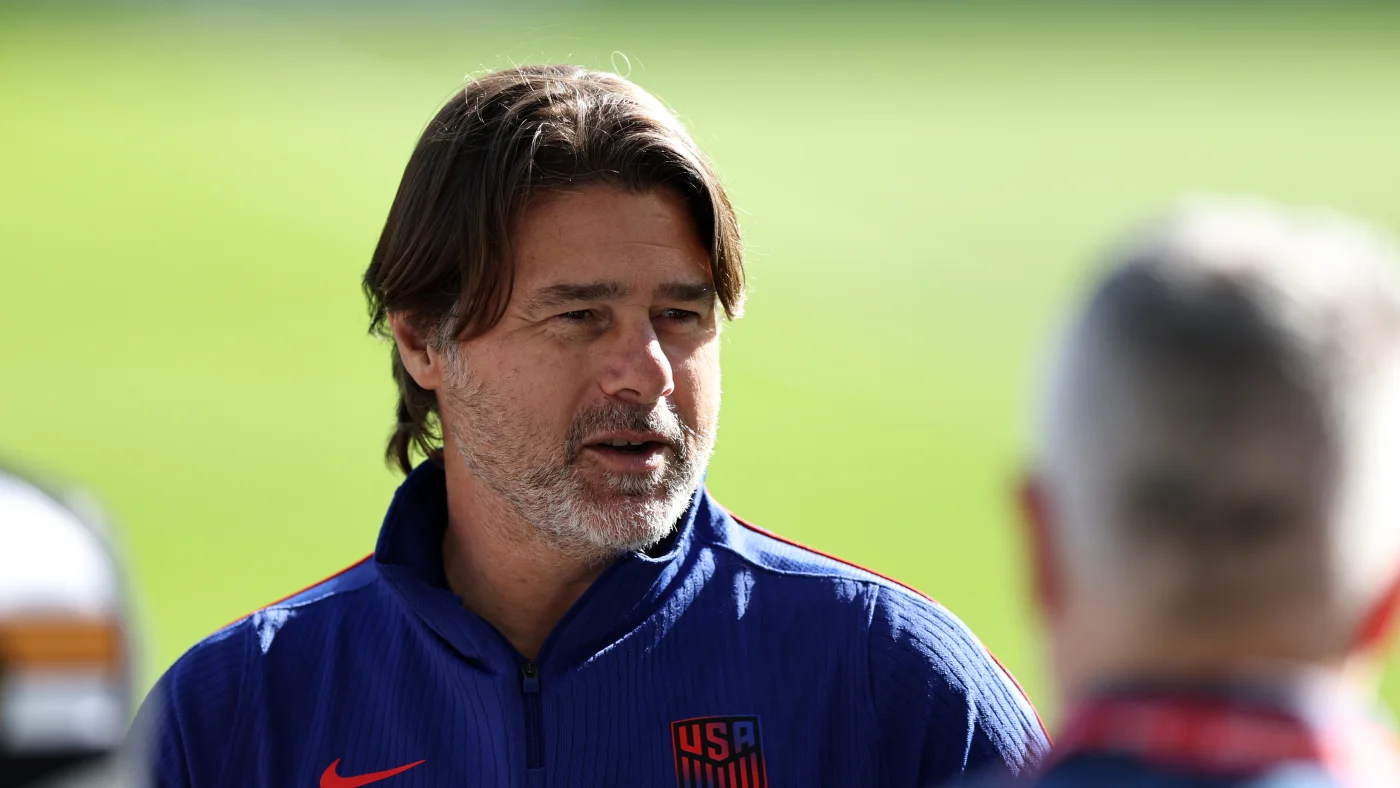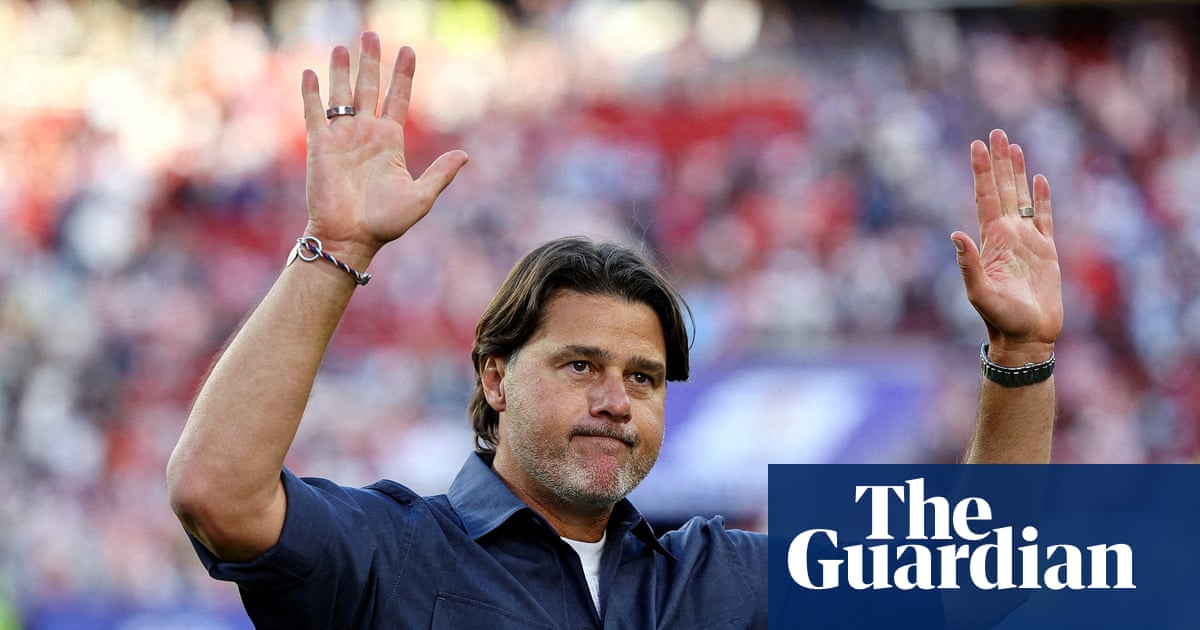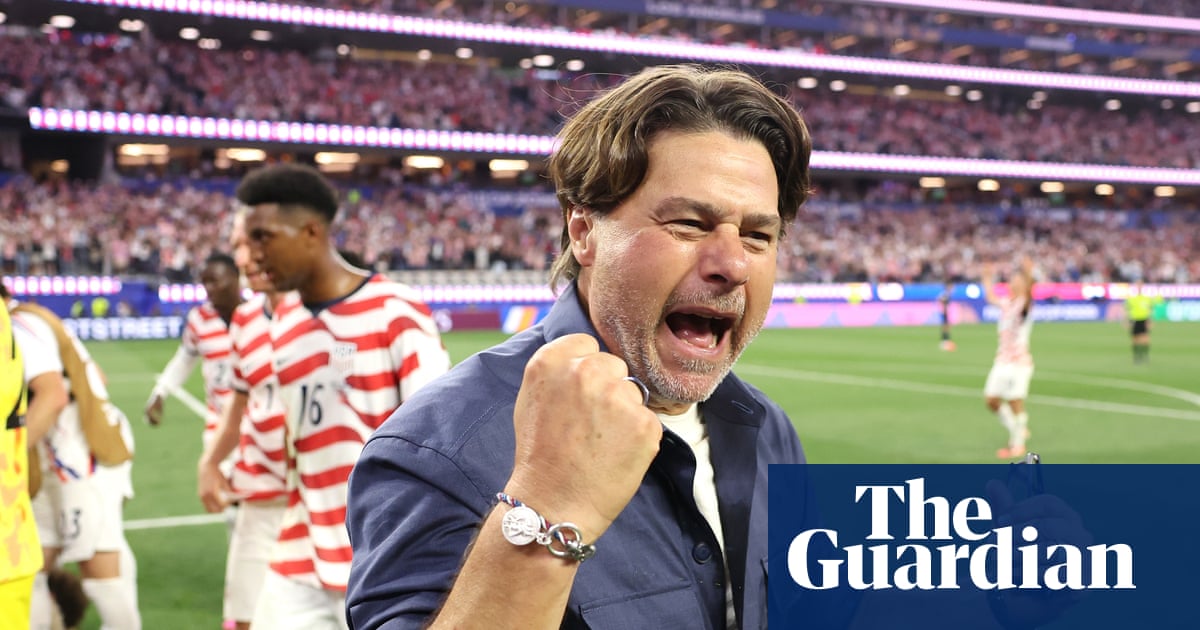

It did not take US men’s national team coach Mauricio Pochettino very long to take his first big swing.
He’d just taken the reins of the program after a disastrous performance at the 2024 Copa América cost his predecessor his job, with the first home World Cup in three decades looming on the horizon. The federation introduced him in New York City, on the 24th floor of a building overlooking the Hudson River. In short order, he was asked about the culture surrounding the program. In his answer, he invoked the four-time World Cup champion US women.
“We need to believe that we can win,” Pochettino said that day in September 2024. “That we can win not only a game: We can win the World Cup.”
It is the type of belief that feels almost alien to observers of the US men, the type of statement that American fans yearn to hear so badly from a coach yet also roll their eyes at. For years, fans of men’s soccer in the US have been desperate to taste glory, and for years they have developed an inferiority complex spurred along not only by results but by international perception. Even in the present day, with American players playing in Europe at the very highest level, the idea that the US could win a men’s World Cup feels borderline preposterous.
That never stopped Pochettino from espousing his belief that the US should believe they could make a miraculous run in 2026 and win the whole thing. It was a mantra he returned to frequently during his time leading the team, publicly and privately, even in the weeks leading up to the tournament. Pochettino even told Donald Trump that the US could win it all, perhaps planting the seeds for an assist turned own-goal down the line.
Belief is something that could attract even the most casual US fans, the type of newcomers whose previous experience with an American soccer coach came from Apple TV. Unfortunately for US fans, Pochettino’s actions never quite lined up with the inspirational speech.
There was the near-constant stream of rumors attaching Pochettino to clubs in England, rumors he never really went out of his way to quash even before they tied him to the Manchester United job he has now accepted. In many ways this type of thing is unavoidable and understandable: bringing on a high-profile coach and expecting peace and quiet is the footballing equivalent of dating a supermodel and expecting no one else to make an advance. Yet too often it felt as if Pochettino was the one stoking the fire; it was not uncommon to wake up in the States and find social media feeds populated with clips of the Argentinian espousing the valor of the Premier League and even floating the idea of returning someday.
This was never really shocking or unexpected and was far from offensive. Professional sports are fickle and players, coaches and administrators alike are wise to keep their options open and their bridges intact. Yet it was a bit galling to hear from someone brought in to galvanize the US’s players and fans ahead of a generational event: a home World Cup.
Pochettino also seemed sometimes frustrated by the very thing he was in part brought in to help change: American soccer’s sometimes awkward place in America itself. After losing the 2025 Gold Cup final to Mexico in Houston, he went out of his way to criticize the idea that the US would play in front of a pro-Mexico crowd on home soil, an issue that predates Pochettino by decades and may well never be solved, one even the most cursory research would’ve revealed prior to arrival. He fairly criticized the lack of stakes in Major League Soccer and suggested that US players are coddled throughout their youth development while at the same time butting heads with media who dared question the effects of a group-stage loss to Turkey at this summer’s World Cup. In reality, he faced far less pressure as the head coach of the USMNT than he would have in most any other major footballing nation.
All of it too often gave observers the feeling that Pochettino was never truly bought in. But then, there was the whiplash, which was palpable. As soon as one began to feel that way, there’d be a fresh injection of dopamine – the US’s 4-1 demolishing of Paraguay , for example, far and away their best-ever performance at a World Cup. And there was Poch, nearly in tears and belting out Country Roads, then speaking glowingly about America, American football and everything else that comes along with it. A few weeks later, they’d suffer a 4-1 drubbing at the hands of Belgium in the last 16 that will go down as among the worst-ever performances by the US at a World Cup. Certainly the most traumatic.
Athletes and coaches hate being asked about their legacies, in general. The question in and of itself sounds moribund, as if the person asked is about to ascend into the ether. Legacies, too, are tricky things – they often take years to materialize, and they’re sometimes just as quickly erased by shifting perceptions or the accomplishments of successors.
Pochettino does not seem to be the kind of person who would mind being asked about his legacy; he actually seems more like one who would already have one in mind before departure. Yet when asked by the Guardian on Friday to define his lasting impact, he struggled to do so at first. “I am not arrogant,” Pochettino replied with a smile and a laugh. “Well, not arrogant enough. I am a little bit arrogant.”
Eventually he relented. Pochettino’s lasting impact, the coach said, was largely down to relationships, to having done things the right way, in his mind.
“The most valuable feeling that we get isn’t one victory, or that we helped in the program,” he said. “It is that relationship in the program – even when you cross the sea, you look and smile because I think you share the values that are very important in life, more important than anything else. That is our principal that we respect always.”
Pochettino has always thought in big, broad, ambitious strokes and has executed those visions over the course of his career with varying degrees of success. In the United States, he arrived with varying goals: ensure a proper showing at a home World Cup, help change the perception of the game to the general public and lay down roots for long-term growth.
In some ways, Pochettino certainly succeeded. In others, he’s left the whole of American soccer wanting. It’s a fitting end for a coach who wanted so many people to believe – yet might never have felt that way himself.