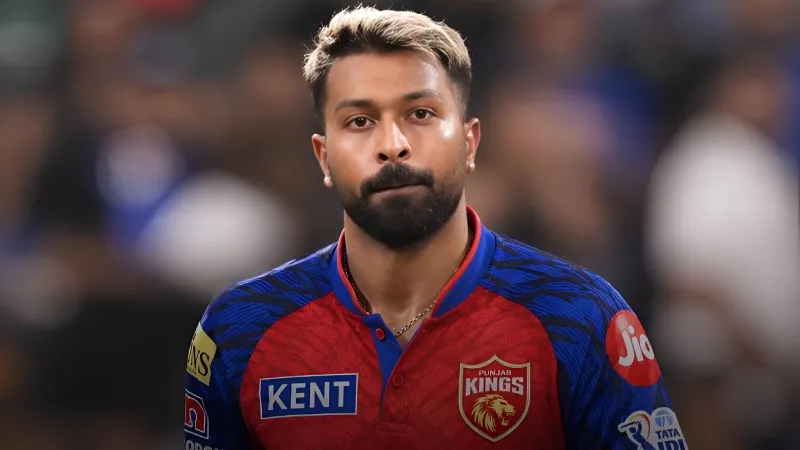
Five or six, behind Shreyas Iyer, is the batting slot that suits Pandya after his move through a swap that took Arshdeep Singh to Mumbai Indians. His pay rises to INR 18 crore, up from the INR 16.35 crore he earned at Mumbai. Iyer already leads the side, so the practical puzzle is where the all-rounder bats and which overseas player makes room. Pandya has struggled for runs lately, which adds risk. Retentions are officially due on 17 November, so the squad is far from settled.
Punjab ended 2026 in fifth place with seven victories from 14 games, and their top four did most of the scoring. Prabhsimran Singh made 510 and Priyansh Arya 364 while opening, Cooper Connolly contributed 491 at three, and Iyer made 498 runs while striking at 168.81 in the number four spot. That is a heavy dependence on four men, and the gap behind them showed all year.
Below them the output faded. Marcus Stoinis scored 216 at a strike rate of 180 but took part in only nine innings across 13 matches, with Suryansh Shedge on 158 and Shashank Singh on 132. A new batter has the most room to make an impact in slots five to seven.
At Mumbai he worked mostly as a finisher, though in 2024 his position floated anywhere from four to eight. The recent figures are weak, and the table shows the decline: 224 runs from 12 innings in 2025, then 206 from ten in 2026, with 40 as his highest score last season. That ceiling tells its own story for a player once relied on to change games.
His strike rate dropped from 163.50 to 138.26 across the two seasons, and for a finisher that is the more worrying number. A well-defined late role in a stronger lineup might help him rediscover that tempo, though nothing guarantees it.
Behind Iyer, the five or six positions look right. Batting at five, he would follow a stable top four. The logic is simple: protect Iyer’s place at four and give Pandya a clear, repeatable job. At six, he would finish innings, which is the job where his strike rate for Mumbai is 150.40, against 133.50 when he batted near the top of the order for Gujarat.
His bowling is the weaker argument. Across 2026, he delivered 22.4 overs for four wickets, conceding a little over 11 per over, and in the early weeks he sent down just two death overs, which cost 13 each. Even so, regular bowling from him would hand Punjab an extra seam option without costing a batting place.
Pandya is an Indian player, so he occupies no overseas place, which means the squeeze falls on Punjab’s foreign all-rounders. Overseas rules cap the XI at four foreign players, so every spot carries a cost. Stoinis is the most likely casualty, and ex-India opener Abhinav Mukund has floated releasing him once Pandya arrives.
Marco Jansen took nine wickets, costing 53.66 each, and added 51 runs across 13 matches, but Arshdeep, who led the side with 14 wickets, is leaving, so left-arm pace now has extra value. Azmatullah Omarzai got three matches and 52 runs. My reading is that Jansen stays, Omarzai is squeezed out, and Stoinis gives up the fifth slot.
Iyer remains the captain. Pandya is expected to come only as a player, and is understood to be comfortable playing under him, which settles the usual worry about two senior voices in one dressing room. Settling the captaincy question early also helps the group avoid distraction before a long season. It also removes any chance of a power struggle.
Iyer totalled 604 runs in 2025, then 498 in 2026, so he already carries the lineup. With an Indian hitter arriving behind him and seam bowling in reserve, he can bat naturally at four and stop worrying about the lower order, and Hardik Pandya at Punjab Kings in IPL 2027 looks like a move that helps the captain as much as the player.
Is Pandya better used at five to protect Iyer, or at six as a pure finisher? Pick your slot in the comments.
Is Hardik Pandya likely to lead Punjab next season?
No, reports say Shreyas Iyer will keep the job. Pandya is expected to arrive purely as a player, and the retention list due on 17 November should confirm the leadership group.
Why was Hardik Pandya traded away from Mumbai Indians?
He asked Mumbai to release him after the 2026 season. The team finished ninth that year, and the swap that followed brought Arshdeep Singh to Mumbai.
What will Pandya earn at Punjab Kings?
His fee is now INR 18 crore. That is up from the INR 16.35 crore he earned in Mumbai colours, and it matches the amount Arshdeep Singh keeps after joining Mumbai.
Which player leads Punjab in the coming season?
Iyer is expected to stay on as skipper. The official retention list, due on 17 November, has not yet appeared, so nothing is final until the club confirms its squad.
Where did Arshdeep Singh go in the swap?
Arshdeep moved to Mumbai Indians. He keeps his existing fee of INR 18 crore, and he leaves as Punjab’s leading wicket-taker from 2026 with 14 wickets, a total no teammate has matched.
Disclaimer: This blog post reflects the author’s personal insights and analysis. Readers are encouraged to consider the perspectives shared and draw their own conclusions.