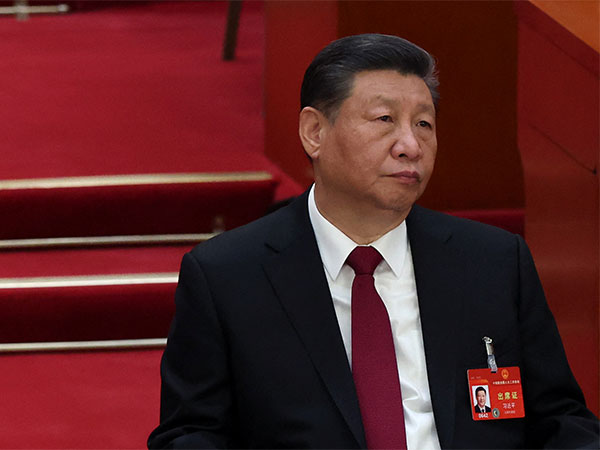
President of China, Xi Jinping/File photo: Reuters
China’s anti-corruption campaign is entering another consequential phase, with a fresh wave of removals and disciplinary scrutiny targeting senior figures across the Communist Party, government and military following the fifth plenary session of the 20th Central Committee of the Chinese Communist Party (CPC) late last month. The developments underline Beijing’s determination to reinforce internal discipline while signalling that seniority offers little protection against the party’s increasingly expansive enforcement machinery.
At the plenum, the CPC reaffirmed its commitment to full and rigorous Party self-governance, placing renewed emphasis on discipline, accountability and the fight against corruption. Subsequent announcements of personnel removals and misconduct investigations suggest that this commitment is translating into intensified scrutiny of the political establishment.
The latest indication came from the Standing Committee of the National People’s Congress (NPC), which announced the termination of the mandates of nine deputies. Four were removed, while the resignations of five others were accepted.
Among those dismissed were Ye Jianchun, former deputy secretary of the CPC Jiangxi Provincial Committee and governor of Jiangxi; He Xiong, former deputy secretary-general of the Henan provincial government; Ji Tao, party secretary and general manager of Hunan China Tobacco Industry; and Huang Yi, chairman of Sichuan Tianfu Bank.
The five whose resignations were accepted reportedly included four military figures—Zhang Gong, Guo Jianjun, Wu Yuhong and Meng Qingbin and Xu Renbiao, former mayor of Zhoushan in Zhejiang Province.
The military departures are particularly significant. The four officers, all reportedly holding the rank of major general, had served across institutions including the Navy, the Rocket Force, provincial military commands and the People’s Armed Police. Their exit from the NPC is fuelling speculation that disciplinary investigations may extend beyond their legislative positions to their military careers.
The NPC, however, has not disclosed the reasons for their resignations or identified specific allegations against them. A Beijing-based source, a former senior colonel in the Chinese military, claimed that the officers were implicated in misconduct and could face further disciplinary action.
“Their involvement in wrongdoing is certain. It appears they will soon have to leave the military as well, and they are likely to face punishment,” the source said to Chinese media.
The source also described the current investigations into senior party, government and military officials as unusually intense. While such assessments remain anecdotal, they reflect a broader perception that the disciplinary environment within China’s political establishment has become increasingly unforgiving.
The significance of the latest developments extends beyond the number of officials removed. China’s anti-graft campaign has increasingly become an instrument through which the leadership reinforces political discipline, institutional loyalty and centralised control.
The CPC’s disciplinary architecture gives the leadership considerable leverage over officials at every level. Investigations can affect political careers, administrative authority and military advancement, making the threat of disciplinary action a powerful mechanism of governance.
The campaign also carries institutional consequences. Repeated investigations into senior military officers can disrupt command structures, complicate succession planning and potentially affect confidence within the armed forces. In a system where political reliability and military effectiveness are closely intertwined, the challenge is to enforce accountability without creating prolonged uncertainty across the chain of command.
The opacity surrounding individual investigations adds another dimension. Official announcements frequently confirm removals or disciplinary action without providing detailed explanations of the allegations. This leaves considerable space for speculation, particularly when prominent figures disappear from public view or are mentioned in unofficial accounts of possible investigations.
The latest wave of removals reinforces the impression that China’s anti-corruption drive is neither a short-term disciplinary exercise nor confined to isolated cases of financial misconduct. It has become a continuing feature of the CPC’s political management, extending from provincial administrations and state-linked enterprises to the highest levels of the military establishment.
The post-plenum developments suggest that Beijing intends to maintain pressure on the political and military elite. With investigations continuing and rumours of further action circulating, the message to officials is unmistakable – no position is beyond scrutiny, and the disciplinary campaign remains an integral part of China’s system of governance.
Publish Date : 14 November 2026 11:39 AM
POKHARA: The villages of Ghandruk, Sikles and Lwang in Kaski
China’s anti-corruption campaign is entering another consequential phase, with a
KATHMANDU: Nepal Rastra Bank (NRB) has decided to keep the
KATHMANDU: Nepal has reiterated its commitment to prioritising employment generation,
KATHMANDU: Rastriya Swatantra Party (RSP) Chair Rabi Lamichhane is scheduled
Reg No.: 1222/075-76(DOI, Nepal)
Chairman: Naresh Shrestha
Contact: +977 1-4249158
©2026 Khabarhub | All rights reserved.