Nepal’s exports of high-value products rose by 23.85 percent in the first three months of the current fiscal year compared to the same period last fiscal year, driven by higher shipments of large cardamom, iron and steel products, jute and jute products, readymade garments, pashmina shawls, carpets, and felt products.
Exports of products listed under the Nepal Trade Integration Strategy (NTIS) 2023 reached Rs36.65 billion in the first three months of the current fiscal year, up from Rs29.59 billion during the same period last fiscal year.
During the review period, Nepal’s overall exports grew by 57.03 percent to Rs114.28 billion, mainly due to the re-export of edible oils, including palm, soyabean, and sunflower oil. The country exported edible oils worth Rs58.42 billion in the first three months of the current fiscal year.
Trade experts said exports could have grown further if Nepal had been able to process and package its agricultural products to meet international standards and sell them in different markets.
“The prices of goods have increased globally in recent times, and the dollar has also strengthened, contributing to the rise in exports. Producers might also have been trying to diversify markets beyond India, which could have added to the growth,” said Rabi Shankar Sainju, a trade expert.
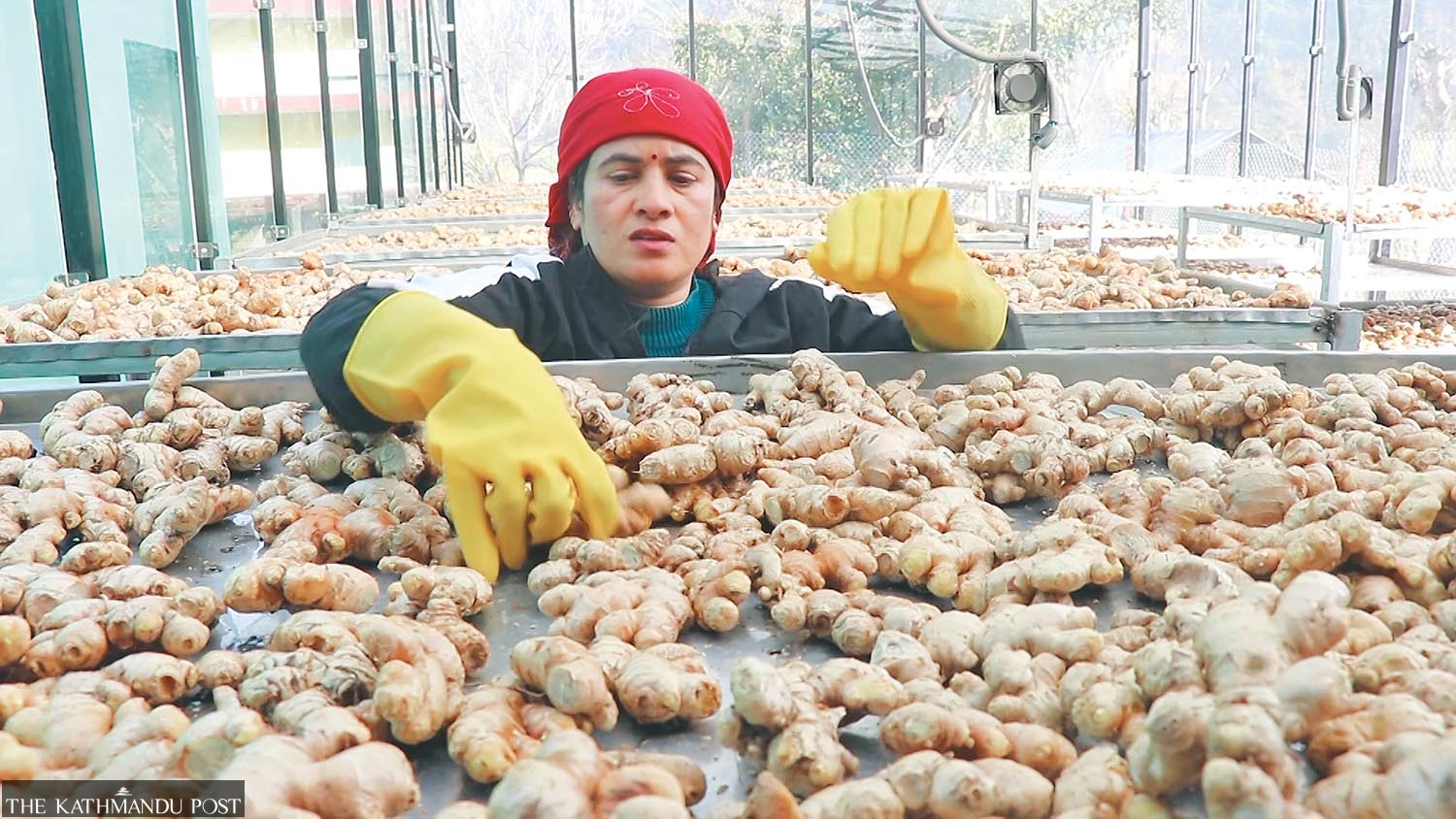
Sainju said exports could have registered substantial growth if Nepal had been able to export processed and packaged agricultural products such as large cardamom, ginger, dog chews, and medicinal herbs, among others.
“Our major strategy should be market diversity and product diversity,” he said.
Among the NTIS-listed products, exports of large cardamom, dog chews, fabrics, footwear, ginger, iron and steel products, jute and jute products, Nepali handmade paper, readymade garments, rosin, tea, pashmina, carpets, felt products, yarn, vegetables, spices, coffee, pasta, honey, and gold and silver jewellery increased during the review period.
Exports of large cardamom jumped by 53.19 percent to Rs2.57 billion during the review period, with 1,449 tonnes shipped.
Tighter global supplies, relatively stable prices and sustained demand from South Asian and Middle Eastern markets have pushed the value of Nepal’s large cardamom exports to an all-time high.
Unlike in previous years, prices remained unusually stable this year at around Rs2,500 per kg, encouraging farmers to sell their produce rather than hold stocks in anticipation of further price increases.
India remains the dominant buyer, accounting for around 99 percent of Nepal’s large cardamom exports. The spice is then re-exported from India to Pakistan and countries in the Middle East, where Nepali cardamom commands premium prices because of its distinctive flavour and quality.
The country exported 6,395 tonnes of large cardamom worth Rs12.64 billion in the last fiscal year.
Exports of dog chews jumped by 77.87 percent to Rs1.49 billion during the review period. The country exported dog chews worth Rs4.81 billion in the last fiscal year.
Demand for Nepali dog chews has been growing in the United States, Canada, and other countries.
Fabric exports rose by 41.05 percent to Rs1.12 billion in the first three months of the current fiscal year. Nepal shipped fabrics worth Rs3.6 billion in the last fiscal year.
Footwear exports increased by 32.17 percent to Rs1 billion in the first three months of the current fiscal year. Exports stood at Rs3.19 billion last year.
Nepal’s ginger exports increased by 38.03 percent to Rs249.36 million, with 3,474 tonnes shipped. The country exported ginger worth Rs1.50 billion in the last fiscal year, with shipments totalling 17,254 tonnes.
Exports of iron and steel products surged by 369.42 percent to Rs4.71 billion in the first quarter. Nepal exported iron and steel products worth Rs6.14 billion in the last fiscal year.
Nepal’s iron and steel exports have come under pressure following India's imposition of safeguard duties.
Shipments of jute and jute products rose by 39.91 percent to Rs3.85 billion during the review period. The country exported jute and jute products worth Rs10.78 billion in the last fiscal year.
India’s decision to increase anti-dumping duties on Nepali jute products has added to the pressure on the country's jute industry, particularly in eastern Nepal, where most of the country's jute mills are based.
According to a notification issued by India's Ministry of Finance on September 24, 2026, anti-dumping duties on hessian fabric, jute bags, and jute yarn and twine have been set at different rates depending on the product and manufacturer.
Shipments of handmade paper increased by 16 percent to Rs417.02 million during the first quarter. Nepal exported handmade paper worth Rs1.21 billion in the last fiscal year.
Readymade garment exports grew by 52.68 percent to Rs3.83 billion, with 5.85 million pieces shipped. The country exported 15.52 million pieces of readymade garments worth Rs9.30 billion in the last fiscal year.
Nepal’s tea exports rose by 48 percent to Rs1.64 billion, with 5,426 tonnes shipped. The country exported 13,303 tonnes of tea worth Rs3.97 billion in the last fiscal year.
Pashmina shipments grew by 29.11 percent to Rs3.32 billion in the first quarter of the current fiscal year. The country exported pashmina worth Rs3.76 billion in the last fiscal year.
Carpet exports rose by 37.64 percent to Rs2.44 billion during the first three months of the current fiscal year. Nepal exported carpets worth Rs10.38 billion in the last fiscal year.
Felt exports increased by 15.68 percent to Rs1.28 billion during the review period. The country exported felt products worth Rs5.97 billion in the last fiscal year.
Yarn shipments increased by 48.74 percent to Rs5 billion in the first quarter of the current fiscal year. The country exported yarn worth Rs15.66 billion in the last fiscal year.
Exports of pasta rose by 121.94 percent to Rs1.58 billion during the review period.
Vegetable exports grew by 20.71 percent to Rs191.48 million. Nepal exported 11,319 tonnes of vegetables during the period.
Spice shipments increased by 93.42 percent to Rs148.48 million, with 841 tonnes exported.
Meanwhile, exports of cement, lentils, medicinal herbs, and fruits declined during the review period.
Cement exports fell by 34.83 percent to Rs419.27 million in the first quarter of the current fiscal year. Nepal exported cement worth Rs2 billion last fiscal year.
Krishana Prasain is a business reporter for The Kathmandu Post covering markets. Before joining The Kathmandu Post in 2018, she spent 3 years in New Business Age magazine covering business.