Rescue experts say a missing teenage boy did everything right after going missing in dense bushland for six days.
William, whose surname has not been released, was found huddled beneath a blanket by a creek bed on Thursday.
The 17-year-old kept his spirits up by singing to himself, staying warm and hydrated, and remained in one spot in clear view of rescuers.
Search and rescue experts are praising a 17-year-old boy who "kept his wits about him" and survived six days alone in dense bushland, after becoming lost on his first unsupervised camping adventure.
William, whose surname has been withheld, sparked a major search after disappearing on November 6 while he was camping with a friend at Walhalla East, nearly 200 kilometres east of Melbourne.
What followed was a gruelling near week-long ordeal in some of Victoria's most rugged bushland.
William disappeared near the W2 Track in Wahalla East. ( ABC Gippsland: Jarrod Whittaker )
As the days passed, sun and temperatures soared before plummeting overnight, bringing bitterly cold conditions.
All the while emergency services faced a serious challenge as they navigated hundreds of kilometres of impenetrable bush in a desperate attempt to find the teenager.
It forced searchers to take to the skies. The race was on to find the missing 17-year-old.
William sits in the police helicopter after being flown out of the bush. ( ABC News )
With no serious camping experience, very limited supplies and precious little protection from the elements, William was without food or shelter.
The teenager, who loves football and video games, had to contend with the mental strain of the isolation, unsure when, or if, help would arrive.
His friends, family, and tireless rescuers were overjoyed when he was finally found asleep on a rock beside a dry creek bed.
William demonstrated a series of remarkably sensible survival instincts.
During his six days alone he rationed his food — one packet of chicken chips, kept hydrated, wrapped himself in blankets at night to stay warm and remained in one spot, clearly visible to search crews.
The teenager also kept his spirits up by singing John Denver's Take Me Home, Country Roads.
Experts say William's level-headed decisions may have ultimately saved his life.
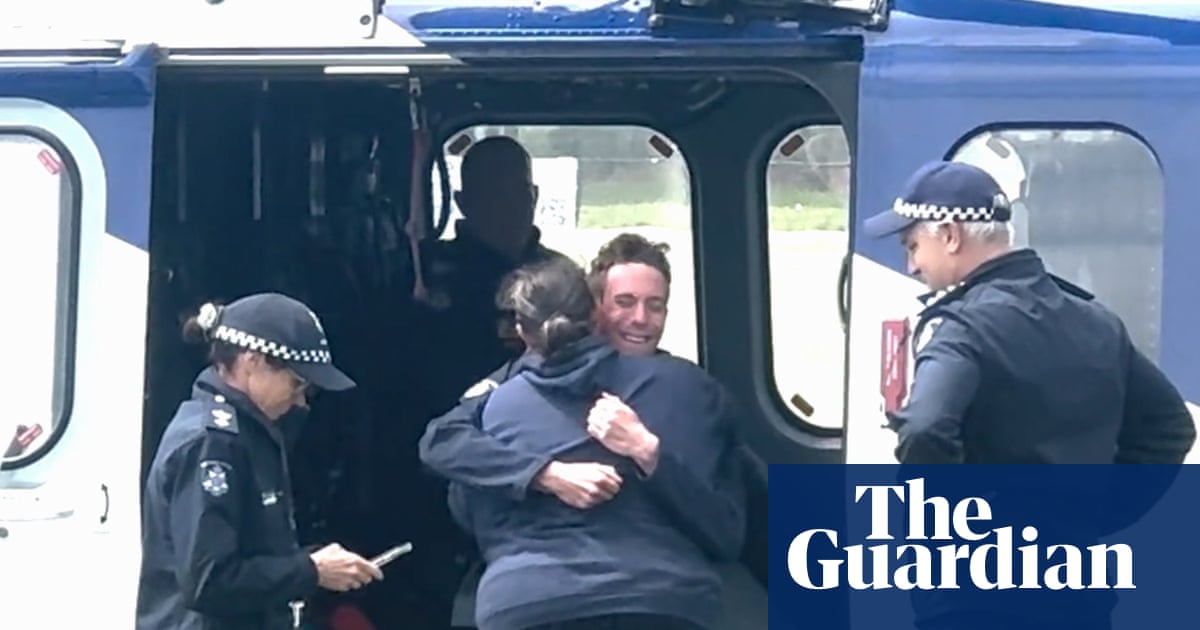
Victoria Police released footage of the moment William was reunited with his mother. ( Supplied: Victoria Police )
Simin Ngan, co-convener of Bush Search and Rescue Victoria, said William "definitely" made some calm and collected decisions.
"Given the level of experience he had in the bush, he did absolutely what was appropriate and the best thing to do," Ms Ngan said.
Ms Ngan said staying warm and hydrated are two of the most important things to do when stuck in the bush.
"He also [was aware] of his limitations, and didn't push himself to keep going through terrain that he was not used to when he wasn't sure how to navigate," she said.
"I think that was a key factor in his own survival."
William was taken to hospital with severe sunburn and cuts to his leg. ( ABC Gippsland: Jack Colantuono )
Those sentiments were echoed by senior instructor with Bushcraft Survival Australia, Gordon Dedman, speaking to ABC Sydney.
"[That area] is very, very thick bushland and it can get really — down on the peninsula — very, very cold as well, with the temperatures dropping as they have… so yeah, very hairy and very thick bush indeed," Mr Dedman said.
Mr Dedman said it's vital in an emergency not to "keep moving, and moving, and moving".
"That makes it hard for rescue teams to find them," he said.
"Food wouldn't be an issue. I mean, the human body can go for a long time without food.
"A human person on their own is much harder to find, especially in dense bushland.
"The fact that he was near a river would have also aided rescuers because if you've got an…open canopy near the river."
Deputy incident management commander from the SES, Maureen Russell. ( ABC Gippsland: Lily Kristanto )
SES searchers put in 120 shifts over the six-day ordeal, as they provided assistance to Victoria Police and other agencies in the hunt for William.
Deputy incident management commander from the SES, Maureen Russell, said SES teams were really feeling the pressure.
"There was a bit of anxiety, a heightened [sense] of 'we have a job to do and we want to do it well', because we didn't want to miss anything," Ms Russell said.
Ms Russell said when William was finally found, the relief and joy was immense.
"It was a little bit on the emotional side. A few minutes where we weren't quite sure what was happening," she said.
"It wasn't until the helicopter landed and his mother was escorted out to the helicopter we realised it was a good result."
William is recovering in hospital with dehydration, a possibly damaged windpipe, and dropped blood pressure.