You have reached your maximum number of saved items.
Remove items from your saved list to add more.
You've used all of your gift articles. 3 more will become available on the 1st of every month.
Antalya, Turkey: The stakes could barely be higher.
The United Nations has brought together 93,000 delegates from 190 countries to plot a path through a climate crisis that is costing the world an estimated $US 1 trillion each year and a rapidly mounting death toll even as its emissions and climate targets are shot.
At the centre of all this, the man running the negotiations, Australia’s Climate Change and Energy Minister Chris Bowen, is addressing Australian journalists about the cost of a coffee machine .
If he is surprised by this, he doesn’t show it.
“That’s climate politics, inevitably,” says Bowen, in an interview with this masthead in Antalya, Turkey, as the first week of the UN’s annual climate summit nears its end. “The Liberal Party will always say it’s too much, and the Greens party will always say it’s nowhere near enough.”
This is the same dynamic Bowen faces as the summit’s president of negotiations, a position he created after Australia lost its bid to host the event in Adelaide. Almost every nation on earth is represented at the COP, and they are divided into a series of formal and informal factions.
In broad terms, there are those demanding the world reduce its greenhouse emissions faster, those that want to slow the process, and those developing nations that want immediate action and a readily accessible pool of finance to help them stave off the consequences of global warming they did not cause.
“My job is to chart a sensible course, a practical course,” Bowen says. “I’m also chairing negotiations, which means we need 195 countries to agree with us, which means steering a consensus outcome. Not everyone will get everything they want.”
Consensus is the COP’s greatest strength and its most profound weakness. It lends its agreements moral authority even as it strips them of ambition. The so-called cover decisions are typically masterpieces of compromise and equivocation. It took 28 years for a COP text to include the words “fossil fuel”, the very cause of climate change, and some nations are fighting to ensure it never happens again.
In COP terms, Bowen is an old hand. He helped break the deadlock over fossil fuels in Dubai in 2023, locked in a room with the US climate envoy John Kerry, Dubai’s COP president and Saudi Arabia’s energy minister, Prince Abdulaziz bin Salman. With that experience in mind, he and COP31 President Murat Kurum have spent the lead up to this summit managing expectations. This will be an “implementation COP”, they keep saying, at which nations will be exhorted to come good on previous pledges rather than come up with new ones.
The one major new target they want to see adopted is a global pledge to increase electricity’s share of global final energy consumption from roughly 21–23 per cent today to 35 per cent by 2035.
This goal also has its roots in the COP in Dubai, where the world agreed to triple global renewable energy capacity and double the rate of energy efficiency improvements by 2030. Electrification to 35 by 35, as the slogan goes, is seen as the third leg of that stool. With electrification, renewables, and efficiency all ramped up to those levels there is some chance the world might be able to halt greenhouse gas emissions before the worst climate impacts are locked in.
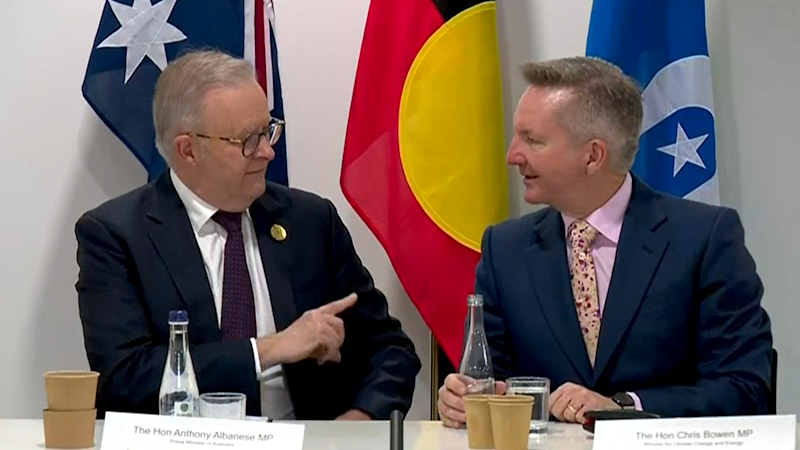
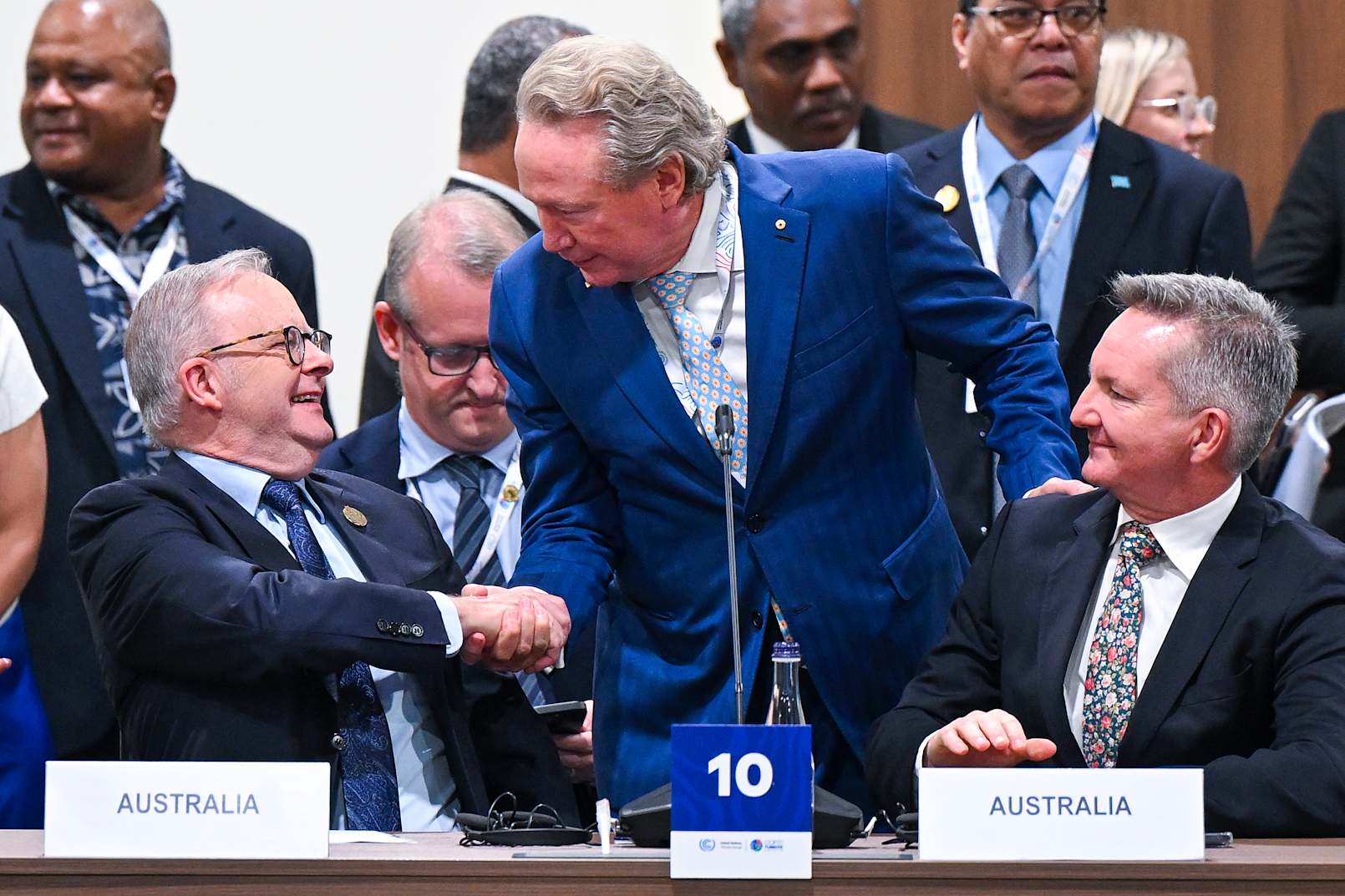
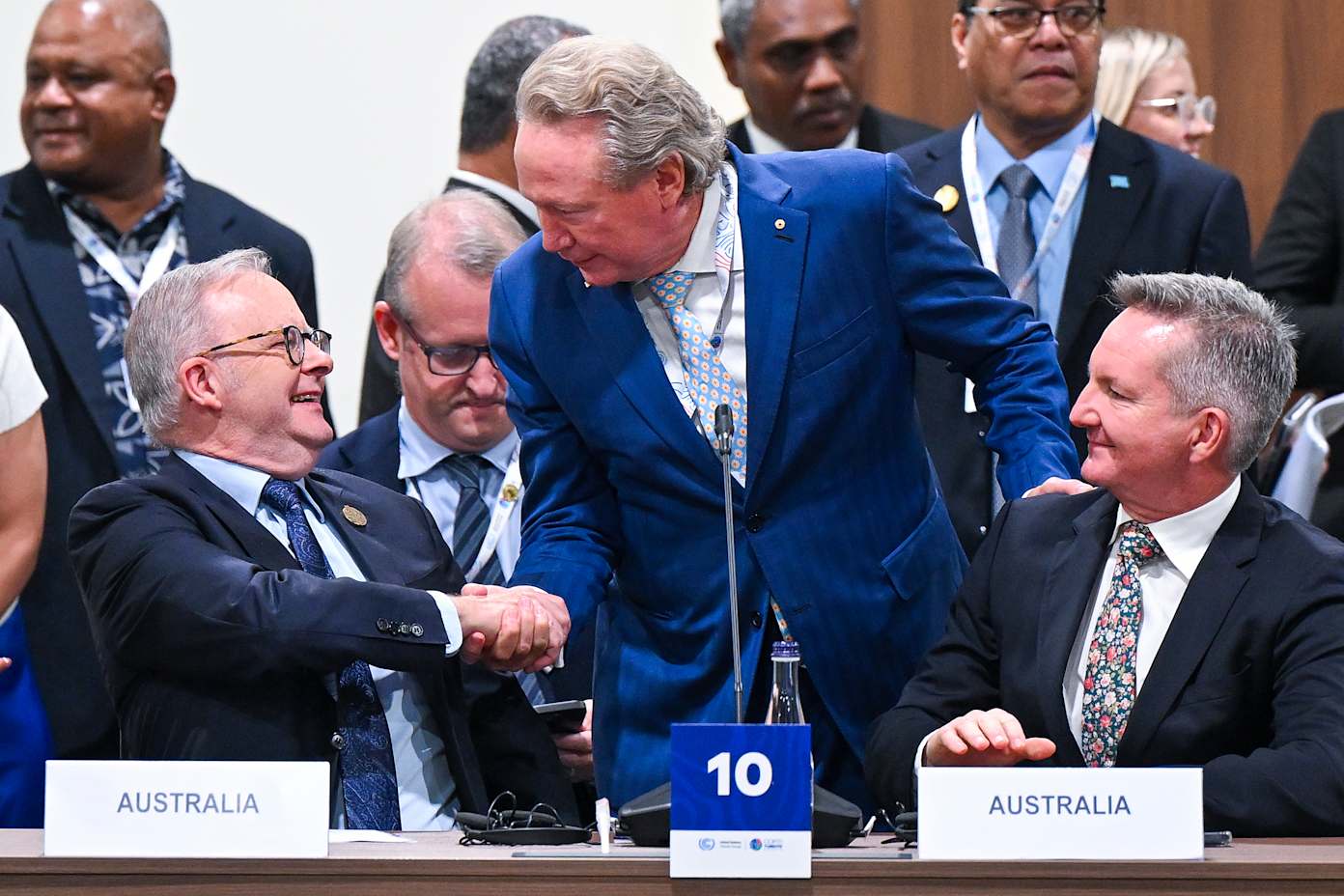
“It’s very important,” said Bowen at a press conference this week, next to Prime Minister Anthony Albanese and Pacific leaders. “We have no chance of 1.5 without this electrification agenda. No chance.”
Then there is the politics. Focusing on electrification also allows Bowen and Kurum to duck the testy issue of fossil fuel reduction. As the shadow-boxing began this week, it was clear this course will not satisfy many of the forces involved. The United Nations Secretary-General Antonio Guterres challenged the hosts in his opening speech. “Fossil fuels must go the way of the dinosaurs,” he declared. “The dinosaurs did not have a lobby. Fossil fuels do.”
The immediate horror of the threat of climate change was, as is often the case at these events, most painfully highlighted by Pacific island nations. “It is a painful process to go through to watch your island drown,” Palau president Surangel Whipps Jr said. “To watch your farms being inundated with salt, your roofs getting blown off from the next typhoon. This is the reality that we live in.”
It won’t be clear until next week, when the first draft text is released and then negotiated, whether Bowen’s strategy of focusing on electrification will succeed.
The working relationship with Turkey is going well, according to people in negotiating rooms.
But stumbling blocks are already appearing. There has been no rush for nations to sign on the voluntary electrification pledge that Turkey is pushing outside the formal negotiations, and some nations are already signalling that they could not support its cover text unless it is also specified that it is linked to clean generation, which in turn could set up another stand-off.
There is a risk for Bowen and Kurum that electrification might be stripped from the cover text by nations wanting either more or less climate ambition.
Other critics fear COP being held just weeks after the United Nations acknowledged the world is poised to crash through the 1.5 degree target agreed to in Paris could be ruinous for the entire process.
If nations facing existential threat cannot have the fossil fuel transition addressed due to “the usual suspects, the blockers”, they will start building their own coalitions outside it, says Richard Folland, a former UK diplomat who is now head of policy with the UK finance and climate think tank Carbon Tracker. This process began last year at the COP in Brazil when 57 nations signed the Santa Marta declaration, agreeing to a detailed road map to exit fossil fuels.
“There are risks there for the COP process if it is not addressing the biggest elephant in the room.”
Fanny Petitbon, a policy expert with the climate activist group 350.org, was less diplomatic in her assessment. “World leaders, the UN Secretary-General and negotiating blocs representing over 70 countries have urged progress on fossil fuel transition. Yet Turkey and Australia have answered with deafening silence,” she said. “The COP31 Presidencies, they have a particular responsibility to turn the growing international momentum into concrete political action.”
For Bowen there are further risks too. Not only must he navigate the murderously complex negotiations next week, he must also return home with something for the Pacific.
In explaining to the Australian people why it chose to spend $150 million on the COP and pre-COP meetings, the government made the case that addressing Pacific nations’ greatest threat would bind Australia more closely to its neighbours as China’s influence across the region grows. To this end, it created a new fund, the Pacific Resilience Facility, to be managed by Pacific countries for use in climate adaptation. Australia kicked in a foundational $100 million, and has been rattling the can for more at the COP, so far without much luck.
At a pledging function this week, attendees offered speeches of support, but not cash. At present, $200 million has been pledged for the facility that has a target of $500 million.
Perhaps the greatest threat the government faces is domestic. The opposition and One Nation have pledged to abandon net zero, while an electorate battered by interest rate rises is becoming increasingly testy at government spending. While Bowen and Albanese took centre stage at COP this week, there’s muted mention of it by ministers back home.
Which brings us back to the Australian pavilion, which has become the conference’s most popular place to get a coffee. On Friday, Coalition frontbenchers were still commenting on the cart’s $32,000 budget as a misguided priority. It’s going down differently at COP, where delegates scratch their heads over the outrage and point to the billions being lost each year to climate-related disasters.
Bowen is characteristically unapologetic about it, noting the coffee cart has been a mainstay of every Australian COP pavilion since Angus Taylor came up with the idea in 2021.
He doesn’t shy from a fight – including this one. He calls the Coalition’s campaign against the cart and other COP spending hypocritical. “They spend money on the COPs, but they had no impact while they were here. We spend money on the COPs, and we have impact,” he says.