I n so many ways this has been a Rugby League World Cup of change. New formats, new stories, new nations rising and even the whisper of a rarity for this tournament: a financial profit. But for all the evolution and growth witnessed in the past month, the final acts arrive with a familiar international comfort blanket.
Perhaps the biggest surprise is that, while the men’s final in Brisbane is the one everyone expected, Australia and New Zealand are contesting it for the first time since 2013. In 2017, England tried and failed to dethrone the Kangaroos while four years ago it was Samoa who were beaten finalists . Now the Kiwis are next to try.
After the classic match the Kiwis and the Kangaroos served up on the opening night a month ago, the feeling persisted that it would be this pair who would make it through to Sunday’s final. One of the most historic rivalries in either rugby code gets a new and defining chapter but, unlike some of the previous editions, this one does feel too close to call.
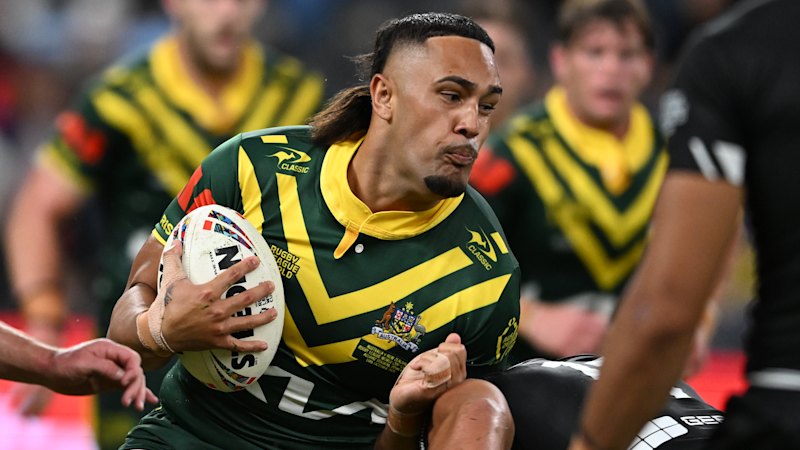
In the green and gold corner are the defending champions. At times over the last 20 years, they have felt untouchable. Sauntering through games even when nowhere near their best, a trait they have already displayed on a couple of occasions in this World Cup – especially during that opener, when they narrowly edged out the Kiwis 24-22 .
Victories of a more straightforward nature over Fiji, the Cook Islands and, most notably, Samoa in the semi-finals have followed. But such is the standard Australia historically set, any minor criticism feels significant. And the notion they were outplayed and outmuscled by the New Zealand pack in that opener not only whets the appetite for Sunday, but has left a mark on the Kangaroos.
“There’s no secret that people have been saying we’re the weakest forward pack in the competition,” said their prop, Keaon Koloamatangi, this week. “It’s easy for them to say they won the battle back then but we’ve changed since then. I think a lot of people probably have disrespected us and overshadowed the fact that we did win that first game, and that’s OK.”
That apparent disrespect is clearly fuelling the defending champions. But for all the talk of which nation has the superior forward unit, it is at the back where this final could be decided by two of the most exciting players in the world game. For Australia, there is Reece Walsh; the electrifying Brisbane Broncos full-back who has lit up the World Cup with a series of dazzling displays.
He was crucial in helping Australia win the opener, but had his opposite number, Kalyn Ponga, not left the field with a broken forearm, perhaps the Kiwis would have won that Test. Incredibly, Ponga returned last weekend just 23 days after that injury, producing a sensational performance to help New Zealand beat Tonga and then winning the Golden Boot this week.
If New Zealand are to break Australia’s grip on the World Cup and be crowned world champions for the second time, it is Ponga who will be their primary threat. “It’s always all love off the field and then when we get on the field, we aren’t friends,” Ponga said of his rivalry with Walsh this week.
It is not just in the men’s final where New Zealand are seeking to end a run of Australian dominance, either. The Kiwi Ferns will square off against the Jillaroos for the fifth consecutive women’s World Cup final on Sunday too, with Australia looking for a fourth straight win in the decider.
The odds are perhaps skewed slightly heavier towards the Jillaroos in the women’s game, given the nature of some of their displays in this World Cup. But New Zealand’s 32-0 win over Samoa in last weekend’s semi-finals was a warning shot to suggest that this is not the same side who were heavily beaten 54-4 in England four years ago.
For all the change witnessed this autumn, one wonders if the most significant change would be a nation other than Australia lifting the trophy. With the World Cup heading to the US and Pacific in 2030, a new champion could breathe fresh life into an international game that feels on the verge of reaching new heights.
England and Samoa have both fallen at the final hurdle in the last decade: now it is over to New Zealand to break Australia’s stranglehold on both the men’s and women’s tournament. The Kangaroos may feel slightly vulnerable, but history has shown you underestimate them at your peril.