
Welcome to Edition 9.19 of the Rocket Report! Will something historic happen this weekend? No orbital rocket has ever been fully recovered with the intent of reusing all of its components. But that’s just what SpaceX is going to try to do with a Starship launch on Friday, and an upper stage landing attempt 22.5 hours later on Saturday afternoon, local time. Ars will be on hand in Starbase, Texas, to provide coverage of it all.
As always, we welcome reader submissions , and if you don’t want to miss an issue, please subscribe using the box below (the form will not appear on AMP-enabled versions of the site). Each report will include information on small-, medium-, and heavy-lift rockets as well as a quick look ahead at the next three launches on the calendar.
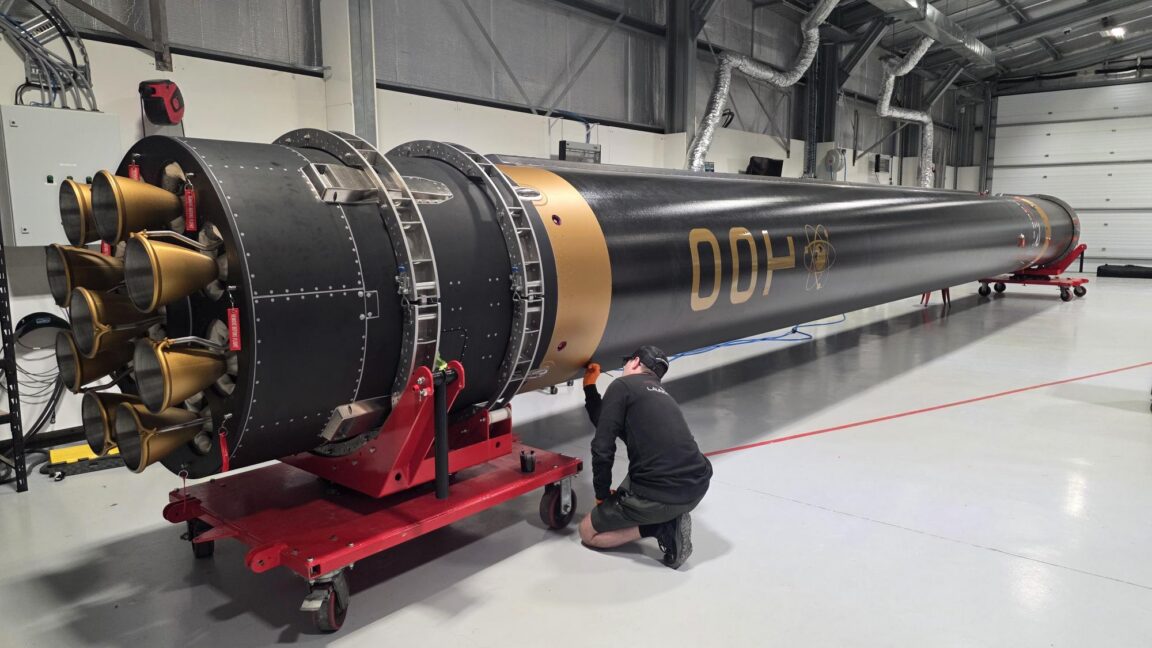
Electron set for milestone launch . The next launch of Rocket Lab’s Electron vehicle is due to lift off from the Mahia Peninsula in New Zealand on November 14 at 5:30 UTC. This mission will serve as Electron’s 100th overall mission—a notable milestone for the small rocket that first flew in 2017, NASASpaceflight.com reports .
A true commercial success … This flight of Electron, named “The Mountain God Rises,” will deliver another iQPS satellite into LEO for iQPS’s synthetic aperture radar constellation. The anniversary rocket features a special gold-and-black livery which looks fantastic. Rocket Lab truly does deserve recognition as the world’s second purely commercial launch business to make a successful go at it. We are all celebrating with them.
Is the Vega rocket a dead end ? Last month, Italian rocket builder Avio presented a market update that outlined the additional investment required to increase the annual launch cadence of its Vega C rocket to six and eventually nine flights per year, European Spaceflight reports . The need for this additional funding raises an interesting question about the future of Italy’s Vega launch vehicle family. Is investing in the infrastructure needed to secure just three more Vega C flights per year by the end of the decade the best use of resources, particularly when several emerging European launch companies appear poised to offer comparable capacity?