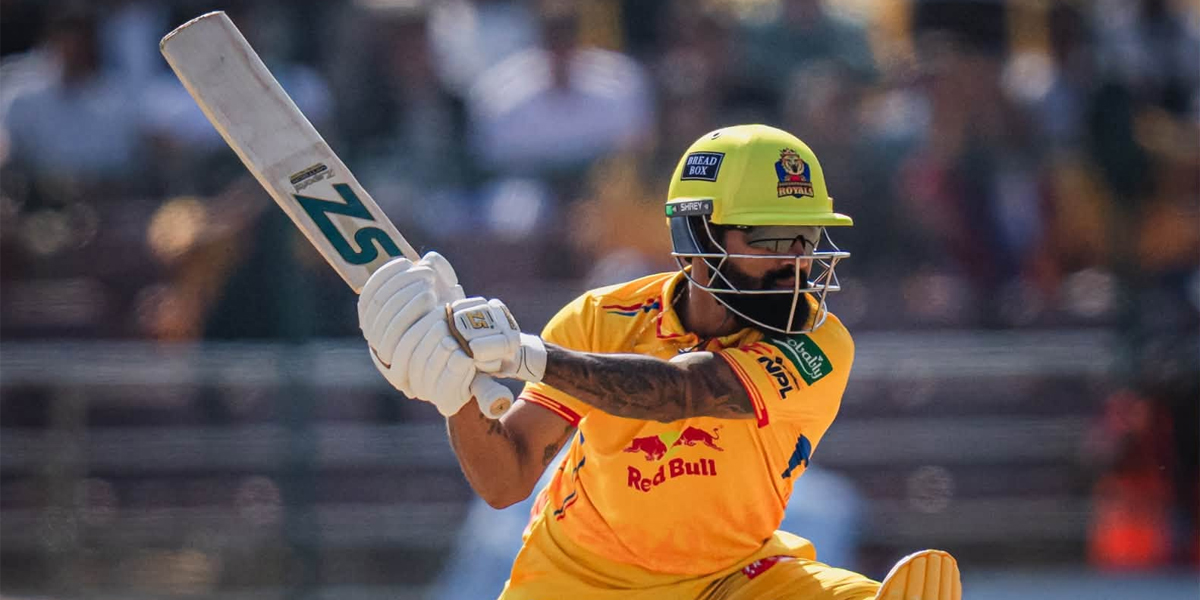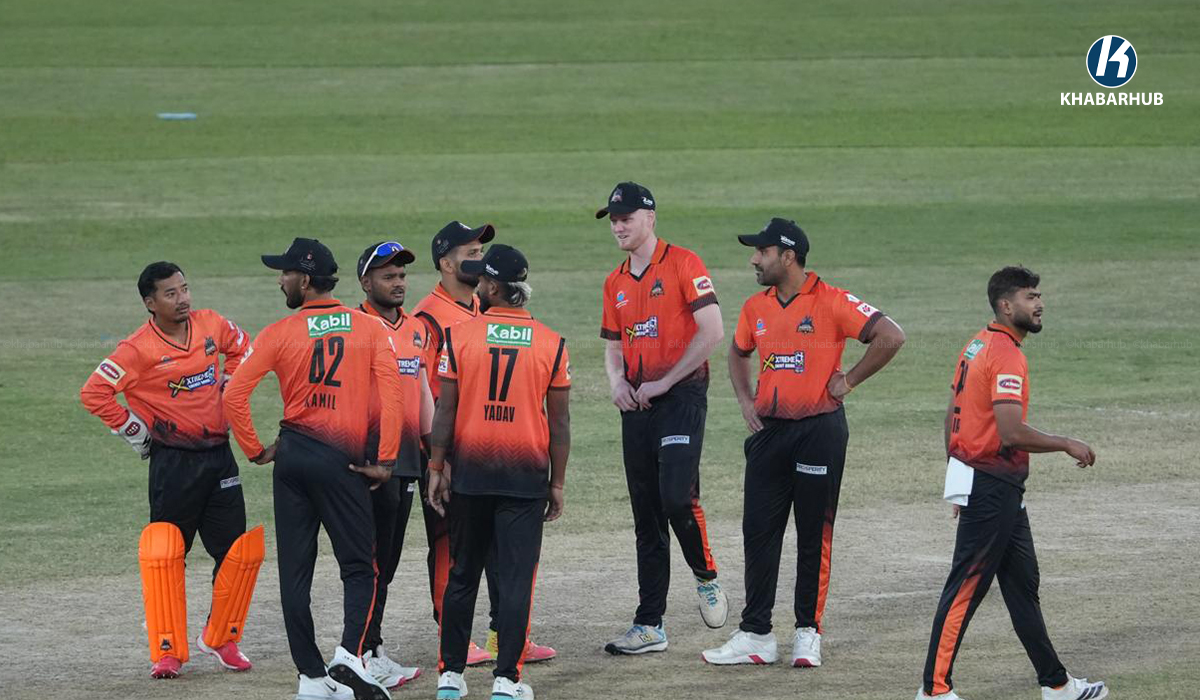
Kathmandu Gorkhas were the last team to win a match after deciding to field first at the ongoing Nepal Premier League. The win came over Biratnagar Kings, in the 15th match of the season, on November 5. Now, the teams are preferring to bat first.
The Gorkhas were the only team to go against the trend—batting first after winning the toss—until the 19th match between Pokhara Avengers and Karnali Yaks on November 9. It might be because the Gorkhas lost that match against Janakpur Bolts on October 29 that other teams, including Kathmandu, did not take such a risk again.
However, despite the team winning the toss and fielding first not confirmed of the win, Pokhara, the team at the bottom, took that risk in a do-or-die match against Karnali on November 9, and won.
After that match, it seems other teams are also willing to bat first. The reason varies—based on the opponent, match day, weather and pitch. For instance, after Karnali won the toss and elected to bat first against the defending champions, Lumbini Lions, on Thursday, Lumbini captain Rohit Kumar Paudel said that he would have bowled first had he won the toss.
The decision to bat first by Karnali, which was captained by David Miller on Thursday, was only the fifth instance where a team decided to defend.
Until Thursday, out of the 22 matches played in the season, excluding the cancelled fixture between Chitwan Rhinos and Lumbini on October 31, teams have elected to field first in 17 instances. Of them, seven have won and 10 have lost.
In the five instances where the team batted first, two have won and three have lost. Moreover, teams have decided to bat first in the last three matches.
Sudurpaschim Royals looked inspired from Pokhara’s dominating batting display against Karnali—posting a target of 218 runs and winning by 63 runs—to elect to bat first against Janakpur on Tuesday. Despite the Royals managing only 120/9 in the first innings, they went on to defend it and win by 27 runs.
However, when Pokhara elected to bat first again—after winning the toss against Biratnagar in the first match on Thursday—it backfired. Pokhara were bundled out for 132 runs and Biratnagar chased it with four wickets and four balls to spare.
But it was not the same case when Karnali chose to bat first against Lumbini in the second match on Thursday. Karnali, despite their decision to bat first and post a big total, were all out for 105 runs in 19.2 overs. Lumbini chased it with 20 balls and four wickets to spare.
“We did not bat well,” Miller said after the loss. “We could not post the score we wanted to.”
Responding to the Post’s question regarding the conditions with the third season compared to the first two seasons, Ravi Bopara, who has played in all three seasons for Chitwan, said he was not satisfied with the pitches.
“During the day, it’s beautiful. It’s hot. Then, in the evenings, it’s nice and cool. I feel like I am in England,” Bopara said after the loss to Kathmandu on November 9. “I don’t know if it has affected the pitches or not.”
It was only in August when the pitches at TU Ground were repaired.
“The crucial factor is how long the grass remains on the wicket. As long as the grass stays, the pitch remains good. Once it dies off, the surface turns flat,” Roshan Kumar Singh, vice president of the Cricket Association of Nepal, told the Post in August. “If grass roots penetrate four inches deep, they bind the soil together, allowing the wicket to set properly.”
However, achieving that four-inch depth typically required four months. And the pitches did not get that time with the NPL kicking off on October 26.
“The pitches haven’t been the best this season,” said Bopara, the leading run scorer of NPL. “I think that this is probably the worst we have seen of the pitches. But today’s pitch was nice. So, positive signs moving into the second half.”
When the Post asked Lumbini’s coach Shakti Gauchan regarding their opinion to field first had they won the toss, he replied, “It depends on the team’s strength and planning.”
He added, “It means that Karnali had a plan with the bat. Had they scored 130+, it would have been difficult for us. It was our strength that we wanted to ball, and we utilised it.”
Gauchan, one of the best leg spinners Nepal has ever had, also argued that if the results would be decided in the toss, it would not be great for the game. “It is why we need to perform the role that the game demands,” he added.
Karnali’s Gulshan Kumar Jha also accepted that the team was hoping to post 130+.
“The wicket was slow at first, but started getting better,” Jha said. “But we could not utilise our plan despite winning the toss and batting first.”
Nayak Paudel covers sports for The Kathmandu Post. He previously worked at the Post (2018–19) and spent over five years at The Rising Nepal. His reporting spans crime, health, education, and social issues.