Jacqueline Amos remembers being on the phone with her father years ago navigating the backroads of Mississippi in an effort to register voters when she drove past a Ku Klux Klan rally.
As she watched provisional ballots get counted in Hinds County on Wednesday, with Democrat Scott Colom on the precipice of making history, Amos wished her father were alive to see it.
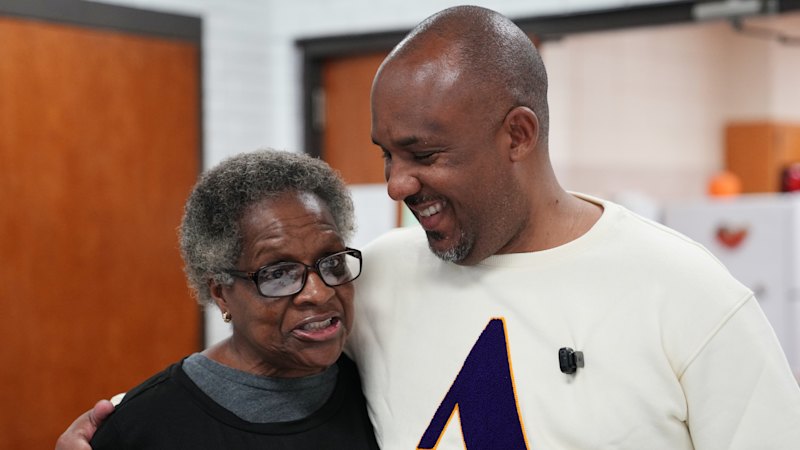
Amos was part of a network of Black women across the state that propelled group chats into on-the-ground momentum and became a visible force for the Colom campaign and turnout operation, from hosting get-out-the vote events to going county by county with a clipboard to register voters.
“You get at the table, you get in the room, and everyone did, all of the women. They did the heavy work. But you know, we’ve always done the heavy work,” Amos told CNN. “There were GOTV parties, you know, where folks hosted people in their homes, in their beauty salons, and their personal businesses, and they just had gatherings, and they just continued to get people involved.”
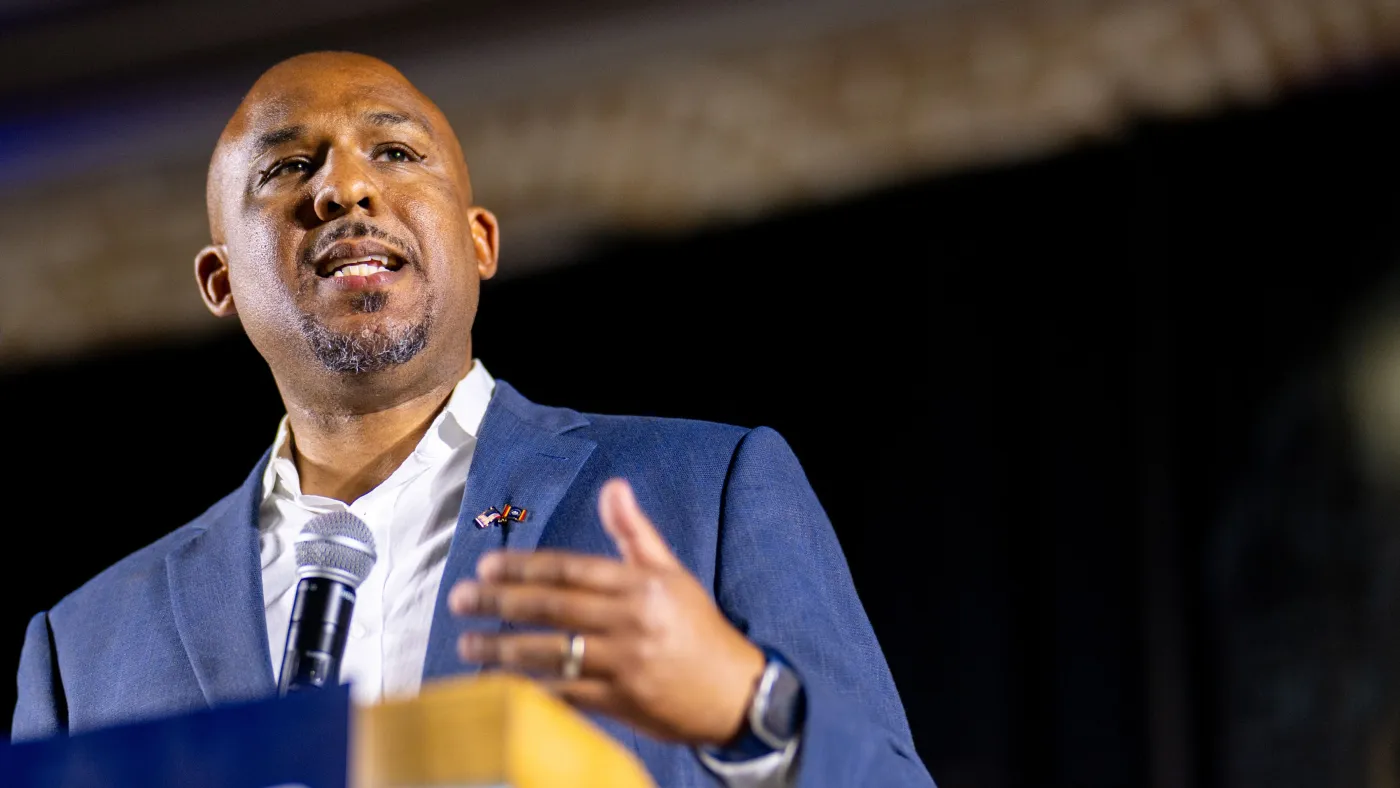
On Wednesday, more than a week after the election, that work paid off. Colom became the first Black person elected to the Senate from Mississippi since the Reconstruction era and the first Democrat since 1982.
How Scott Colom defied more than a century of history to win Democrats a Mississippi Senate seat
Black women played a major role in Colom’s victory. They made up 20% of the electorate in Mississippi, compared to 5% nationally, according to CNN’s Voter Poll, and Colom won 99% of their votes.
When an online commenter asked about the other 1%, Colom joked that it was a “statistical error.”
Across the South, Black women voters helped usher in a slew of new Democratic officeholders this year, powering Keisha Lance Bottoms to a history-making win as Georgia’s first Black governor alongside a slate of Black women who will hold key state offices. They also backed successful Democratic candidates in GOP strongholds, including South Carolina and Texas , by lopsided margins.
“Mississippi is not a fluke. The new political battleground for America is the South,” LaTosha Brown, a longtime voting rights activist and co-founder of Black Voters Matter, told CNN. “There is no path to the presidency that does not come to the South.”
In his victory speech at the historically Black Tougaloo College on Wednesday, Colom honored civil rights icon and Mississippian Fannie Lou Hamer while crediting the women in his life and the ones he met through the campaign.
“As my mom would always tell me, faith without works is dead, and we worked this election, y’all,” he said, during a celebration supercharged with excitement and a deep acknowledgement of history.
Three Black women who attend a regular breakfast club that Colom visited couldn’t contain their enthusiasm. Students of Tougaloo made a spirit line for attendees to dance their way to their seats. To kick off the event, the Tougaloo choir sang, “Lift Every Voice and Sing,” a hymn known as the Black national anthem, and when Sam Cooke’s “A Change is Going to Come” came on, the crowd joined in.
“I’ve seen some strange things happen in my lifetime, and thankfully this is one of them,” Jackson businesswoman Toni Cooley said ahead of Colom’s remarks. “I probably didn’t think that I would see it.”
South Carolina’s leadoff position in the 2028 Democratic presidential primary will only amplify the role of African Americans, who make up about a quarter of the state’s population, giving them an early role in shaping a wide-open contest.
South Carolina Democratic Party Chairwoman Christale Spain, the first Black woman to lead the state party, said the midterm results reinforce the importance of her state holding the Democrats’ first presidential primary.
“As we look toward 2028, any potential Democratic presidential nominee must recognize the importance of these voters and be willing to understand their priorities and concerns,” Spain said in statement. “Black voices must continue to be part of the conversation here and throughout the South if we want to see this level of success again.”
Dyamone White was at a dinner with Colom in Chicago at the Democratic National Convention in 2024 when Colom said he was going to run and noticed quickly that the party wasn’t taking Colom’s race seriously.
White said she was used to losing and voter apathy.
But in 2023, White helped organize events for Black women supporting Democrat Brandon Presley’s run for governor. While Presley ultimately lost by three points, White started to notice a shift in voter engagement that she helped capitalize on to support Colom’s campaign.
“We learned then how to make Black women connect to policy,” White said.
Now, she has a message for everyone who had written Mississippi off: “Wake up and smell the coffee.”
In Jackson, Patricia Smith, a longtime Democrat, was not going to be deterred. Even though she was a regular voter, she told CNN that when she showed up to vote on Election Day for Colom she was told she wasn’t listed in the poll book and had to fill out an affidavit ballot. Somehow, she said, the system had her listed at an address that she hadn’t lived at since 1991.
Smith was one of thousands of Mississippians who cast provisional ballots because they were not included in precinct poll books or did not have appropriate photo identification.
But Smith’s vote was saved. A fellow Black woman who was working as an observer watching officials sort through affidavit ballots gave Smith a call as soon as she recognized her name.
“What it does for me is renews my faith. That, and I don’t mean to sound churchy with this, but God has not forgotten us,” she said.
Cassandra Welchlin, executive director of the Mississippi Black Women’s Roundtable, said the group registered about 600 new voters this year as part of its “Power of the Sister Vote” campaign. It organized a massive post-election tele-townhall to coach voters on how to correct problems with provisional ballots.
“This moment really speaks to the courage, the actions, the fortitude and the determination of Black women,” Welchlin said.
Colom’s wife, Nadia, who was been instrumental in strategizing how to mobilize young voters and Black women, spoke to her daughters from the stage Wednesday night with a reminder of their motto: “Colom girls never quit.”
Strategists point to a “Blacklash” that built across the region in response to both the inflationary pain felt by a growing number of Americans and the GOP’s aggressive moves in the last year to curb Black political power.
The Supreme Court’s gutting what remained of the power to bring claims of racial discrimination under the 1965 Voting Rights Act in response to redistricting loomed large. Within days of the court’s decision in Louisiana vs. Callais, Republican-controlled legislatures in Tennessee , Louisiana and Alabama raced to carve up congressional districts with substantial Black populations.
“Black voters were feeling like they’ve been getting beat up on and attacked and like their rights were threatened and decided that they were that they were ready to fight back,” said Terrance Woodbury , the president of Democratic research firm HIT Strategies.
Anneshia Hardy, a voting rights activist in Alabama, said the Callais decision provided a “tangible example” of threats to Black representation that in the past have sometimes seemed more abstract to voters. “They weren’t just voting for a party, they were voting for survival,” Hardy said.
In Alabama, Democratic Rep. Shomari Figures won reelection after the state’s post-Callais redistricting forced him into a district that Trump would have won by 14 percentage points in 2024. Figures previously told CNN the Black voting-age population in the district dropped from 47% to 40% under the new map.
On Election Day, he still won by nearly eight points.
“That meant something,” Hardy said.” “That in itself kept folks’ political imagination intact.”
In Louisiana, Black voters — particularly Black women — helped Democrat Jamie Davis come within 2 percentage points of winning the state’s Senate race against Rep. Julia Letlow. The grandson of a sharecropper, Davis would have become Louisiana’s first Black senator ever.
Davis is now weighing whether to challenge Republican Gov. Jeff Landry, who is up for reelection in November 2027.
“I think it sent a really powerful message to our elected leaders here at the state level as we go into statewide elections in ’27,” said Ashley Shelton, who runs the Power Coalition, a group that works to build political power for people of color in Louisiana.
Two Black female Democrats are also in runoffs next month for House seats in Louisiana. The districts lean Republican, but Shelton said the candidates — state Rep. Pat Moore and Chauna Banks, a former East Baton Rouge Metro Council member, have “viable paths.”
“There’s a lot to be work done, but it’s a question about are voters going to show back up and I think they will,” Shelton said. Black voters, she added, “absolutely can decide the runoff.”
Even though Georgia did not redraw its congressional map after the Callais decision, the fallout from the ruling still stirred Black voters there, according to one Democratic organizer.
Eelise Davis, who was a regional organizing director for Georgia Democrats’ coordinated campaign, said the ruling came as voters in one of her counties, majority-Black Macon-Bibb County, were already concerned about the closure of some longtime polling sites.
“Once the redistricting was happening in other states and then polling locations suddenly start disappearing, they’re like, ‘Wait, what’s going on?’” Davis said. “That was definitely the fear.”
The day after Democrats romped in the midterms in Georgia, flipping the state House, outgoing GOP Gov. Brian Kemp announced he would not call a special legislative session this year on redistricting while his party still retained power of both chambers.
“The voters of our state have spoken,” he said in a statement.