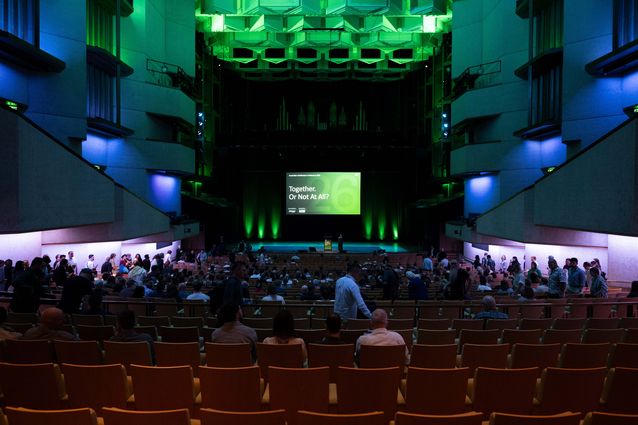
Aaron Peters provides a critical appraisal of this year’s Australian Architecture Conference, observing how the profession – and the conference itself – must evolve to stay relevant amid the challenges of an uncertain future.
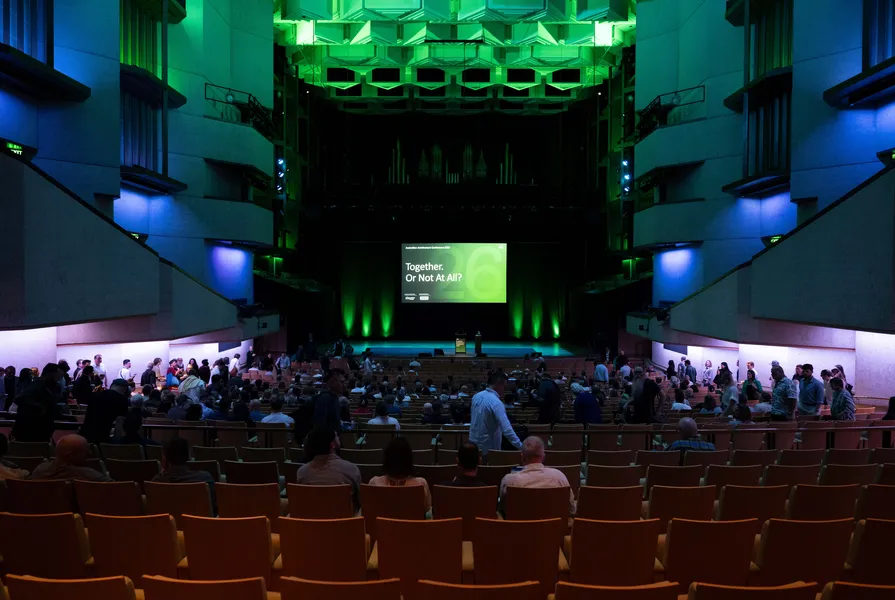
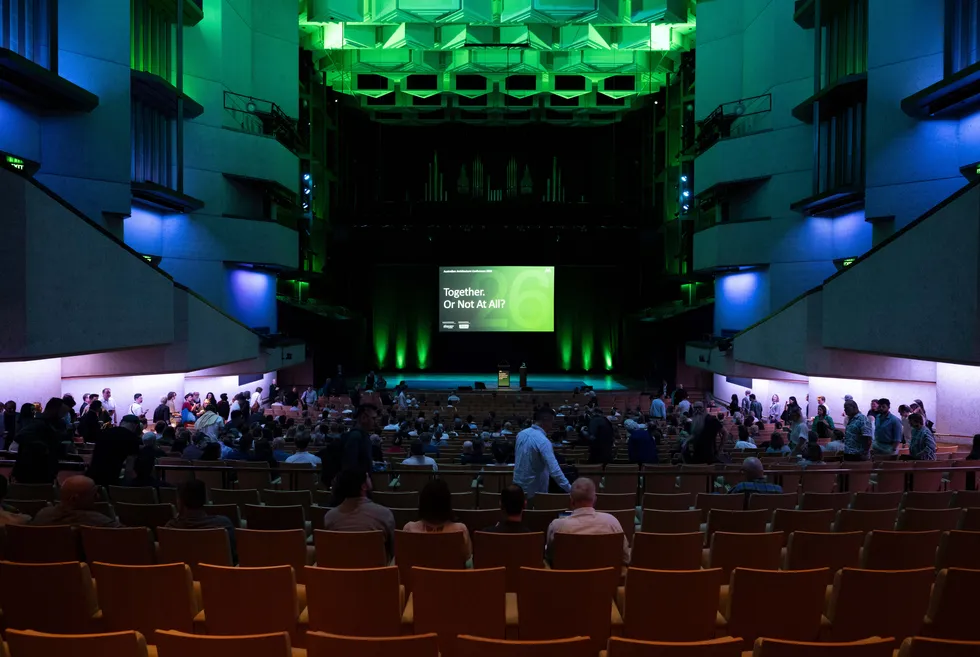
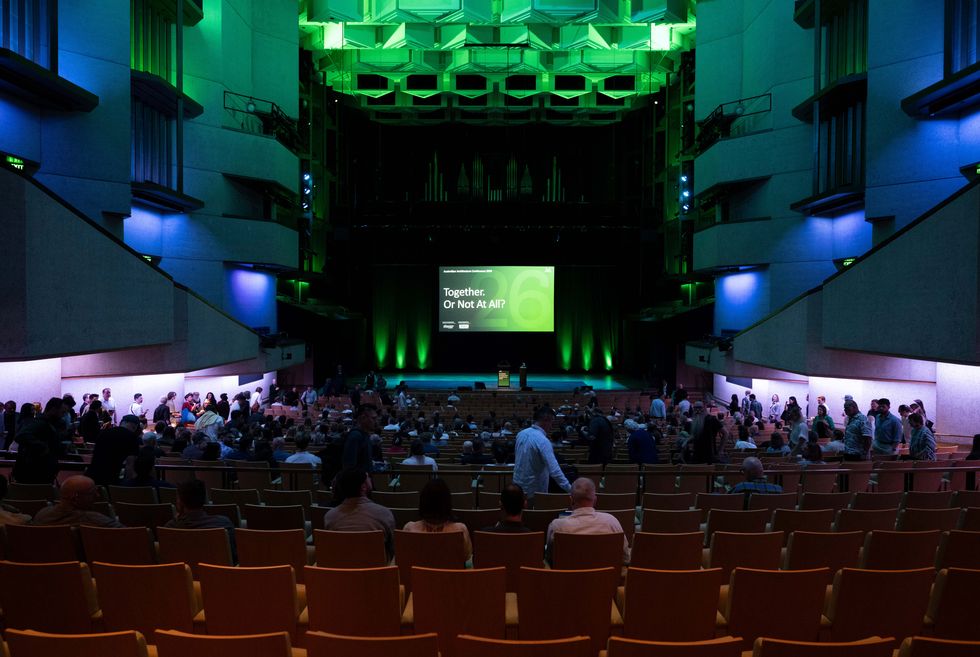
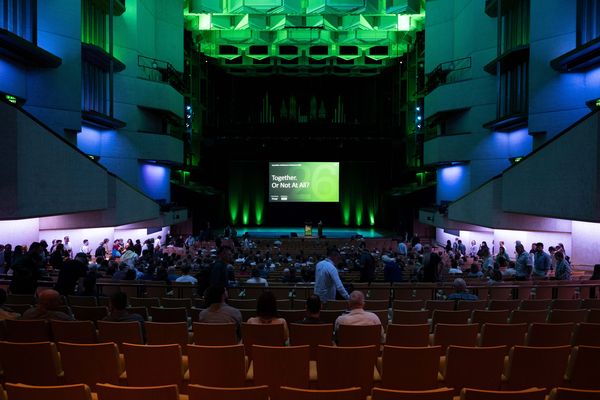
The rallying cry for the Australian Institute of Architects’ Australian Architecture Conference, this year held in Brisbane for the first time since 2012, was Together. Or Not At All? – a provocative, enigmatic theme for the Institute’s flagship forum, reflecting its diverse array of speakers and hinting at the many challenges architects, and indeed the forum itself, face.
Much has changed since 2012. That iteration , curated by Michael Rayner, Shane Thompson and Peter Skinner, was titled Experience and featured several high-profile international speakers (including a newly crowned Pritzker Prize winner) luxuriating in “the real, sensed experience of architecture in natural and constructed settings.”
As I parsed the 2026 conference program in the lead-up to the event, the weight of intervening years was palpable. This year’s program promised to be more provocative, and almost all of the anticipated notes had been struck: Indigenous design, public impact, carbon, climate, circularity, advocacy, equity, artificial intelligence and modern methods of construction. But could Brisbane 2026 pull all these threads into a coherent, invigorating event, or would it be a super-sized CPD offering?
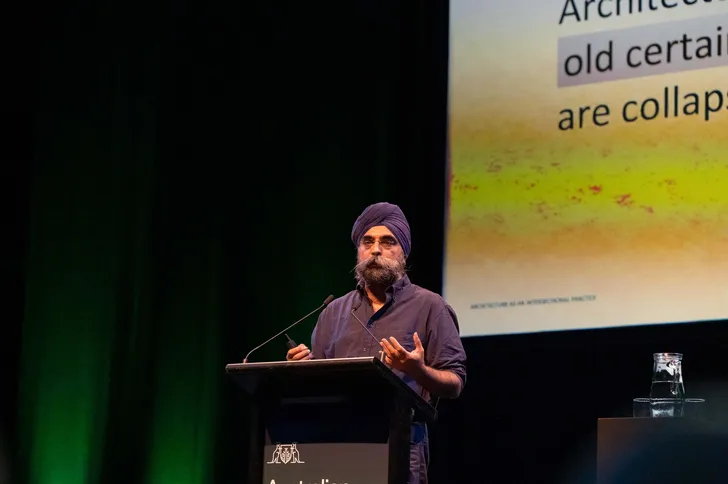
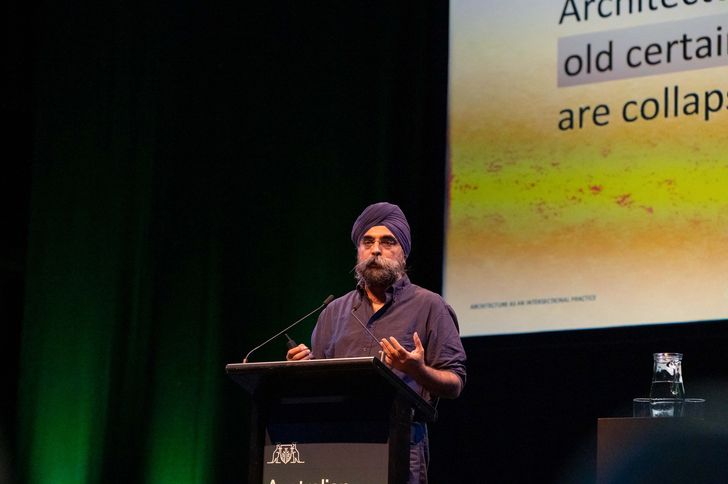
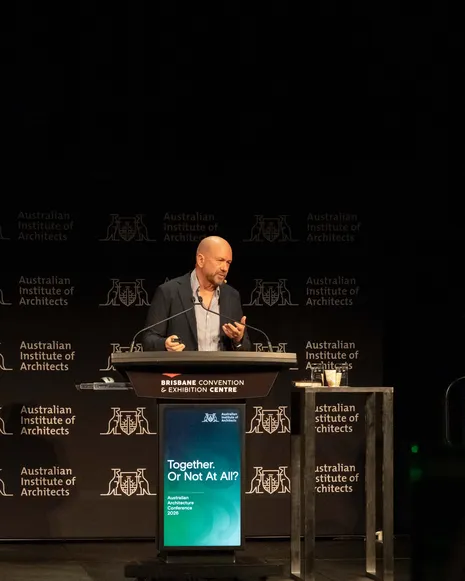
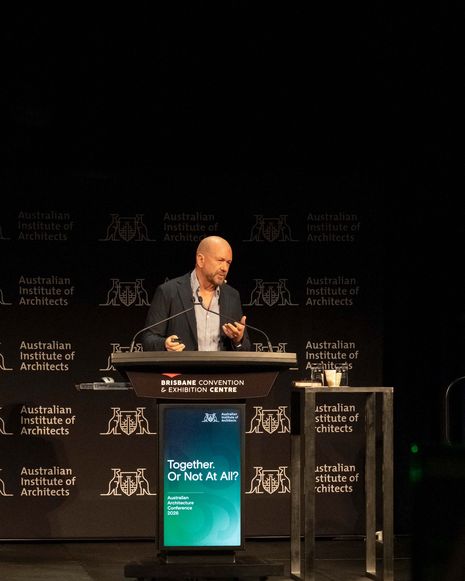
UK architect Indy Johar was the opening speaker “Together” had to have. His uncompromising opening keynote laid out not only the scale of an unfolding catastrophe, but also a timeline for our likely destruction. Johar made clear that none of our efforts so far are adequate to meet the challenges we face. He claims, among other things, that we are nowhere near adapting to a forecast 8-degree-Celsius urban temperature increase by 2100; that density is outmoded, and that large corporations are forecasting a 40 percent reduction in staff by 2028. He argues there will no longer be a financial incentive to invest in infrastructure like education and health, only a political incentive; and as such, a complete overhaul of our socio-economic system is urgently needed to enable our profession to adapt. When he quips, “you’ll be pleased to hear that I’m coming to an end,” laughter follows, the discomfort palpable.
The unenviable task of following the opening keynote falls to Rachel Nolan and Patrick Kennedy, two architects with the wit, intelligence and credentials to rescue the mood in the auditorium. Nolan leans into the microphone and grins, “Why us after that?” Their generous presentation charts the course of their practice, foregrounding collaborators’ contributions throughout. Nolan and Kennedy are a rare combination: outstanding designers, fierce advocates with entrepreneurial chutzpah and an active social conscience. No one is where Johar would like us to be, but Kennedy Nolan are further along that path than most.
Canadian-British architect Alison Brooks’s presence in the conference lineup, by contrast, was something of an oddity. Her impressive portfolio of well-mannered work is indicative of a generation of London architects, but her presentation felt out of step with the proceedings – a familiar failing of national conferences, where international keynotes can underwhelm with a portfolio round-up rather than advancing the theme. In this instance, Brooks spoke largely in architectural clichés, a first-person narrative that offered little evidence of genuine insight into her work and practice.
Laura Lee illustrated another familiar failing of conferences held at this scale. Despite her earnest, and no doubt meticulous, research, her lecture was unengaging; at one point, she joked about the unintelligibility of her own slides. And there’s the problem: outstanding work doesn’t necessarily translate into effective communication, and it’s even rarer to find someone with the presence to project their story to a room of 1,300 delegates. Generating the charisma and energy required to fill a stadium is the task of rock stars and pop bands; hard to do without a guitar and hair gel.
Ultimately, Lee’s greatest failing is not necessarily her own. This conference didn’t need an overarching theory of the problem couched in highly academic language. If you’re using the term “pluriverse” as anything other than a punchline, something is deeply wrong.
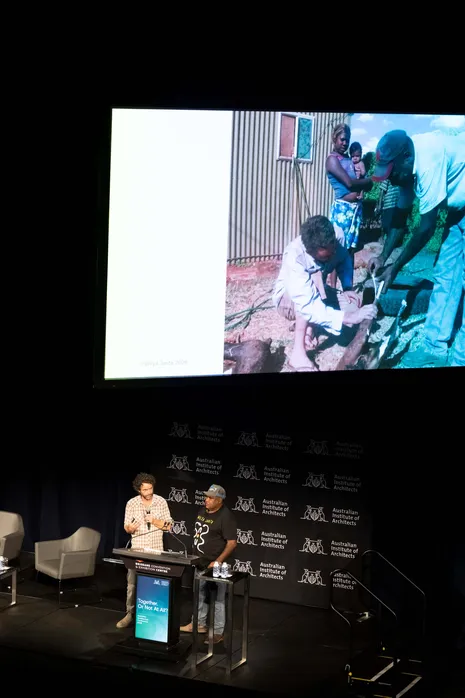
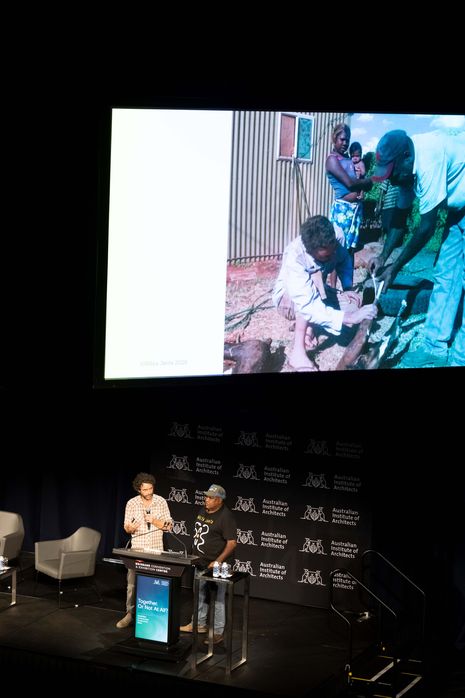
Simon Quilty and Jimmy Frank Jupurrurla.
The fifth session redeems the conference’s first day. Warumungu man Jimmy Frank Jupurrurla and doctor Simon Quilty describe, in heartfelt and plain terms, the triumphs and tribulations of their efforts to deliver culturally safe and climate-responsive Indigenous housing for remote Aboriginal communities. This presentation, from two non-architects, shows how much we have to learn from outside our profession about our responsibilities, evidence-based research and effective communication. Future conferences must take note.
Day one concludes with Peris Toral Arquitectes, and an impromptu introduction from Jeremy McLeod, who implores the crowd to “caffeinate up and focus in; these guys are fucking amazing!” He’s not wrong. The level of design ambition and construction quality, particularly when working in social and affordable housing, is impressive. However, this talk would have been even stronger as a pairing, with a client or perhaps a politician to explain how European countries entertain open competition for projects, permit experimentation and deliver social housing with construction standards rarely seen outside private houses in Australia.
A mixed first day gave way to a consistently outstanding second. South African architects Ilze and Heinrich Wolff were a wonderful choice and, like Kennedy Nolan, combined wit and humour with a compelling and varied body of work, proving that ethics can drive the engine of creative practice. Their well-structured lecture shows how agile activism and a focus on enabling occupation can permeate projects across scales and typologies, from exhibition design to a hospital and market hall.
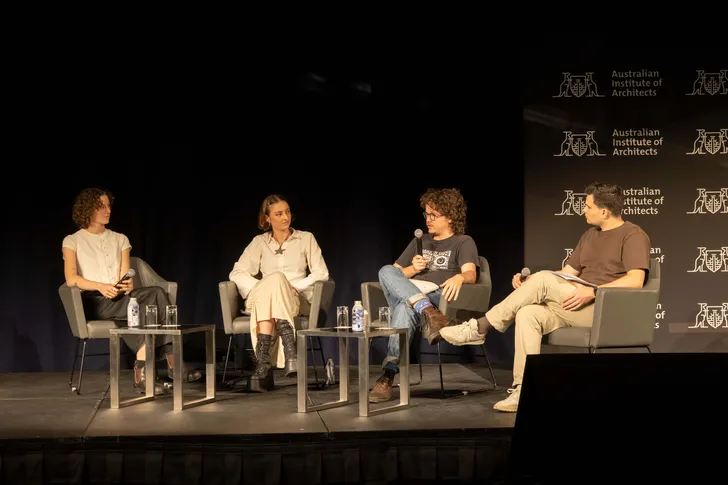
Following the opening keynote, the format shifts to concurrent sessions. I choose The Future of the Profession with short presentations from Hudson Smith, Izzie White and Gina Engelhardt, moderated by Blake Hillebrand. It’s a good choice. Each speaker offers a proposal for improving the profession, the most compelling of which is White’s argument for awarding the title of “architect” to graduates and establishing a new category of “registered architect” for those who complete the registration process, thus maintaining a distinction and allowing the significant number of graduates who move into allied fields the respect due to their expertise, broadening the visibility of architects working outside traditional practice modes, and maintaining ties to the architectural diaspora who might otherwise begin to identify as something other than what they are entitled to think of themselves as. Seriously, what have we got to lose?
Gina Engelhardt, Izzie White, Hudson Smith and Blake Hillebrand.
My second choice of concurrent session hears from Australian Institute of Architects’ Gold Medallists Kerry and Lindsay Clare, and New Zealand Institute of Architects’ Gold Medallist Richard Naish. Their lectures explore the provenance of their practices and the unexpected turns of their distinguished careers. I’m reminded of the importance of serendipity, how reliant we all are on our circumstances and the unexpected generosity of others that allows us all to carve out a life in architecture.
For the final session, we return to the keynote format. Fremantle architect Simon Pendal delivers a characteristically serious and sincere account of his research, teaching and built work. His collaboration with polymath farmer Ron Watkins, exploring regenerative agriculture, reveals an inquisitive mind unafraid to do the hard, unglamorous work of studying the science and history behind the landscapes and ecologies of south-western Australia.
The final speaker, Dutch architect Reinier de Graaf, offers a perfect bookend to Johar’s opening salvo, his presentation centred on his latest publication (that he could be found dutifully signing at the Uro bookstand), which he describes as a manifesto. He begins by assuring us, “I love architecture,” (we laugh) but that if we don’t adjust course in the next 10 to 20 years, “our discipline may not exist” (we don’t laugh). De Graaf is engaging and entertaining throughout his episodic lecture, and apart from a somewhat glib use of Mao’s Cultural Revolution as a punchline, his argument is astute, provocative, and available from all good bookstores.
The promotional tagline for the 2026 Australian Architecture Conference didn’t pull any punches, announcing it “the profession’s most important conversation in a decade.” But how effective, and indeed relevant, are these gatherings in an age where every flight is measured in carbon footprint?
Part of the challenge is financial. Filling a big room requires big drawcards. And inevitably, that means international speakers of high renown – but who even is a “headline” act when we’re no longer reading from the same shallow pool of star-making journals? The “canon” that once gave us all a shared point of departure feels increasingly anachronistic, and to many, alienating.
As a result, the Australian Architecture Conference seems, more than ever, obliged to encompass everything and everyone. It’s both an impossible burden and a great privilege for the few cultural institutions that retain a foothold in an increasingly diverse and atomised cultural landscape. And when a quick YouTube search gives access to the stump lectures of famous (and less-famous) architects free of charge, why pay a small fortune for tickets?
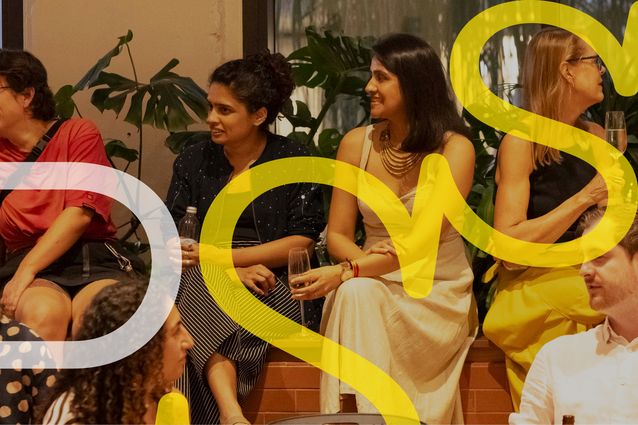
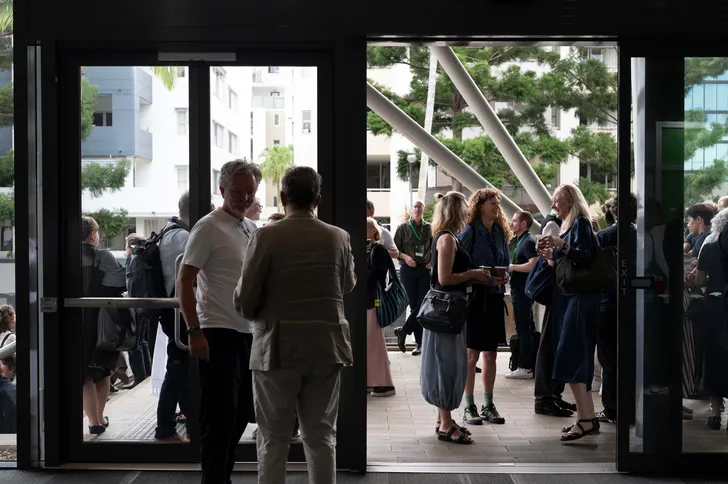
As good as this year’s conference was, I think this remains an open question. However, the undeniable highlight of every conference I’ve attended is found in the margins: waiting in the lobby, the lunch queue, standing on the footpath with a drink in hand. It’s connecting and reconnecting with other architects at an event that brings us together and gives us shared purpose.
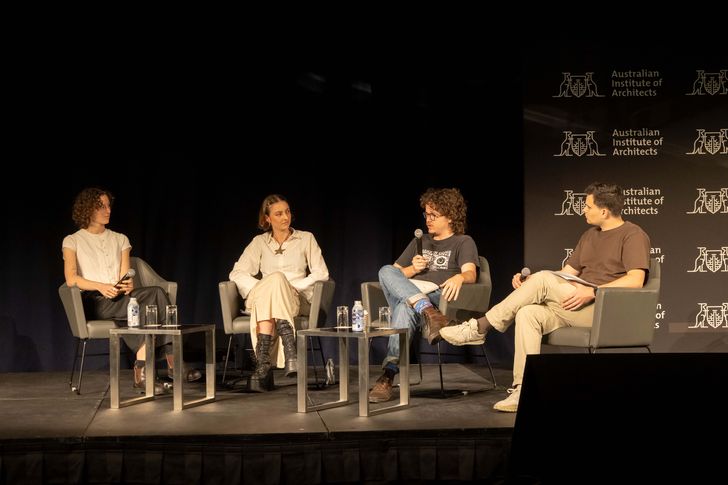
The conference provided opportunity to connect and reconnecting with other architects over a shared purpose.
Our conference, profession, and our Institute, like our planet, and indeed, our entire way of life, face an uncertain future. This venerable gathering must keep fighting for relevance alongside Design Speaks’ excellent, tight-format events, or grassroots gatherings, like Kate Finning, Andrew Murray, and Jean-Marc Tang’s independent Garage Talks, held in a wonky carport in Fitzroy, where negligible overheads and low stakes encourage risk-taking.
Will the national conference prove to be sufficiently agile, able to prosecute specific topics, narrow in its focus when required? Or will the need for broad ticket-shifting appeal or universal relevance asphyxiate a much-loved inheritance of a passing age?
In discussion with local architects and academics Kirsty Volz and John Doyle, American architectural practitioners Elizabeth Bowie Christoforetti and Jacob Reidel share insights from studio …
The Association of Consulting Architects’ 2026 Pulse Check survey provides a snapshot of the health of architectural practice across Australia.