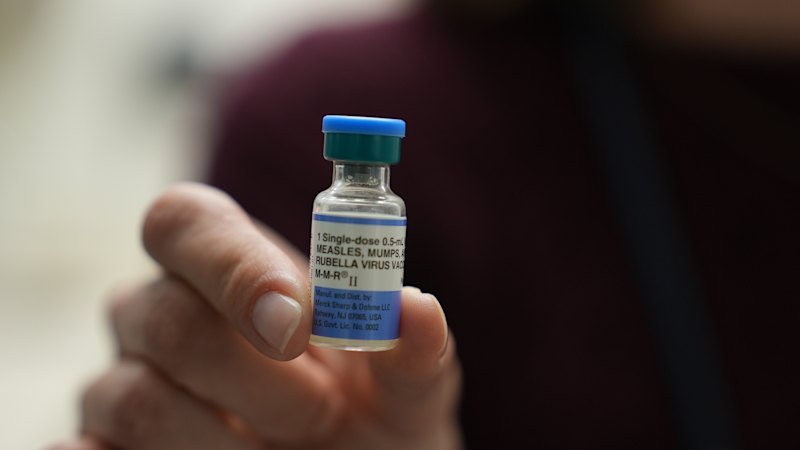
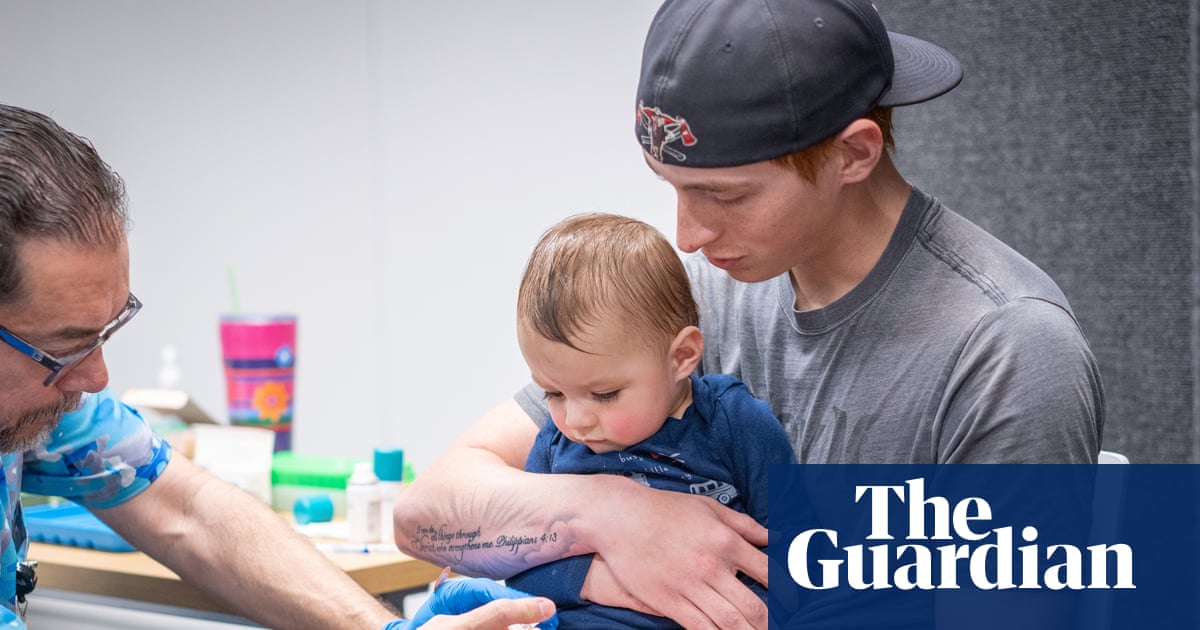
A man receives a Q fever vaccine at the Wellington Agricultural Show. ( Supplied )
Australia is expected to run out of Q fever vaccines this week.
The shortage is due to unexpected manufacturing issues.
It is hoped vaccines will be available again by the end of December.
The vaccine that protects Australians from a serious bacterial infection is expected to run out this week.
Q fever is spread by animals, including sheep and cattle, and causes severe flu-like symptoms that can become chronic and, in some cases, lead to serious cardiovascular complications.
Last year Australia recorded 991 Q fever cases; the highest number since national monitoring began in 1991
Australian manufacturer CSL Seqirus is contracted by Australia's Department of Health (ADH) to supply the vaccine.
"Unfortunately, we actually expect a short temporary stock out starting now through to the end of the year," senior vice-president of operations Chris Larkins said.
"We've expedited the next two batches that are being manufactured. They'll be available, we believe, late December.
"We are very sorry. We know it affects public health, especially in the country and also affects businesses financially out there."
Mr Larkins said stabilising supply was the company's highest priority "given how critical it is to public health and getting our agricultural businesses back up and functioning".
Rawsonville dairy owner Erika Chesworth said she had been unable to vaccinate her staff since March.
"We've just had very short responses from the only local clinic saying they are unable to source the vaccine," she said.
Erika Chesworth from Little Big Dairy. ( Supplied )
"It's just been dead ends everywhere; there's been no communication from anyone in any capacity."
Ms Chesworth said the situation left staff and the business "vulnerable to a disease that animals can't be vaccinated for".
"It puts us at a high risk. It's hard enough to secure staff with skills," she said.
"We had an experience two summers ago when two staff members contracted Q fever and they were really sick.
"We had a seven-year-old grandson contract Q fever … people can't be done until they're 15, there are so many problems."
Mr Larkins said the Q fever vaccine was "an exceptionally complex product to manufacture", with each batch taking nine months to produce using an inactivated form of the bacteria.
"Over the last 12 months we've seen an unfortunate situation where we've had a combination of raw material supply issues … and then we've had unexpected manufacturing equipment issues on our filling lines with our electronic system," he said.
A Q-fever vaccination is already mandatory for those working in meat processors across Australia. ( ABC Rural: Tom Major )
"It's been a perfect storm where we've been unable to release about three or four batches to the market that were coming through this nine-month cycle period.
"We think from later this year or early next year the constrained supply situation will ease up and we'll be able to get that product out to customers."
Mr Larkins said the company expected production issues to ease after moving operations to two new, state-of-the-art sites in Melbourne.
Nurse and shearer Carol Mudford said she waited five years to get a Q fever vaccine after she started working in the sheds in 2020.
"It's either not been available or very difficult to get for the last five, six years," she said.
Ms Mudford said Q fever was a public health problem, not just an agricultural issue.
"A lot of people still don't know about Q fever; we need more awareness because anyone in rural Australia is at risk," she said.
Carol Mudford (left) after receiving a Q fever vaccine in Dubbo. ( Supplied )
"It is highly contagious as a bacteria that travels in the dust.
"It spreads very well; it can linger on clothing that comes back to a family home, through dust that flies off a livestock truck or spread through mowing lawns."
A spokesperson for the Health Department said in a statement that CSL Seqirus was responsible for managing the manufacture and commercial supply of Q-VAX, "including distribution arrangements and the allocation of available stock".
"This arrangement with CSL Seqirus, over 10 years and worth $1 billion, supports the continued availability of domestic manufacturing capability," they said.