You have reached your maximum number of saved items.
Remove items from your saved list to add more.
You've used all of your gift articles. 3 more will become available on the 1st of every month.
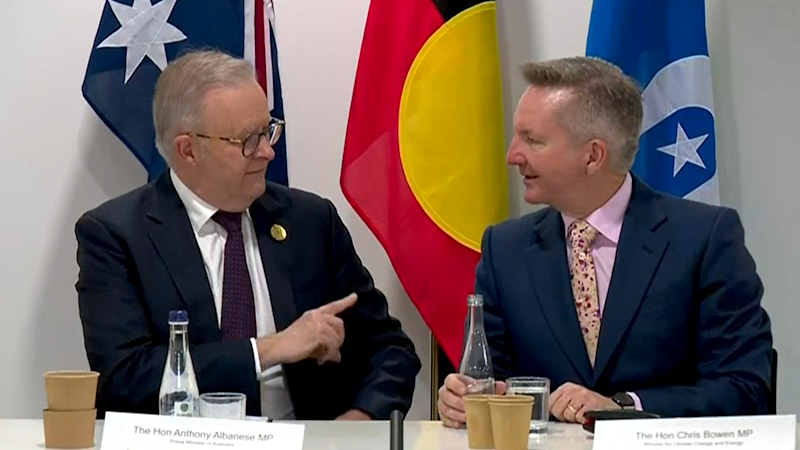
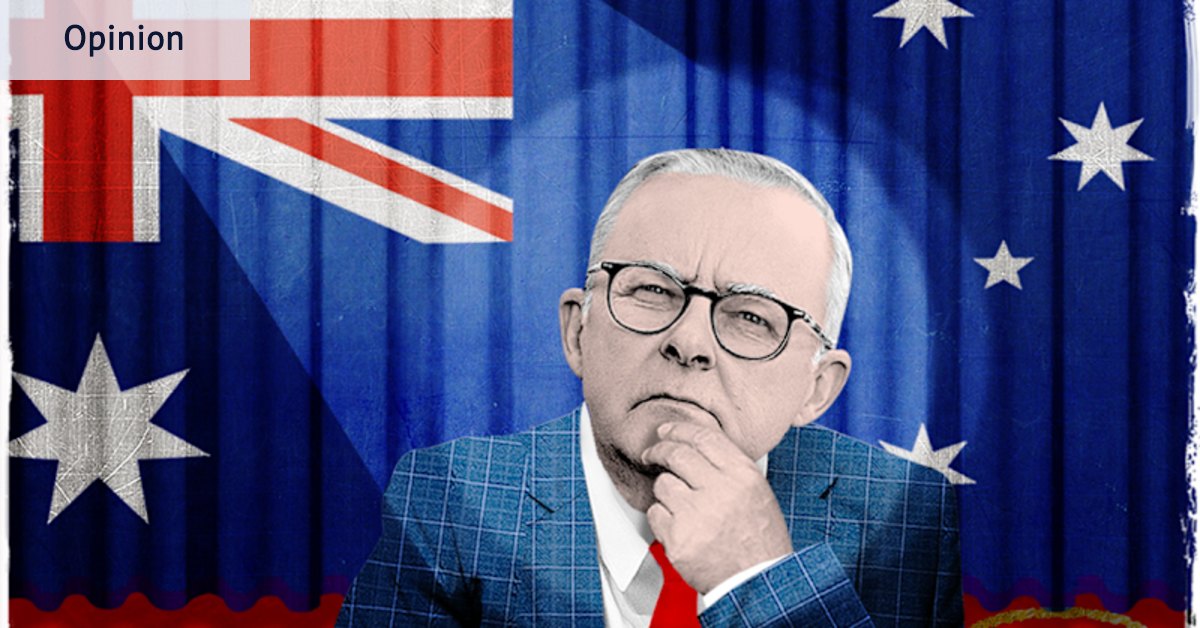
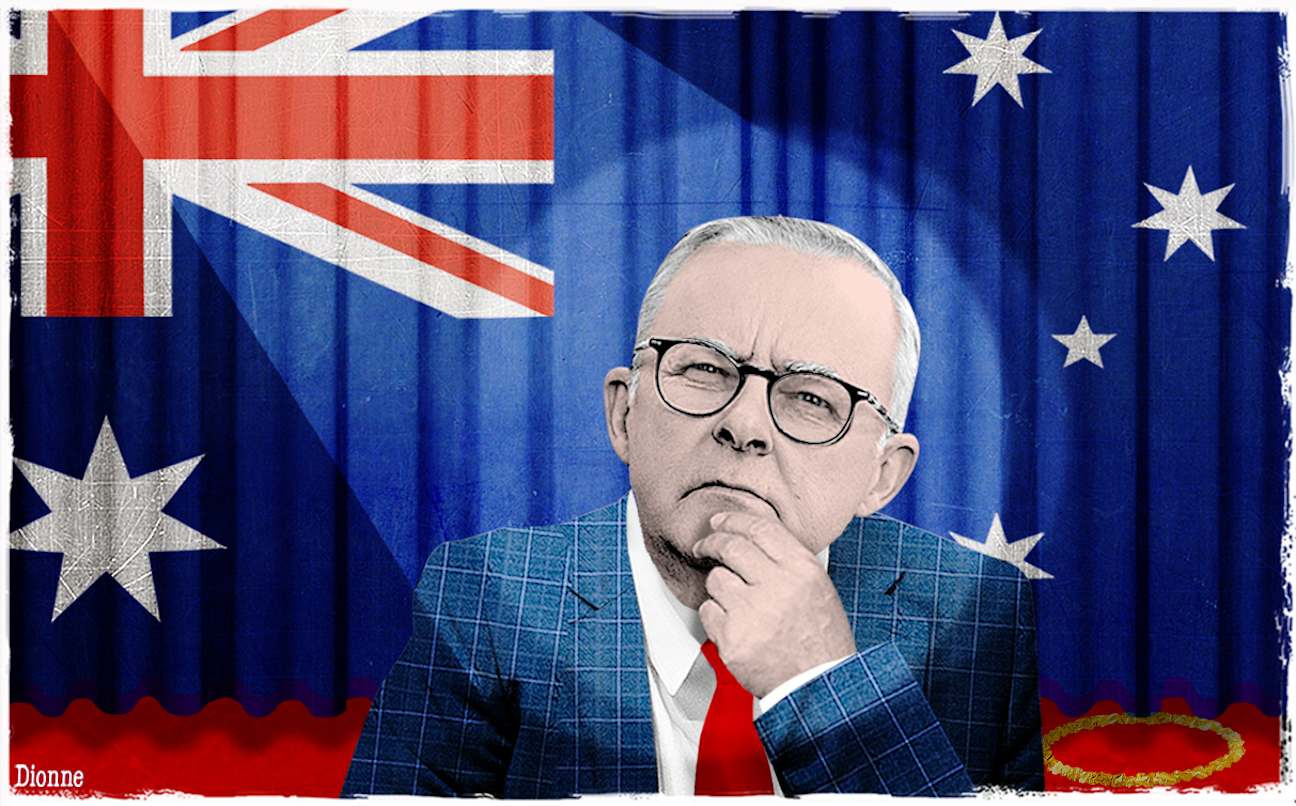
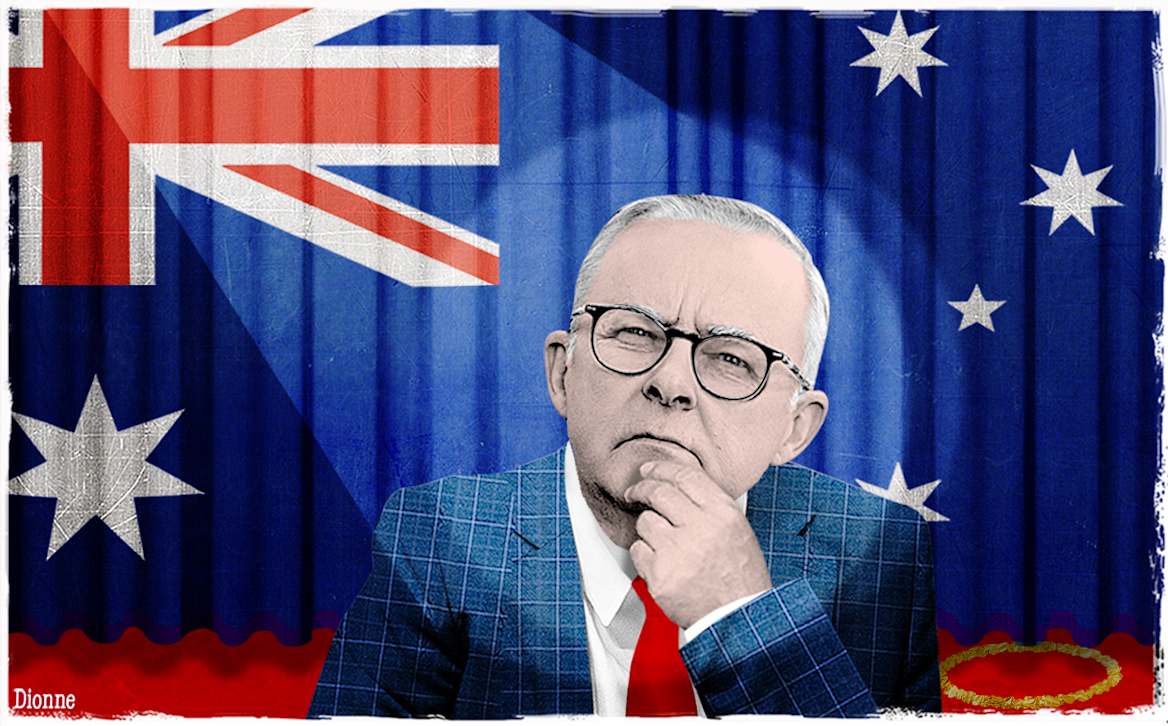
Anthony Albanese had a story to tell and sell to a shell-shocked Labor Party in the days after its surprise 2019 federal election loss: Give me the leadership and I, Albo the everyman with a love of beer and Oz rock and my single parent, public housing upbringing, will not frighten or challenge the voters with big or difficult policy ideas as my rival Bill Shorten did. I won’t antagonise business by attacking the “big end of town”, as Shorten did: I will bring calm to politics, let the erratic Scott Morrison destroy himself and lead our party into office.
After ascending to the leader’s chair unopposed, Albanese was good to his word. Labor secured a small win in 2022 and a landslide victory last year. Every leadership choice involves a roll of the dice and this one paid off. But the profound extent of the Albanese wager is now being laid bare.
His approach was vested in his belief in himself as the character known as “Albo”, who enjoyed a special relationship with ordinary Australians. He was no Bob Hawke, who was effectively willed into the prime ministership by a large majority of Australians and kept there for multiple electoral terms. But he was still seen by most as not a bad bloke. Four years into his time as PM, the goodwill has worn off. He’s more “Albanese” than “Albo” these days.
The essence of the gamble on Albanese was that the Labor government he would lead would take power in 2022 without extolling a comprehensive critique of the country’s deep-seated problems after 20 years of Coalition rule in the previous 26 years. Instead, rather than pointing to a series of urgent crises that Labor would have to fix, he stepped lightly into power as the man who was not Morrison.
His method did not deny Labor’s regular role as the greater change agent in politics as much as suppress it. Labor governments have traditionally come to power either at times of crisis – during or just before the world wars, the Great Depression and the severe recession of the early 1980s – or by diagnosing serious policy problems in need of prompt rectification. Always, they were invested with a sense of urgency. Under Albanese, there was a list of things to address, including climate change and workplace relations. But the urgency, underpinned by a coherent narrative about the government’s larger strategy and purpose, was hard to find.
There was a lot that was wrong with the structure and practice of our economy when Labor came to power in 2022, the housing market being the best and most widespread example, and the addiction to immigration as the chief driver of economic growth coming in second. Throw in the stagnation of wages and productivity, plus a lack of business innovation, and there was a lot to deal with.
Essentially, too many Australians have eventually found themselves in hock because of the long property bubble that started at the advent of this century. From these broken settings, many of the government’s woes flow. Albanese could have said, after coming to power, that things were worse than he had been led to believe and a major post-pandemic policy rethink was unavoidable. After campaigning with the slogan “Bringing Australians Together” in 1983, Hawke and his treasurer Paul Keating did something like that in their first year of office. They embarked on a policy revolution, remaking the economy.
But that was not Albanese’s way. His modus operandi as leader was tailored to suit his strengths – and his limitations. His understated demeanour, the strong nasal voice accessing a less than expansive vocabulary, and his deep interest in physical infrastructure were all key features. Erudition can be overrated as a political gift. Malcolm Turnbull was the most erudite and intellectually capable of recent prime ministers but almost lost the one election he fought as leader.
By and large, Albanese profited initially by not looking like he was putting on airs and graces or being too clever. But sometimes you have to be a bit clever to get yourself out of political troughs, and the ability to tell a sophisticated story simply and persuasively is the central way to do that. This is the weakness of the “taking down the temperature” approach. When the public is raging about its cost of living troubles, suggesting everyone just calm down won’t cut it.
It’s not as though Albanese has no scores on the board when it comes to pursuing tough policy issues or landing on the right rhetorical line. The social media ban for under-16s and his continued focus on applying guardrails and accountability to AI developers and social media companies show that it’s not beyond him to handle difficult issues over long periods.
And his response to a suggestion that he was too soft during last year’s election campaign – “Kindness isn’t weakness. Kindness is something I was raised with” – was probably the most effective thing he’s said as PM. It captured the difference between him and his campaign opponents Peter Dutton and Donald Trump.
Albanese is not the first prime minister whose brand as the leader with the common touch turned sour. It happened to Hawke and John Howard. But their falls took longer; both won four elections as prime minister before being seen off – in Hawke’s case by caucus and in Howard’s by voters. Along the way to their final reckonings, they had their bad times but found ways to stage multiple recoveries. Albanese did it in his first term, after his failed advocacy in the Voice referendum put him in the doldrums.
There is a possible way forward if he chooses it. Defending this year’s budget measures aimed at taking the heat out of property prices, Albanese uncharacteristically spoke directly, describing the housing market as broken. The property research company Cotality says the median value of Australian homes has dropped $63,400 since March. For younger Australians, most of whom are very poorly treated economically, this is a good thing.
He could do worse than owning the drop in property prices – aren’t price falls good when we’re fighting inflation? – and start speaking loudly and assertively about fixing all the other things that are structurally wrong. It’s a risk, but the “keep calm” schtick has run out of puff.
Shaun Carney is a regular columnist, an author and former associate editor of The Age .
The Opinion newsletter is a weekly wrap of views that will challenge, champion and inform your own. Sign up here .
You have reached your maximum number of saved items.
Remove items from your saved list to add more.
You've used all of your gift articles. 3 more will become available on the 1st of every month.