Stocks tumbled slid on Thursday on renewed concerns around spending by artificial intelligence companies, while while oil prices jumped as geopolitical tensions rise.
The tech-heavy Nasdaq Composite pulled back 2.1%, while the S&P 500 shed 1.3%. The Dow Jones Industrial Average dropped 279 points, or 0.5%.
Meta Platforms slipped 5% even it exceeded revenue expectations and offered upbeat guidance. Technology more broadly was under pressure as well as ongoing concerns about artificial intelligence spending persisted. Advanced Micro Devices fell more than 5%, while Micron Technology and Nvidia dropped 2% and 1%, respectively.
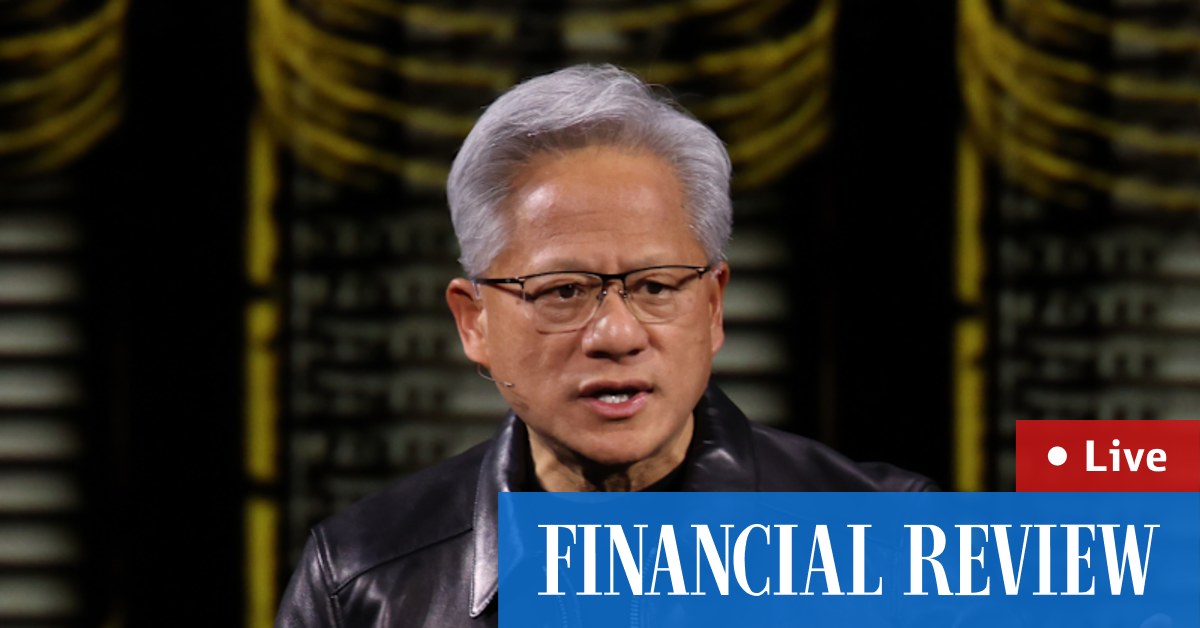
Neocloud leader CoreWeave , whose bond yields and credit default swaps remain elevated , declined nearly 4% as well. The move comes as Nvidia CEO Jensen Huang told CNBC Thursday that demand for neoclouds is " off the charts ." However, he added that capital is scarce and impeding growth.
Huang's commentary about a scarcity of capital is "spooking markets and reigniting the concerns around the capital markets on the credit side being full from a risk appetite standpoint," said Wells Fargo traders in a note. They also said Meta's comments about the large amount of AI funding needed caused the shares to roll over and weighed on overall market.
JPMorgan traders noted that Wednesday's bullish "tone reversed overnight" because Meta shares rolled over in the premarket and chatter increased "over renewed Iran kinetic-risk post US mid-term election."
Additionally, "underlying price actions and feedback from our trading desk also suggested the still fragile narrative around AI financing concerns and the lack of conviction/re-grossing from the recent tech reversal," they said in a note to clients.
Oil prices, meanwhile, jumped after The New York Times reported, citing sources, that the U.S. and Israel have plans for renewed strikes against Iran following next month's midterm U.S. elections. President Donald Trump also told reporters late Wednesday that Washington is not negotiating with Tehran and that something will happen "fairly soon."
International benchmark Brent crude futures traded 3% higher at above $112.45 per barrel. West Texas Intermediate crude futures advanced 2% to above $99.95 per barrel.
Investors also turned to U.S. Treasurys in their search for a safe haven. The benchmark 10-year Treasury note yield dropped more than 9 basis points to 5.048%. The 2-year note yield also shed 9 basis points to trade at 4.733%.
Shares of CME Group advanced 3% on the back of an upgrade by JPMorgan.
The bank re-rated the stock to overweight from underweight and increased its December 2027 price target on the stock to $367, up from their prior $250.
JPMorgan analyst Kenneth Worthington describer the current interest rate environment as "constructive" for further growth in CME's interest rate business since the company benefits when CME activity when longer term rates are rising.
He also favors CME's launch of a series of new products, which could "evolve into larger opportunities," citing its successful launch of its crypto futures service.
The analyst also cites CME's expansion in some cases to 24/7 trading for pre-existing retail-sized contracts.
Rollins reported weaker-than-expected third-quarter results as the pest control company continued to face challenges attracting residential customers.
Revenue rose 6.2% from a year earlier to $1.09 billion, while adjusted earnings came in at 33 cents per share. Analysts polled by FactSet expected a profit of 34 cents per share on revenue of $1.11 billion.
"We are disappointed with our third quarter performance and are acting with urgency to address the challenges impacting our results. We now have a clearer understanding of how the customer acquisition landscape is evolving and are taking concrete steps to optimize our approach," said President and CEO Jerry Gahlhoff Jr.
To be sure, the stock rose more than 4%.
The Dow Jones Industrial Average lost 218 points, or 0.4%. The S&P 500 shed 0.9%, and the Nasdaq Composite pulled back 1.5%.
Shares of Lockheed Martin rose more than 3% after the company reported better-than-expected results for the third quarter. Driven by strong demand for fighter jets and missile defense systems, Lockheed also hiked its earnings and revenue guidance for 2026.
The company now expects 2026 sales of about $80 billion to $82 billion, up from its previous outlook of $79.75 billion to $81.75 billion.
Sales for the defense contractor touched $20.6 billion, an increase of 11% from a year earlier. Lockheed's order backlog jumped to a record $292 billion, boosted by a $52.5 billion multiyear contract for PAC-3 missile interceptors amid heightened global defense demand.
Shares of Procter & Gamble added around 3% in premarket trading after the consumer goods company posted a beat on both the top and bottom lines for its fiscal first quarter..
The Tide and Pampers parent saw adjusted earnings of $2 per share, topping the $1.88 consensus estimate, according to LSEG. Revenue came in at $23.28 billion, above the $22.80 billion expected from analysts.
Procter & Gamble also raised its full-year revenue guidance to a range of 2% and 4%, up from its prior guidance of 1% to 3%.
"While we expect there will continue to be geopolitical and economic challenges, this strong start keeps us on track to deliver within our guidance ranges for organic sales growth, core EPS growth and free cash flow productivity for the fiscal year," CEO Shailesh Jejurikar said in a statement.
Initial filings for unemployment insurance slipped last week to their lowest level since mid-July, the Labor Department reported Thursday.
Jobless claims totaled a seasonally adjusted 194,000 for the week ending July 18, down 6,000 from the prior period and below the Dow Jones consensus for 200,000. That was the lowest total since July 18 as employers remain reluctant to let go of employees even as hiring as slowed.
Continuing claims, which run a week behind, rose 25,000 to 1.73 million.
President Donald Trump told reporters Wednesday night the U.S. is not negotiating with Iran but added "something will happen fairly soon." His comments come as investors worry about escalating tensions in the region following the midterm elections in November.
Asked whether the neocloud business model is on shaky ground, Nvidia CEO Jensen Huang told CNBC on Thursday that capital for the sector is scarce.
"There's a scarcity of capital. The demand [for] the capital is much greater than the availability of the capital," Huang said.
An analysis from Gartner put out last week found that as much as $3.5 trillion in investment spending could be on the rocks due to insufficient profitability for AI software. Large scale consolidation among AI-dedicated providers of computing power could ensue.
By 2030, more than 80% of neoclouds could cease functioning as independent businesses and be susceptible to some form of takeover, Gartner warned.
Check out the companies making the biggest moves premarket:
American Airlines forecast deeper losses this year as record revenue failed to help the airline recover from this year's spike in fuel costs. The carrier plans to slow its capacity growth next year as a result.
American on Thursday said it expects to lose between $1 and $1.60 a share, on an adjusted basis for the full year. In July, it forecast earnings of up to 65 cents a share to a loss of as low as 65 cents a share.
The airline's stock was down about 4% in premarket trading. Read more .
Spotify Technology delivered a slight miss on both operating income and revenue compared to expectations in its third-quarter earnings report, according to FactSet.
However, forecasts for operating income for the fourth quarter came in above estimates, and U.S.-listed shares of the Swedish company were higher in premarket trading Thursday. The stock was rising more than 5% before the bell.
The company also reported 306 million subscribers, slightly above estimates for 305.11 million, according to StreetAccount.
"We've built a strong business that keeps compounding, we invest when we see a path for growth, our costs are moderating, and there is more runway ahead," Spotify co-CEO Alex Norström said in a statement about the results.
Oil prices surged Thursday after The New York Times reported, citing sources, that the U.S. and Israel have plans for renewed strikes against Iran following next month's midterm U.S. elections.
Brent crude traded 2.7% higher at $111.77 per barrel. WTI advanced 2% to $99.25 per barrel.
Birkin bag designer Hermès dropped to the bottom of the Stoxx600 index after reporting third-quarter earnings highlighting a drop in demand from Chinese consumers.
The French luxury brand saw total revenue for the third quarter rise 4.3% to 4.1 billion euros ($4.6 billion), recording growth in America, Japan and Europe. However, sales of its ready-to-wear and accessories division as well as watches fell during the quarter. It also flagged that growth in the Middle East and France was slightly down.
"Back to China now, what we see is that it's the volume divisions that are suffering, so fashion accessories, for example, and also watches and shoes," Chief Financial Officer Eric du Halgouet said in the earnings call.
"It has to do with a drop in footfall that we have been able to offset with greater value, which is the strength of Hermès. With other divisions like jewelry, leather goods, and such, it's really a matter of footfall more than anything else, and the volume-related mid-tier that suffers the most."
Halgouet also emphasized that regarding recent protests in Paris, the brand has "reinforced security and safety" of its staff and stores, but it's too early to gauge the impact on the business and on tourism.
Asian stocks tumbled on Thursday, led by a sell-off in technology shares.
The MSCI All Country Asia Pacific ex-Japan Index fell over 2% to its lowest level in nearly three months, putting it on course for a fourth consecutive weekly decline.
Japan's Nikkei 225 reversed earlier gains to decline 2.6% to 62,907.84, while the Topix lost 1.1% to 3,997.5.
South Korea's benchmark Kospi was down 3.52% to 5,533.77, while the small-cap Kosdaq was down 3.6% at 764.1.
China's CSI 300 index shed 1.8% to 4,036.30, while Hong Kong's Hang Seng Index declined 3% in its last hour of trade.
Many technology names were seen lower in early premarket, with Intel and Marvell Technology both down more than 5%, Micron Technology down 3.5% and Qualcomm down 2.94%.
Nvidia shares were seen 2.2% lower.
French borrowing costs remained under pressure in morning European deals Thursday, with the yield on the 10-year OAT up nearly 6 basis points to 5.0514%.
The yield closed Wednesday around 5.02% , its highest level since 2002.
Mass protests and rioting over the weekend have further spooked investors , compounding existing concerns that the country's politicians will struggle to pass reforms to reduce the budget deficit and tackle its growing debt .
French stocks on the CAC 40 index were down 1.33% in early trade. Luxury goods giant Hermes fell 6.3% after missing analyst expectations for third-quarter revenues.
The pan-European Stoxx 600 was down 0.78% shortly after 8:10 a.m. in London (3:10 a.m. E.T.) as the continent's main bourses and sectors started Thursday's session mainly in the red.
Basic resources shed 2.22%, leading losses, as travel and leisure stocks slumped 1.94% in early dealmaking. Banks slipped 1.93% while technology names were down 1.79%.
Food and beverage stocks advanced more than 1%, while telecoms rose 0.39%, and oil and gas ticked 0.14% higher.
The French CAC 40 shed 0.82% in Paris, while Italy's FTSE MIB dropped 0.96% in Milan. In Frankfurt, Germany's DAX opened 0.73% lower, while in London, the U.K.'s FTSE 100 futures slipped 0.54%.
Nestlé CEO Philipp Navratil told CNBC Thursday that while third-quarter results were strong globally, the U.S. has been a tough market as shoppers face budget strains and seek value.
"Look, the U.S. numbers were also good in Q3... but consumers are still cautious, so it's not an easy environment in the U.S. at all," Navratil told CNBC's Carolin Roth on "Squawk Box Europe."
"Consumers look for value, they are stretched at the end of the month, and so we have to adapt the portfolio to the right price points," he said.
Nestlé reported organic sales growth of 4% in the third quarter, with real internal growth (volume and product mix) of 2.8%.
Nestlé's Americas sales improved in the third quarter, led by stronger U.S. and Latin American demand, despite continued weakness in some consumer segments.
"When we price, we do this with the aim to take consumers along...so we use different price points, different portfolio brands to really cater for each of the budgets out there," Navratil added.
Defense electronics group Thales boosted its full-year outlook early Thursday, amid a major rearmament push among European defense primes.
The company, best known for military radars, secure battlefield communications, and the sophisticated avionics and sensors it supplies for Dassault Aviation's Rafale fighter jet, said it now expects organic sales growth toward the upper end of its guided range of 6% to 7%, "and potentially beyond."
In the third quarter, organic sales grew 8.7% year-on-year to 5.5 billion euros ($6.2 billion). Order intake rose 3% to 6.7 billion euros as customers ordered its air defense radars and battlefield communications systems, driven by "sustained demand in most markets."
Thales also reported a sharp increase in orders from the Middle East regions, up 210% in the first 9 months of the year compared to the same period a year ago.
Barclays ' third quarter pre-tax profit came in at £2.3 billion ($3.1 billion), up 12% year-on-year, and in line with LSEG-compiled forecasts of £2.3 billion. Group income was £7.4 billion, compared to analysts' expected £7.61 billion.
Net interest income for the three-month period held steady at £3.91 billion, as the bank announced a new £500 million share buyback.
Barclays' CET1 capital ratio — a measure of a bank's solvency — was 14.2%, down from 14.3% at the end of the second quarter. Return on Tangible Equity, meanwhile, was 11.7%, versus 16.1% the previous quarter.
Stoxx 50 futures were more than 1% lower ahead of the market open, with European stock markets set to start Thursday's trading session in negative territory.
The French CAC 40 is set to open 0.91% lower, with Germany's DAX is seen starting down 0.73%. Italy's FTSE MIB was down about 1%.
In the U.K., FTSE 100 futures were off by 0.44%.
New car registrations in the European Union have risen 5.7% year to date, the European Automobile Manufacturers' Association (ACEA) said Thursday.
The industry group said the market was showing "notable resilience" despite headwinds including higher energy prices and volatile geopolitics.
Buyer support measures and a greater range of models on offer have meanwhile supported electric vehicle sales, ACEA said.
Hybrid-electric cars were the most popular, with 36.3% of the market. Battery-electric cars accounted for 22.7% of new EU registrations, while plug-in hybrid electric sales accounted for 10.1%.
The share of petrol and diesel cars fell from 36.9% to 28.2% year-on-year.
The Indian rupee has appreciated for eight straight sessions against the dollar, marking its longest strengthening streak since March 2025.
The rupee, which has been among the weakest Asian currencies for over a year, closed on Wednesday at a nearly four-month high of 94.46 rupees per dollar.
Devarsh Vakil, head of Prime Research at HDFC Securities, said the sustained momentum of the Indian currency has been "anchored by strategic central-bank intervention, healthy foreign inflows into the primary market and profit-taking in the US dollar."
Earlier this month, India's central bank announced measures that made it expensive to take speculative bets on the rupee and restricted rebooking of cancelled foreign exchange derivative contracts. It also opened a special window to meet the entire daily dollar requirements of three public sector oil marketing companies, ring-fencing this trade from spot markets.
China's benchmark CSI 300 index on Thursday entered bear-market territory, falling 20% from its June peak, as a prolonged sell-off in its equities deepens.
The index, which tracks 300 of the largest stocks listed in Shanghai and Shenzhen, has declined for 10 consecutive weeks and is down 2.6% so far this week, underscoring sustained pressure on Chinese equities, data from LSEG showed.
"I think China is really struggling with reining in the problems that they've had in the past from the overbuild of capacity and other things," said Jordan Cvetanovski, chairman and CIO at Pella Funds. China's equity market continues to face structural challenges, particularly as the world's second-largest economy grapples with the fallout from years of excess capacity and overinvestment, he added.
In September, the country posted it's weakest growth in industrial profits this year amid intense competition that has eroded margins and even invited the government to step in.
South Korea's central bank expectedly kept its policy rate steady at 3% on Thursday, after two straight hikes, with analysts pointing that it does not signal a change in policy stance as inflation stays elevated.
Economists polled by Reuters had forecast the Bank of Korea to hold rates and the decision comes after President Lee Jae Myung reportedly called for an "all out effort" to boost housing supply.
Inflation in Asia's fourth-largest economy came in at 2.9% in September, staying at or above the BOK's 2% target for 13 months.
Analysts from Dutch Bank ING said that the pause was unlikely to mark the end of the tightening cycle, as inflation remains above target and economic growth was relatively resilient.
Growth for South Korea has been largely supported by exports of semiconductors as demand for chips to power the AI boom continues.
Exports for September skyrocketed at a record 83.7% year on year, with semiconductors spiking over 262% compared to the same period last year.
Asia-Pacific markets opened mixed Thursday.
South Korea's Kospi was down 0.67%, while the tech-focused Kosdaq fell 0.73%.
Japan's Nikkei 225 rose 0.19% and the Topix advanced 0.38%.
Asia-Pacific markets were set for a mixed open on Thursday as concerns over the sustainability of the artificial intelligence boom continued to weigh on investor sentiment.
Futures for Japan's Nikkei 225 in Chicago were at 64,555 while in Osaka they were last at 65,030, compared with the index's previous close of 64,621.24.
Futures for Hong Kong's Hang Seng index last traded at 23,602, lower than the index's last close of 23,651.87.
Australia's S&P/ASX 200 lost 0.56%.
Shares of International Business Machines swung wildly in extended trading after the company posted its third quarter results.
IBM was last down more than 3%, but the stock initially popped after the tech stalwart beat Wall Street' expectations.
The company reported adjusted earnings of $2.95 per share for the third quarter, compared to analysts polled by LSEG's expectations for $2.86 per share.
Revenue also beat estimates, and IBM now expects free cash flow for full-year 2026 to increase by more than $1 billion over the year prior.
The Texas-based air carrier cut its 2026 profit outlook on Wednesday, citing higher fuel prices.
Southwest Airlines is the third carrier to trim its profit guidance this month, after Delta Airlines and United.
Southwest now anticipates earning between $2.60 and $2.85 per share on an adjusted basis this year, down from its July call for $3.25 to $4.25 per share.
Shares of Southwest were last down 0.2% in extended trading.
Several stocks made dramatic moves in extended trading following their latest earnings releases.
Tesla — Elon Musk's auto manufacturer shed earlier gains and last traded down 2%. Tesla posted beats on the top and bottom lines in the third quarter . The company earned 48 cents per share on an adjusted basis and posted revenue of $28.05 billion. Analysts polled by LSEG were looking for 43 cents a share and $27.88 billion.
Meta Platforms — The social media giant gained 3% in extended trading after revenue came in ahead of analysts' estimates. Third-quarter revenue of $64.60 billion topped the LSEG consensus call for $63.37 billion. The midpoint of its fourth-quarter sales guidance was also above the Street's estimates.
Lam Research — The semiconductor manufacturing equipment company dropped more than 5%. Lam sees second-quarter adjusted earnings of $2.33 per share, plus or minus 15 cents, on revenue of $8.60 billion, plus or minus $400 million. That compares to analysts' expectation for $2.31 per share and revenue of $8.53 billion.
Read more about Wednesday evening's after-hours movers here .
Stock futures opened lower shortly after 6 p.m. in New York.
Futures tied to the S&P 500 were down 0.2%, while Nasdaq-100 futures fell 0.3%. Dow futures ticked down 0.1%, or about 72 points.