Image: Kumanjayi Walker's life and death and examined in a new documentary, '2.6 seconds: Death in the Outback'.
Warning: this article contains the name and image of an Aboriginal person who has died, and details that may be distressing to some readers.
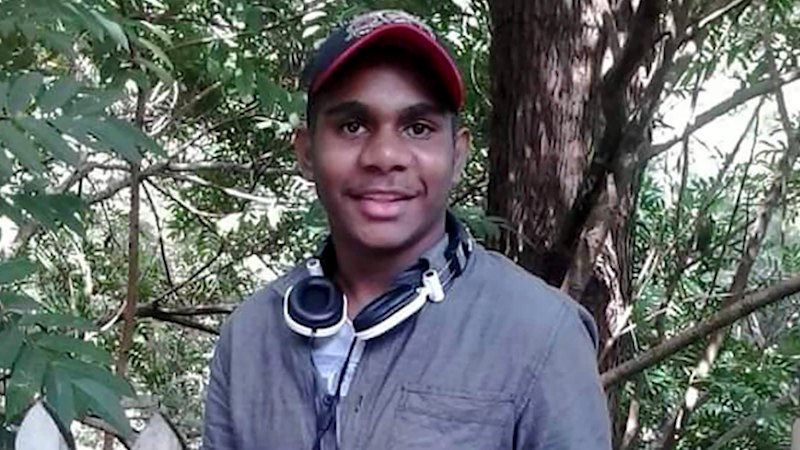
Much has been written and said about the 19-year-old Warlpiri Luritja man.
Relatively little of that has focused on what his family knew: Kumanjayi Walker was a loved and loving member of his community.
He was a brother, son, grandson and partner. Kinship way, he was also a grandfather and uncle.
He was "cheeky, funny [and] loved music", a teenager who cared about his appearance and enjoyed others' company, but also appreciated time alone.
Kumanjayi was also a young man who experienced hardships, experiencing developmental and environmental challenges during childhood.
A 2017 forensic psychological assessment, submitted to the inquest into his death, found that he had a cognitive impairment consistent with a mild to moderate intellectual disability.
Those who knew him remember him for his happy side.
A lover of basketball, his teachers in hometown Yuendumu (known locally as Yurrampi) said he was kind and talkative.
As Senior Warlpiri woman Valerie Martin recalled, Kumanjayi was "a regular visitor", and a welcome one.
“As I got to know him, he had a spark, always with his shoulder bag,” she remembered.
“Always got a smile on his face when he used to come and see us.”
The inquest into Kumanjayi Walker's death found it was "entirely avoidable", precipitated by multiple police failures ( see more below ).
Three days before he died, Kumanjayi had evaded officers attempting to arrest him, briefly wielding an axe before running off.
That incident led to the development of an arrest plan which would see local officer Constable Felix Alefaio, who knew Kumanjayi personally, attending his house with officers from the Immediate Response Team in the early morning of Sunday 10 November to arrest him.
On November 9 2019, the officers were dispatched from Alice Springs to the remote community of Yuendumu to find and arrest Kumanjayi in relation to several outstanding warrants.
One of the officers, Constable Zachary Rolfe, arrived at 6:33pm and began door knocking soon after.
Around 7:20pm, Rolfe and another officer, ignoring the arrest plan, entered a darkened house and encountered Kumanjayi Walker.
After identifying and attempting to arrest him, a struggle ensued. Kumanjayi struck Rolfe with a small pair of scissors.
At 7:22pm, Rolfe drew his firearm and shot Kumanjayi in the back, a non-fatal wound.
Falling to the ground, and lying beneath the second officer, Kumanjayi was shot two more times through the side of the chest by Constable Rolfe. There were 2.6 seconds between the first and second gun shots.
Kumanjayi was transported to Yuendumu police station, where officers administered first aid.
He lost consciousness at 8:15pm and was declared dead at 8:36pm.
Many Aboriginal and Torres Strait Islander communities have varying cultural protocols regarding the naming, images and voices of people who have died.
‘Kumanjayi’ is a culturally significant substitute name used in many Warlpiri and some other Central Australian Aboriginal communities after a person has died.
As 2.6 Seconds: Death In The Outback director Darren Dale explained to SBS, “In Central Australia, if a person dies, be it a man or a woman, if somebody dies, their name should not be spoken again in a way out of respect or not to call that person's name or to call their spirit.
"So ... within just Central Australia, that first name is replaced by 'Kumanjayi.'"
It replaces the deceased person's given name at their time of death, during mourning, or "sorry business", when the use of that name may be culturally inappropriate or distressing.
The use of ‘Kumanjayi’ may continue for years, indefinitely, or for as long as a family requests.
Out of respect for cultural protocols and the wishes of grieving families, news organisations and public agencies use ‘Kumanjayi’ instead of the deceased person's first name when requested.
As stated in the coroner’s report on the inquest into the death of Kumanjayi Walker, “Aboriginal communities throughout the Northern Territory have different terms that are used to refer to the person who has passed away, depending on their language and place.”
“In the Warlpiri language, the term 'Kumanjayi' is used, which is sometimes spelt Kumunjayi or Kumuntjayi. In Arrernte the spelling is 'Kwementyaye'. In Luritja the terms 'Kumanarra' and 'Kumarn' are used.”
Zachary Rolfe is the former Northern Territory police officer who shot Kumanjayi Walker in November 2019, causing his death.
He was 28 years old at the time of the shooting, and had been with NT police for four years.
NT Police charged him with Kumanjayi Walker's murder on November 13 2019, four days after he shot and killed the teenager.
He was acquitted of all charges at trial in 2022.
Rolfe was formally dismissed from NT Police in April 2023 under section 78 of the NT's police act, for "serious breaches of discipline".
The trial ran in the NT Supreme Court between February 7 and March 11 2022, before a judge and jury.
More than 40 witnesses testified over five weeks, including Rolfe, who had pleaded not guilty to murder and the alternative charges of manslaughter and a violent act causing death.
After deliberating for seven hours, the jury returned a unanimous 'not guilty' verdict, acquitting Rolfe of all charges.
Kumanjayi Walker's family were devastated by the result, and called for guns to be banned from remote communities.
The Royal Commission into Aboriginal Deaths in Custody ( see more below ) recommended that every death in custody be investigated, and every Australian jurisdiction now follows this practice.
This is to guard "against the potential misuse of police powers or the continuation of poor practices".
Judge Elisabeth Armitage is the Northern Territory's coroner, and led the inquest into Kumanjayi Walker's death.
It ran for more than two years, from September 2022 to November 2024, making it the longest inquest in the NT's history.
This was in part due to delays, including several legal challenges mounted by Zachary Rolfe, who was also compelled to attend the inquest.
Kumanjayi Walker's family and broader community attended every single day of hearings, often travelling vast distances from their communities to the Alice Springs Local Court.
Judge Armitage's final report runs more than 600 pages .
It is a landmark work, the scope of which can only be appreciated by reading it in its entirety; notwithstanding, here are some of its key findings and recommendations.
The most significant finding was that Kumanjayi Walker's death "was avoidable".
It was a case of "officer induced jeopardy", a situation where an officer makes themselves and others vulnerable by "needlessly [putting] themselves in danger".
Rolfe abandoned a plan, developed in collaboration with senior and community officers, to safely find and arrest Kumanjayi. His sense of "superiority" likely contributed to this decision, the coroner found.
Armitage also determined that Rolfe was racist, and that his racist attitudes "may have influenced (consciously or unconsciously) his failure ... to minimise the risk of a fatal interaction" with Kumanjayi.
In the opening paragraphs of her report, Judge Armitage writes that one of its goals is to "[prevent] another family from experiencing the type of grief that Kumanjayi’s family has endured".
"It is my sincere hope that the completion of this process and the handing down of these Findings will help to prevent a similar tragedy," she writes.
She also points out that she believes police are entitled to "lawfully defend themselves against serious attacks".
"In fact, an important aim of these Findings is to make recommendations to reduce the risk of serious attacks – or any attacks – upon Police ..."
The report made 33 recommendations to the NT government, including:
Strengthening community-led services
Improve health, early intervention in remote communities
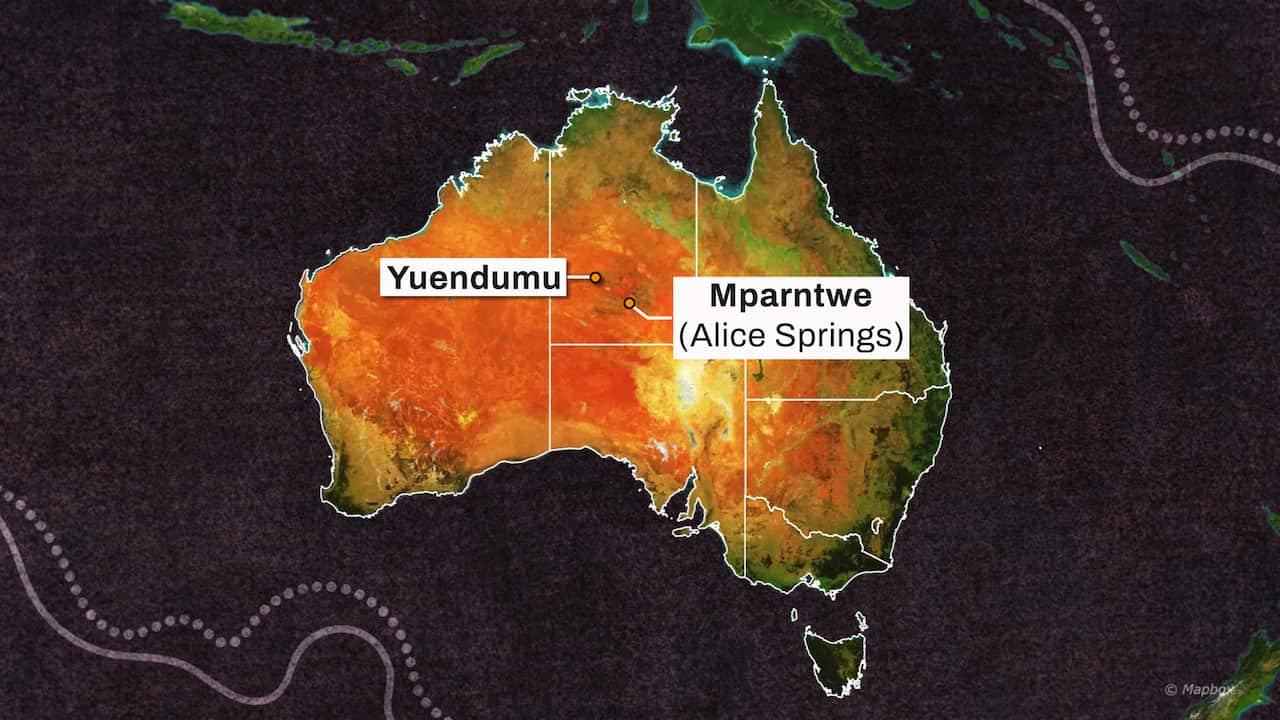
Yuendumu, known locally as Yurrampi, is a remote Aboriginal community in the Northern Territory of Australia, located approximately 300 kilometres north-west of Mparntwe Alice Springs along the Tanami Road.
Established in 1946 as a government ration depot and native settlement, it remains one of the largest Aboriginal communities in Central Australia.
It has a population that fluctuates between 700 and 1,000 residents.
Yuendumu is a predominantly Warlpiri community and has long been recognised as a culturally significant First Nations community with strong language, kinship and ceremonial traditions.
Warlpiri is the primary language spoken in the community.
The documentary 2.6 Seconds: Death In The Outback situates the shooting within the realities of life in remote Australia, where communities often experience complex interactions with government institutions, including police, health and justice systems.
Parts of the new series were filmed in Papunya.
Also known locally as Warrumpi, it's a remote Aboriginal community in the NT located approximately 240 kilometres north-west of Alice Springs/Mparntwe and home to the Luritja side of Kumanjayi's family.
The community has a population of around 430 people, with First Nations people making up the vast majority of residents from Luritja, Pintupi and Warlpiri language groups.
The community is internationally recognised for its Western Desert art movement.
In response to growing public concern about the alarming number of deaths in custody in the 80s, the Australian Government established the Royal Commission into Aboriginal Deaths in Custody (RCIADIC) in 1987 to investigate the causes and circumstances of these deaths.
The Commission examined all Indigenous deaths in custody that occurred between 1 January 1980 and 31 May 1989 across Australia, taking into account the social, cultural and legal factors that may have contributed to them.
The RCIADIC delivered its final report in 1991, making 339 recommendations aimed at improving custodial practices, strengthening relationships with Aboriginal communities, enhancing police education and increasing access to information.
Thirty years after the commission handed down its 339 recommendations, experts say many of the key reforms remain unimplemented, with Aboriginal incarceration rates and deaths in custody continuing to rise.
The commission investigated 99 Aboriginal deaths in custody between 1 January 1980 and 31 May 1989.
There have been 644 Indigenous deaths in custody since 1991, including 97 deaths in 2026 alone.
One outcome was the establishment of the National Deaths in Custody Program (NDICP) at the Australian Institute of Criminology in 1992, following Recommendation 41.
2.6 Seconds: Death in the Outback premieres Tuesday 10 November at 8:30pm on SBS and NITV, and is available on SBS On Demand after broadcast.