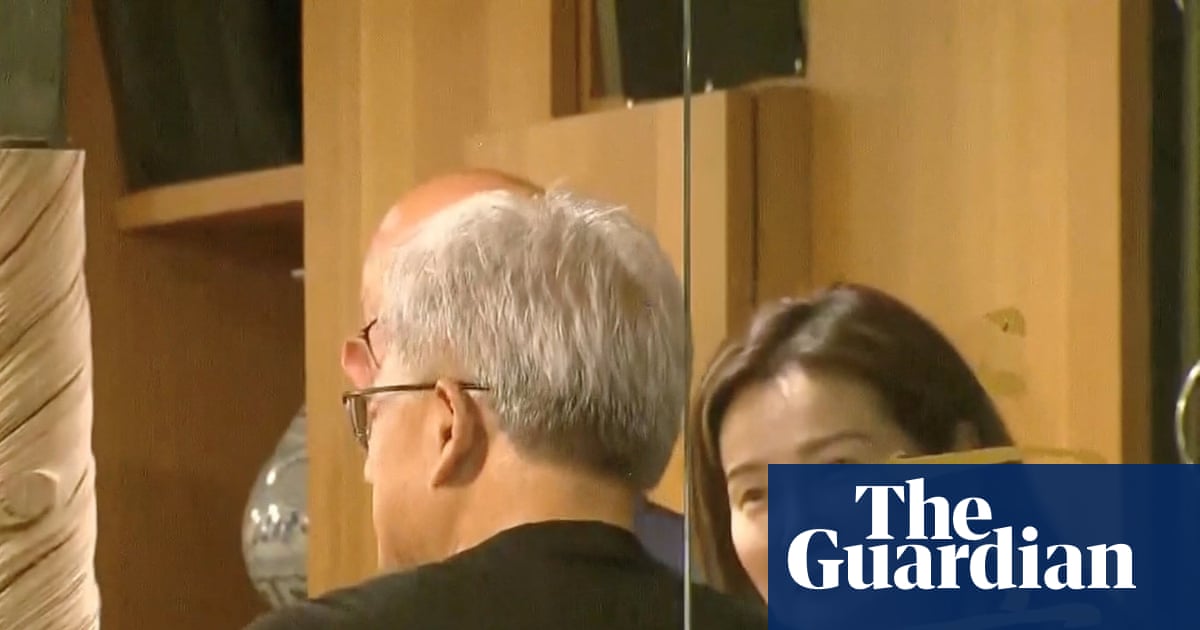


A hand on the back, a kiss on the cheek; the footage of Alice Huang’s interaction with Jensen Huang in a Taipei venue last year does not seem particularly remarkable at first glance.
But the Nvidia chief executive’s revelation on Sunday that he had an affair with Ms Huang has given it new significance.
According to reports, his lover, who is not a relation, was not just an executive at an Nvidia customer. She was also an alleged Chinese spy.
Nvidia has now launched an independent investigation into reports that the boss of a cornerstone company in the global AI boom has been the target of a foreign intelligence effort.
“While the board has no reason to believe that either national security or Nvidia secrets were compromised, the board’s inquiry will examine all available information,” said the board.
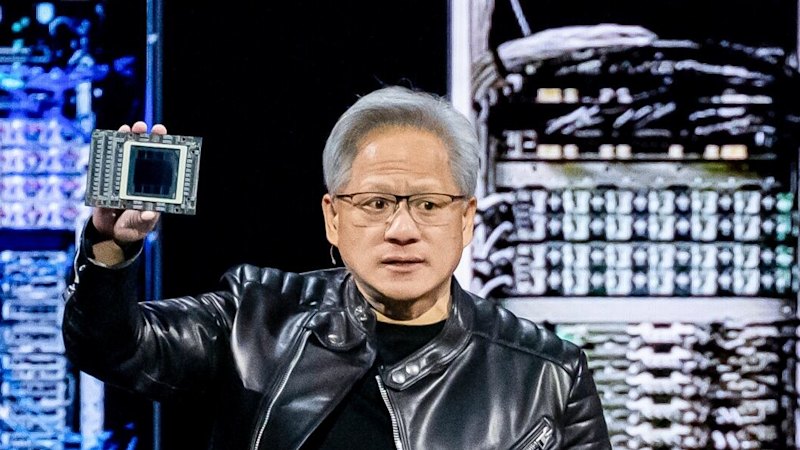
Huang, 63, a poster boy of the AI boom in his trademark leather jacket, admitted there was “no excuse” for what he had done.
Aside from Huang’s dented personal reputation, what is the scale of the damage done to Nvidia and US national security?
The story started to emerge last year when the New York Times and Bloomberg raised questions about a Singapore-based buyer of Nvidia’s powerful chips, which have become the proverbial shovels in the AI gold rush. There were concerns that Megaspeed was flouting US restrictions on AI chip exports to China by diverting some Nvidia inventory to America’s arch AI rival. Nvidia and Megaspeed denied this.
Then last month came a further startling NYT report that Jensen Huang had formed a “close relationship” with Alice Huang, a Megaspeed executive, and that American officials believed she was a Chinese intelligence asset. Donald Trump had been told, but decided not to act on the information. It is now evident that the relationship was more than just close.
At the heart of the question of what China might have achieved through Alice Huang is the extremely close relationship between the CEO of the world’s second-most-valuable company and the president of the United States.
The New York Times reported on Monday that Nvidia appeared to have successfully leaned on the US commerce department to halt an investigation into potential chip smuggling on the part of Megaspeed. That pressure came through a Trump appointee, who allowed Nvidia to reach out about the case.
Responding to reports last year that it might have diverted Nvidia deliveries, Megaspeed said: “Megaspeed is a Singapore-based company, operating fully in compliance with all applicable laws, including US export control regulations.”
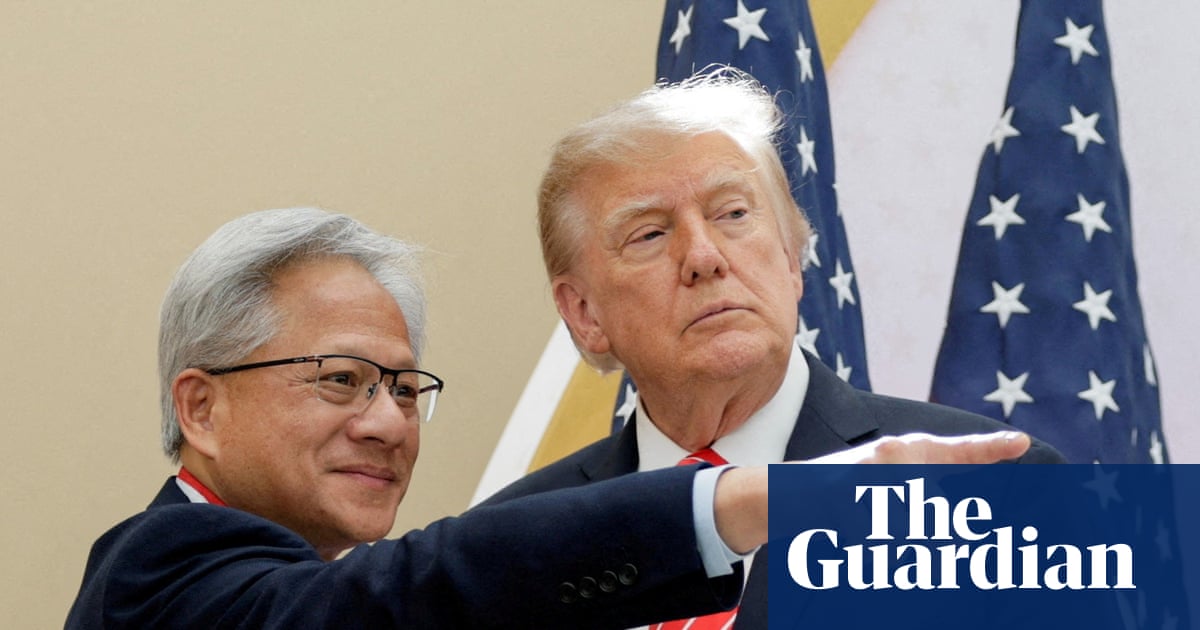
Trump has met frequently – at least seven times – with the head of Nvidia since the start of his second term. Huang has flown on Air Force One and taken calls from the president during public events.
Four of their meetings have touched on one of the most sensitive issues in US-China relationships: the controls that the US has put up around the export of the world’s most advanced AI chips, which are almost entirely sold by Nvidia.
Under the former president Joe Biden, the US put in place the Chips Act, a package of rules that introduced sweeping limitations on US tech companies and their overseas trading partners. These rules sought to control what semiconductor technologies US companies could sell to businesses based overseas – particularly those that might be put under pressure to transfer those technologies to China.
It also introduced strict licensing requirements that in turn limited what those partners could do with technology that they bought.
For Nvidia, this was bad for business. China was one of the largest markets for its GPU chips – accounting for roughly a quarter of its revenue in the years between 2020 and 2022. When the Chips Act passed, the company started to sell downgraded versions of its premier chips to China – for example , the A800 and H800. Some of these were then banned, forcing Nvidia to scramble even more.
Under Trump, things changed. The president first invited Huang to the White House just six days after he was inaugurated, to discuss AI policy and chip exports . The two then met again in July and August of 2025. This was followed by victories for Huang – Trump allowed Nvidia to export previously banned chips to China. Nvidia agreed, in turn, to give the US government 15% of the sales revenue.
Experts said the deal would help Beijing compete “on the AI frontier”, in other words develop AI systems to rival those being produced by the likes of Anthropic and OpenAI.
Five months later, the tech boss appeared to win another startling concession, days after another meeting with Trump. The president agreed to allow the tech boss to export H200s – a far more powerful chip – to China, in exchange for 25% of the revenue.
“President Xi responded positively!” Trump wrote on Truth Social.
It is not unusual for large technology companies to lobby for their preferred policies in Washington; nor is it unusual for Trump to give access – and favourable deals – to men he likes.
But one more thing is now apparent – during this crucial year for his company, Huang was also intimately involved with a reported Chinese spy. The two were first photographed together in mid-2024. Five months after Trump took office is when the two were filmed at the Taipei restaurant. This would have been at the height of Huang’s lobbying push, shortly before Trump agreed to let Nvidia sell the H200s.
What could Alice Huang have gleaned – and passed on – during this affair? Plenty. Glimpses into US policy as it was being made, and to Trump’s own chaotic thinking on AI. And perhaps a world of tips beyond the confines of the White House.
Huang was a key figure for government after government as they formulated their AI policy. He met world leaders from South Korea to Saudi Arabia that year; he joined the then UK prime minister, Keir Starmer, on stage in London.
He would have known the details of the most important tech policy for many governments on Earth – their AI ambitions – because his company was often the only one that could make these ambitions happen. That is certainly true for Britain.
For all the intellectual feats of the systems powered by Nvidia technology, it is Huang’s human intelligence that is most valuable to America’s competitors.