Melissa Fisher says there was one night in her former home when the temperature crept past 35C, and she thought she was "going to die".
"I was so overheated. I started feeling very sick and drowsy and dizzy," she says.
"I started to panic that my brother would find me the next day and I would not be here because of how hot it was."
Fisher was living in a public housing unit in northern Adelaide at the time with no insulation, only concrete walls and a tin roof. She has since moved to another unit with temperature control.
She says there was "no sleeping" when heat lingered overnight in her last home and no relief because she couldn't take showers to cool off, due to a painful inflammatory skin condition.
Your trusted source for staying up-to-date with the world around you. Get free daily news updates and analysis, straight to your inbox.
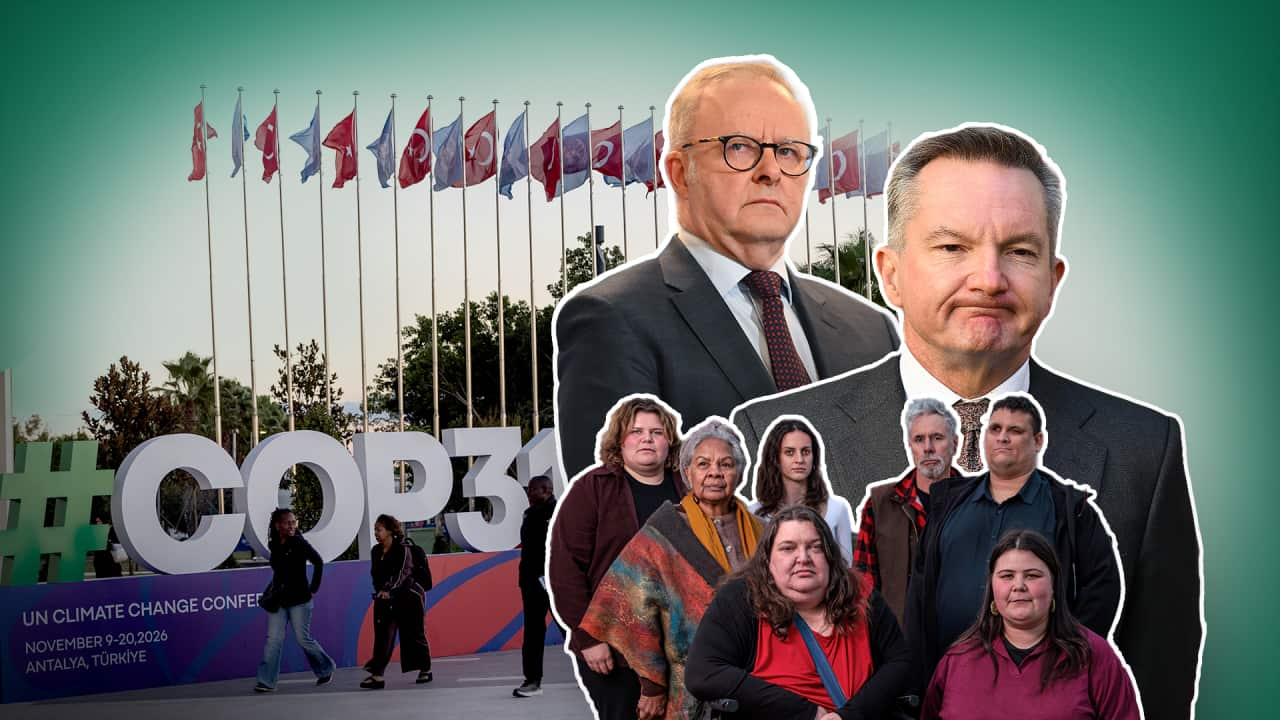
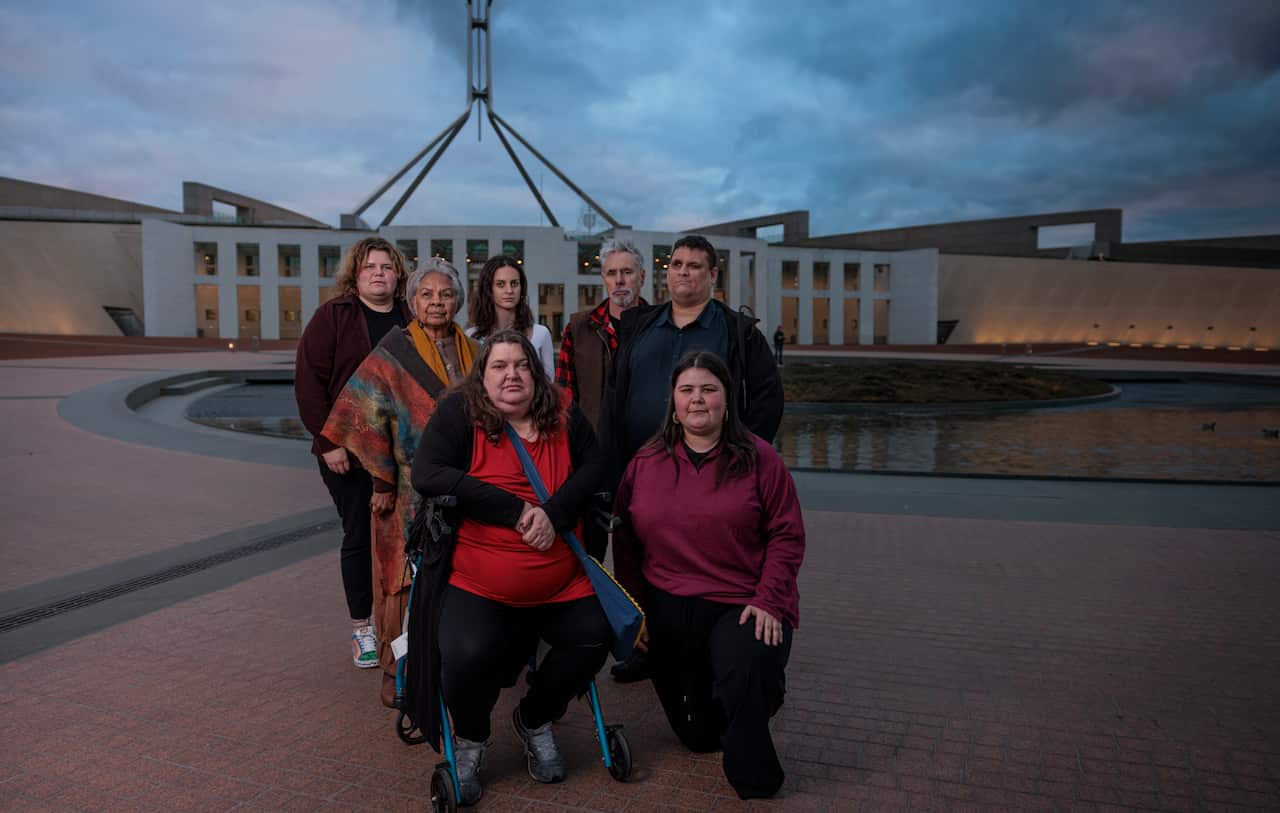
Fisher is one of 10 claimants from across the country who launched a human rights case against the Australian government earlier this year, arguing it has a legal duty to protect people from climate harm.
Known as the 'Hard Truths' case, the group, including First Nations people, firefighters and people living with disabilities, argue climate change is already causing them "devastating harm" and that the government's approval and subsidisation of coal and gas projects are fuelling escalating risks.
They outlined broad-ranging effects of climate change across the country, including floods, the Black Summer bushfires , the South Australian algal bloom and extreme heat.
According to their submission, by failing to regulate fossil fuel production in line with climate targets, the Australian government is violating the group's human rights, including the rights to life, privacy, family and home life, and culture.
Represented by the Human Rights Law Centre, Environmental Justice Australia and Earthjustice, they called on the United Nations Human Rights Committee to declare Australia's approval and subsidisation of coal and gas projects unlawful.
"We send so much coal overseas to be burnt and then the government wipes their hands of it and pretends it doesn't exist because we've sent it overseas. But the fact is the world doesn't have borders for gases and climate change," Fisher said.
According to Naru Research, led by climate and energy researcher Tim Baxter, emissions from Australia's exported fossil fuels "essentially doubled" between 2005 and 2020, while it has seen some decrease in emissions produced onshore.
Now, after launching the case in June, several members of the group are heading to this year's Conference of the Parties to the United Nations Framework Convention on Climate Change (COP31), which kicked off on Monday in Antalya, southern Türkiye.
They are attending to speak directly to the Australian government and participate in formal side events.
Fisher says she couldn't attend for medical reasons, but she's thankful some representatives of the case will attend the conference to raise awareness.
Australia is playing a key role as co-host at this year's COP , with Climate Change and Energy Minister Chris Bowen acting as the president of negotiations.
However, Australia's role is being scrutinised by experts and advocates, who argue there are conflicts between its domestic policy and what it's advocating for on the global stage.
Ahead of COP31, a letter signed by more than 500 academic experts from universities and research institutes, and addressed to Prime Minister Anthony Albanese, was published, outlining a "paradox at the heart of Australia's climate leadership".
The letter argued "Australia has pledged to represent its Pacific family on the world stage while advancing new and expanded coal and gas projects at home, with no plan to phase out production".
It also detailed what it called an "extraordinary convergence of events relevant to the climate crisis", including the glacier collapse in August that led to mass devastation and the deaths of more than 1,400 people in Nepal, and the announcement from the United Nations Environment Programme that 1.5C of global warming is now unavoidable.
Alina Leikin, principal lawyer from Environmental Justice Australia, told SBS News COP31 is presenting a "stark reality" for the Australian government.
"While Australia is playing this very important role, it hasn't really held up the mirror to its own policies — particularly when it comes to exports," she said.
Leikin said the claimants from the Hard Truth case are attending COP31 to relay "the catastrophic impacts of climate change" in their own lives to the global community.
Speaking to The Guardian's Australian Politics podcast last week about this criticism, Bowen said nations that export fossil fuels and those that import them are both managing energy transitions.
"Other ministers certainly recognise that Australia's doing well in its transition, that we've got great domestic decarbonisation plans in place," Bowen said.
In a statement to SBS News, the minister said COP31 is an "opportunity to show what cooperation can deliver at this crucial time for both our climate and global energy security".
"It will be about unlocking finance and investment, cheaper energy for households, accelerating electrification and boosting action on the ocean, nature's greatest climate regulator," he said.
The Hard Truths case is the first case to be filed in an international court or body against a country for climate harm since a landmark ruling by the International Court of Justice (ICJ) last year that paved the way for such action.
The advisory opinion delivered in July 2025 laid out obligations for states related to climate change, citing international treaties including the Paris Agreement (which set the goal of limiting global warming to 1.5C above pre-industrial levels) and international law, including human rights law and environmental law, including the duty to prevent significant harm to the environment.
While non-binding, the ruling clarified that even though the climate crisis has been caused by many countries and entities, the failure of states to take action to protect the climate system from greenhouse gas emissions may be an "internationally wrongful act which is attributable to that state".
Rebekkah Markey-Towler, a research fellow from Melbourne Climate Futures at the University of Melbourne, told SBS News it had broad implications for climate litigation around the world.
"It was a significant and a landmark moment in that regard to say to countries 'You have a responsibility to act on climate change and if you don't, there are going to be consequences under international law,'" she said.
Markey-Towler said the launch of a case against the Australian government was not surprising after the ICJ ruling, and Australia has been a "hotspot for climate litigation" for several decades.
Fisher says being involved in the Hard Truths case has felt "meaningful" and she takes pride in "putting pressure on the government to do more for climate change".
For now, the group is awaiting the government's response to their challenge. Fisher says she hopes they could see a pause on coal and gas activity until they get a result.