This audio is voiced by AI and may occasionally mispronounce words.
Share your feedback and help us improve this feature. Read more about how we use AI at SBS here.
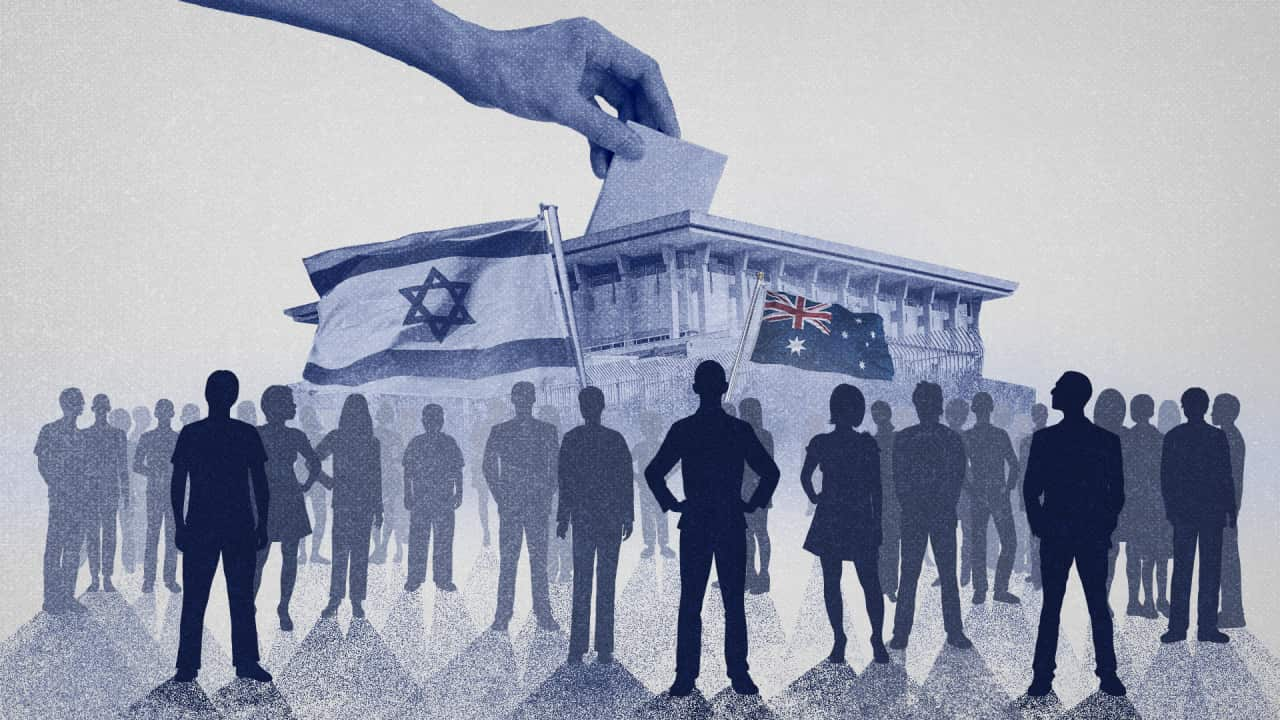
Nirit Eylon immigrated to Australia 21 years ago. This month, for the first time, she’s flying back to Israel specifically to vote.
The country does not allow citizens living abroad to vote from outside its borders.
But with an election many view as the most consequential in its history fast approaching, estimates from the US-based Fly&Vote initiative, which helps facilitate their travel, suggest as many as 53,000 Israeli expats are expected to return.
"There is a perception that this election is about right and left. I don't believe it's so. I believe it's between right and wrong," the 52-year-old, who lives in Melbourne, tells SBS News.
Your trusted source for staying up-to-date with the world around you. Get free daily news updates and analysis, straight to your inbox.
Eylon believes Israel is at a crossroads. She views the election as a contest between competing visions of the country’s future: one grounded in liberal democratic values, and another shaped by religious nationalism.
She believes Israel's leaders must be held accountable for failures surrounding the October 7 attacks, and that political change is necessary for Israel to begin to heal.
Eylon is far from alone in viewing this election as pivotal.
Israeli political science expert Shahar Burla, a contributing editor at The Jewish Independent, is one of more than 11,000 Israeli-born people living in Australia.
He tells SBS News he knows around 20 people in his immediate circle who are planning to return to Israel for the election — a circumstance he describes as "very unusual".
"I think that the main motivation is fear," he says.
Israeli Prime Minister Benjamin Netanyahu's government has pursued sweeping changes to Israel's institutions, including moves to curb the judiciary’s oversight of government decisions, while pushing increasingly hardline policies towards Palestinians and expanding Israeli military operations across the region, including in Lebanon and Iran .
Ongoing geopolitical tensions and fractured alliances mean the election will be watched closely by many outside Israel too.
SBS News has spoken with nine people from Jewish, Israeli, Palestinian, Lebanese and Iranian communities in Australia about what is at stake for them in this election, as conflict continues to reverberate across the Middle East.
While their views on peace, security and coexistence vary, they share one common belief: that Israel cannot continue on its current path.
For Palestinian Australian academic Shamikh Badra — who lost his father, his brother and his brother’s family to the war in Gaza — a change of government would be welcome, but he cautions it's not a simple fix.
"I am not saying that [the] next government will automatically be better, but removing this government is the first step," he says.
Netanyahu, as leader of the Likud party, has served as Israel's prime minister for nearly 20 non-consecutive years since he was first elected in 1996.
In the lead-up to the 27 October election, a relatively new, centrist party called Yashar has been polling neck and neck with Likud.
Former Israel Defense Forces (IDF) chief of staff Gadi Eisenkot leads the party, which takes its name from the Hebrew word for 'straightforward' or 'honest'.
Eisenkot is Netanyahu’s primary challenger to lead the country, and has a personal stake in Israel's ongoing conflicts, having lost both his son and nephew in the Hamas-Israel war.
He's running on a platform of accountability for the October 7 attack, promising to restore trust in Israel's institutions and strengthen national security.
But neither party is close to winning enough seats for a majority in Israel's 120-seat parliament, the Knesset.
That means coalition-building will be crucial to forming government.
Currently, Israel’s parties are divided over their willingness to govern alongside Netanyahu rather than splitting along traditional left-right lines. Two distinct camps remain: those willing to join a Netanyahu-led coalition, and those who may be willing to join one led by Eisenkot.
But neither bloc appears to have a clear path to a parliamentary majority, raising the prospect of political deadlock.
Burla notes that while Eisenkot has positioned himself at the political centre, his prospective coalition spans the political spectrum and includes right-wing parties.
That limits how far a new government could go on issues such as recognising Palestinian statehood and negotiating territorial compromise.
Among Israel's major Jewish-led parties, support for Palestinian statehood remains limited. Yair Golan, leader of the left-wing Democrats, is the only major party leader to have endorsed a future two-state solution.
Burla believes changing Israel's leadership could remove a "first obstacle" to peace with Palestinians, but does not expect significant progress in the coming years.
"None of them will speak about a Palestinian state at this stage, or any territorial compromise with the Palestinians.
"But I think that Eisenkot has at least the potential, the political potential, to move forward some kind of a peace process."
Yasmeen Abu Fraiha is a medical doctor who works with humanitarian missions in the Middle East.
She's one of roughly two million Palestinian citizens of Israel, a group that makes up around 20 per cent of the country’s population.
Fraiha tells SBS News many "feel the urgency in these elections". She believes Palestinian voters will turn out in higher numbers than they have for previous polls.
Palestinian citizens of Israel have historically voted at lower rates than the wider population. In the 2022 election, just over half of Arab and Druze voters cast a ballot, compared with more than 70 per cent nationally, according to the Israel Democracy Institute.
Fraiha, too, feels democracy is at stake. But for Palestinians, she says, the consequences are more fundamental.
"I don't know if it will be necessarily better if [Netanyahu] loses, but it will definitely be worse if they win again," she says.
Yet many Palestinians who will be directly affected by the election’s outcome will have no say in it.
Badra, the Sydney-based researcher and community organiser from Gaza, says his family paid the ultimate price under Israel’s current government. His priority is to see it removed from power.
Beyond that, a path to peace will not be easy. But Badra says any lasting solution must address Palestinian rights and security, including an end to occupation and settlement expansion.
"Security for Palestinians means being able to live in your home without fear of bombing. It means children have food, medicine, education. It means people being able to move freely and live with dignity," he says.
"It also means real political and human rights for Palestinians."
On 7 October 2023, Hamas killed 1,200 people and took another 251 captive during its attack on southern Israel.
Israel's retaliatory bombardment of Gaza has decimated much of the strip and killed more than 74,000 people, including more than 1,400 since a ceasefire began last October, according to the local health ministry.
The humanitarian conditions in Gaza remain dire, with critically limited access to food, water and essential services. UNICEF estimates nearly 84 per cent of Gaza’s population continues to live in overcrowded displacement sites or damaged shelters.
The election’s outcome will be felt far beyond Israel. For many Australians like Sam Hoballah, the results will be deeply personal.
Born in southern Lebanon, in a town close to the Israeli border, the Sydney-based interpreter moved to Australia 40 years ago.
However, much of his family still lives in Lebanon, a country scarred by civil war and decades of regional conflict .
As a child, Hoballah says he grew accustomed to periods of recurring war and insecurity. Last August, before Israel launched its ground invasion of southern Lebanon, he returned to his hometown to visit family.
"This time it was different," he tells SBS News of the conflict in recent years.
"While [they] have been living in a difficult, insecure situation in that part of Lebanon, this time it is catastrophic."
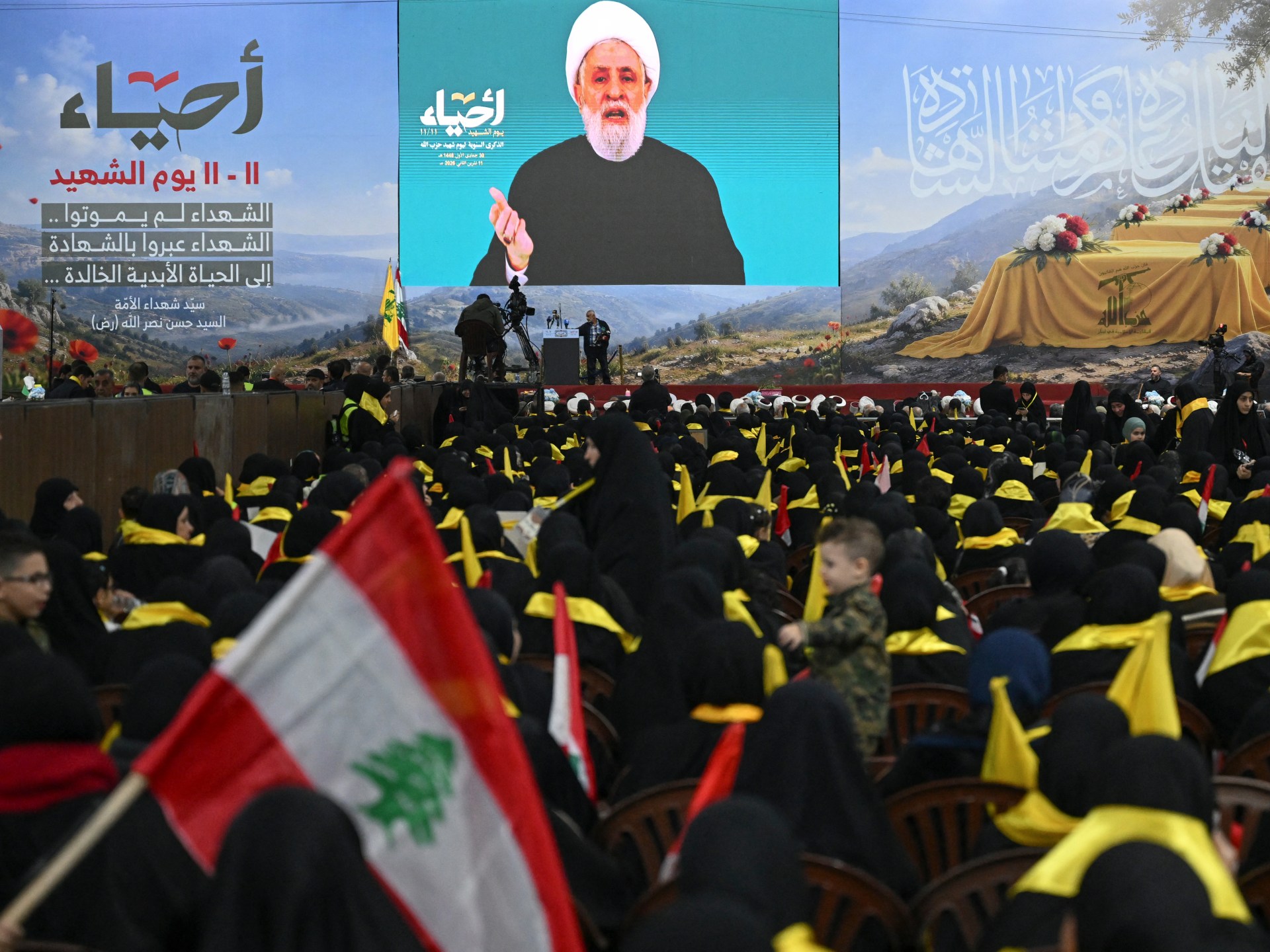
Following the Hamas-led attacks on Israel on 7 October 2023, a new chapter began in the decades-long conflict between Israel and the Lebanese militant group Hezbollah.
Despite a ceasefire in November 2024, the conflict flared again in March this year, after Israel and the US initiated war with Iran.
The Iran-backed Hezbollah fired rockets at Israel in support of its ally, triggering a major Israeli air and ground offensive in Lebanon.
More than 4,300 people have since been killed in Lebanon, according to the country’s health ministry, while dozens of Israelis have been killed in the conflict.
Israel’s occupation and bombardment of southern Lebanon has flattened villages and displaced hundreds of thousands of people.
Hoballah says his own siblings are among them; parts of his hometown, Shaqra, have been reduced to rubble.
"It's a total misery there now," he says.
"So you can imagine the psychological impact this has on our community here [in Australia]."
The 66-year-old says he can’t recall a time in his life when people in southern Lebanon felt safe under any Israeli government.
"To be honest, there was some differences, but no major difference."
He has little faith the election will bring meaningful change, but hopes to see Israel led by a more moderate coalition.
For Australians with ties to Iran, the war has also brought Israel's political future into sharp focus.
Suren Edgar, vice president of the Australian Iranian Community Alliance, says the conflict has affected many in his community very personally.
"You are consistently checking the news, trying to contact people and worrying about what may happen next," he tells SBS News.
He says decisions made by Israel’s next government "could have direct consequences" for his friends, family and the wider region.
"For me, what is at stake is whether the region moves toward another cycle of war, or towards greater stability."
Edgar hopes Israel's next government will balance its security concerns with the need to protect civilians and infrastructure, recognising that long-term security cannot come from permanent regional conflict.
"I hope it understands that weakening the Islamic Republic and weakening Iranian society are not the same thing."
Across different diaspora groups, the election is also being viewed as a vote on the direction the country will take in managing its foreign relationships and conflicts into the future.
Ric Benjamin is chair of the New Israel Fund Australia and a longtime organiser within Australia’s Jewish community.
He says many Jewish Australians feel "strongly connected to Israel" and are passionate about its elections, even if they can’t cast a ballot.
Benjamin points to the work of Jewish and Palestinian Israelis who continue to cooperate despite the conflict, such as those in the health and humanitarian sectors, as a rubric for Australians navigating their own divisions.
"If it's possible for people who are on the ground in the conflict, who have on both sides lost people through war or terror, if they are able to come together, why is it that our communities, 15,000 kilometres away, can't find that when they cry out for help?
That desire to break the cycle of conflict at the ballot box is one of the reasons Israeli Australian Limor Fayena has extended her trip to Israel. It will be her first time voting in Israel in 20 years.
The Sydney-based 50-year-old software engineer, who is also Burla's partner, says she hopes her vote will help bring about a "more responsible government" — one that will consider the future being created for the nation's children and grandchildren.
"How can we minimise the option of another war and sit down and think about the future — not the current and not the past?"
— With contributions from SBS Arabic and SBS Persian