Just a few months ago, Cuban artist Luis Manuel Otero Alcántara was serving a five-year sentence in a prison outside Havana, unsure if he would ever be allowed to go free.
Alcántara became Cuba's most high-profile political prisoner, a symbol of resistance against the country's one-party Communist rule.
Alcántara was released in July but freedom came with a condition: he had to leave Cuba.
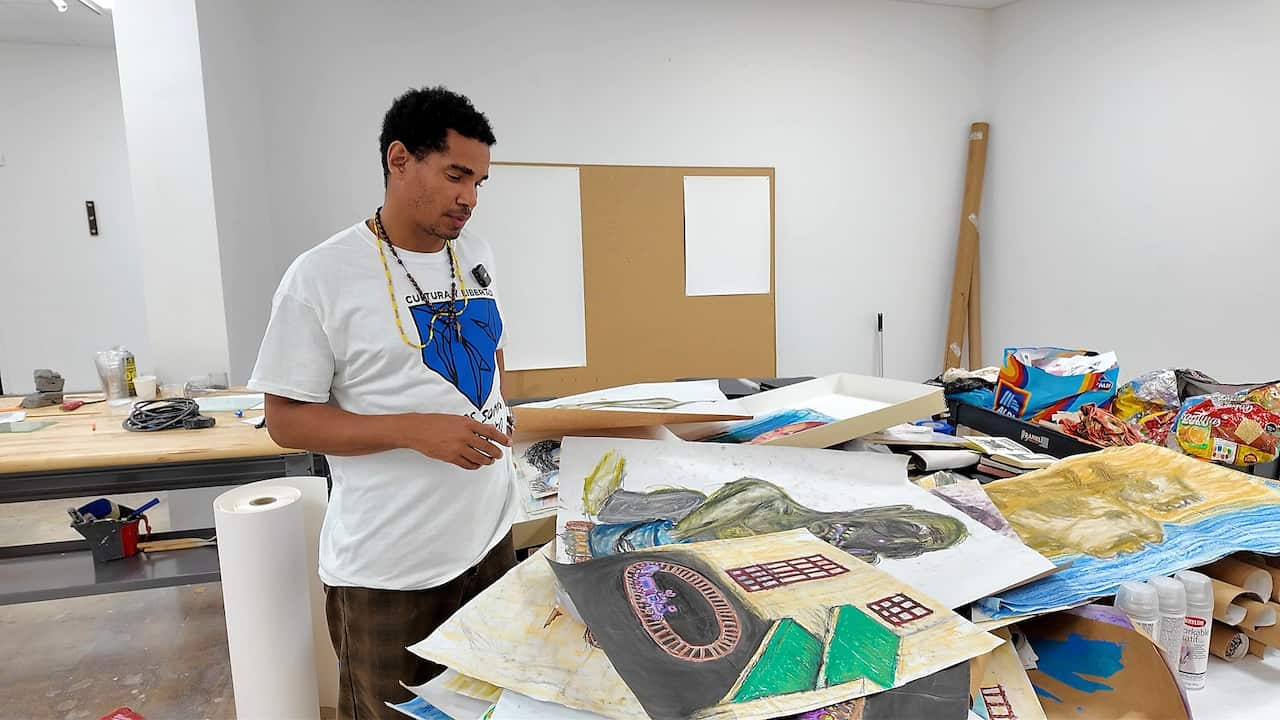
"In the end, they [Cuban authorities] expelled me from the country because I had no way to live or even exist in Cuba—except in prison," he told SBS Dateline, speaking inside El Espacio 23, a Miami art gallery where he received an art residency.
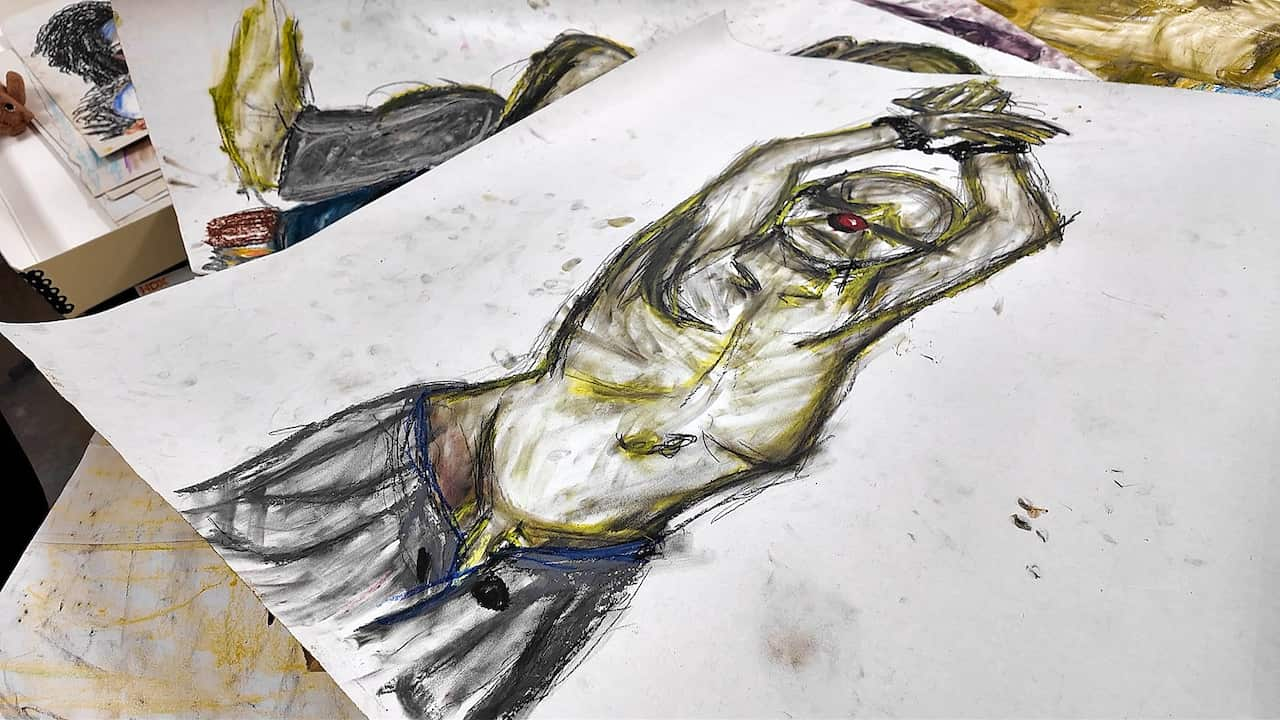
In prison, art was an escape from grim reality, the 38-year-old artist says. He was allowed to bring his prison drawings with him, some of which are currently on display and explore the themes of black holes, frozen time, and sexuality.
Your trusted source for staying up-to-date with the world around you. Get free daily news updates and analysis, straight to your inbox.
A self-taught artist from a poor background, Alcántara rose to prominence in 2018 when he formed the San Isidro Movement, a collective of Cuban artists, journalists and academics who banded together to protest a censorship law and call for more civil and political freedoms. The activists were subjected to ‘frightening levels’ of surveillance and harassment by the authorities, Amnesty International said .
Alcántara says he was arrested more than 90 times over the course of three years in the lead-up to his arrest in July 2021, during Cuba's largest anti-government protests in decades.
The following year, he was sentenced to five years in a maximum-security prison on charges including "contempt," "public disorder" and "insulting national symbols".
Amnesty International called his imprisonment unjust and declared him a prisoner of conscience.
"Just as they built me these five years out of nothing — out of falsehoods — they could easily build another 5 or 10 years, it wouldn’t be an issue for them," he said in a 2024 interview with Spanish newspaper EL Pais on the difficult choice he was facing.
"So, I choose exile. But I don’t want to leave Cuba. That’s the big problem: I’ll either be a martyr, or I’ll be outside of Cuba."
After his release from prison, Alcántara's whereabouts were unknown for eight days. Later, it was revealed that he had been held in a secret location while awaiting permission from the Trump administration to go to the United States under humanitarian parole for people of "a significant public benefit".
On 18 July, he landed at Miami airport and was greeted by crowds of supporters. Florida is home to the largest Cuban American diaspora in the US, and his arrival was welcomed in a statement by US State Secretary Marco Rubio.
The decision to go into exile was extremely difficult, Alcántara says.
As an artist, he used to travel outside of Cuba all the time, but he always had a place to come back to. Now he feels cut off from his family and homeland.
"You only understand all that when you can't go back. And that's what exile [is]: not being able to return to your roots, to that breath of fresh air you received when you were born, and that stays with you throughout your life."
From exile, Alcántara continues to call for the release of political prisoners in Cuba. Rights groups such as 11J and Prisoner Defenders estimate between 800 to 1,300 people remain behind bars.
Among them is San Isidro Movement co-founder, rapper Maykel Perez Castillo, who is serving a nine-year prison sentence in a Cuban prison on charges including "contempt", "public disorder" and "defamation of institutions and organisations". His imprisonment is widely viewed as politically motivated for his activism and music by Amnesty International and PEN International, a worldwide association of writers that promotes freedom of expression.
Alcántara has been busy since his move to the US: holding art exhibitions, giving talks, and accepting awards for his fight for democracy. From afar, he watches as his home country is grappling with a deepening crisis.
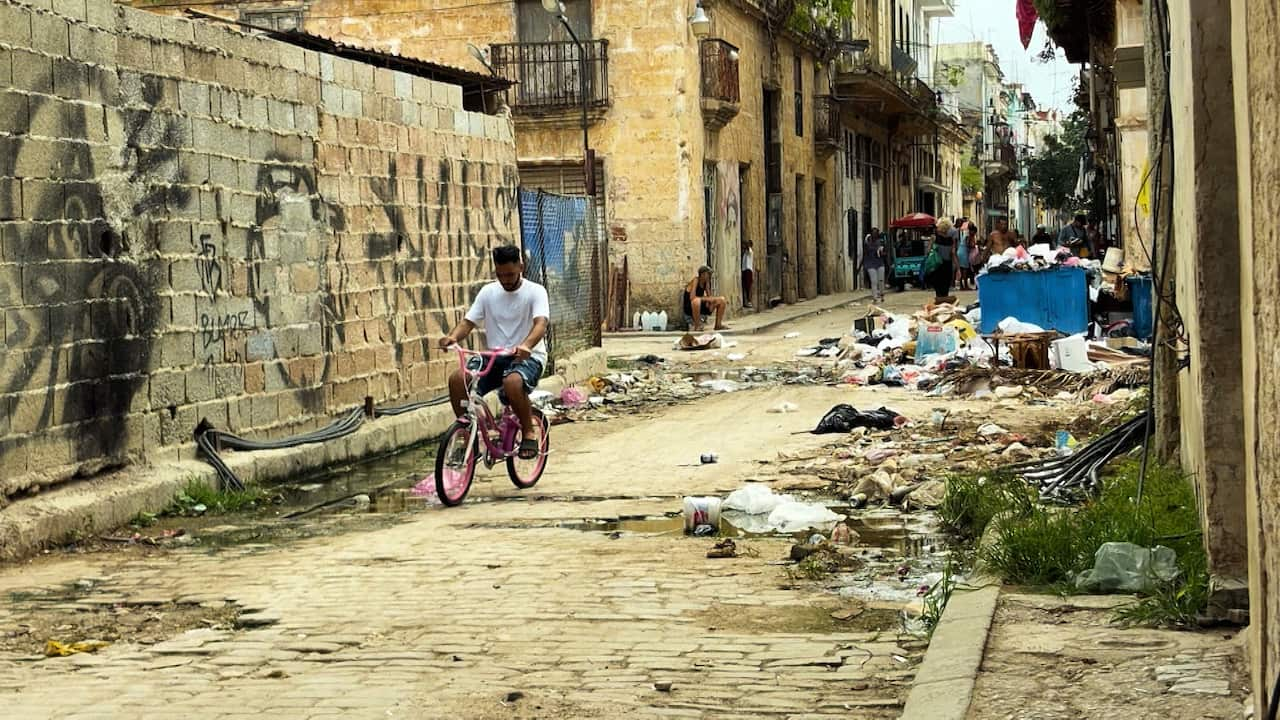
At the start of this year, US President Donald Trump ramped up sanctions and restrictions on oil shipments to Cuba with a goal of forcing a political change on the island, declaring its Communist regime a threat to US national security. The embargo caused severe shortages of fuel, food and medicine.
For the exiled artist, however, Cuba is in the grip of a human rights crisis, and political corruption is to blame for the economic hardship.
"One of the greatest evils of the Cuban dictatorship is corruption," he said.
He believes that Cubans – both living on the island and the vast diaspora abroad – have to take charge of Cuba's future to bring the end to the regime. But international support will be needed in the country's transition to democracy.
"We won't be the first country to emerge from a dictatorship, and we're going to need international aid."
Dateline is an award-winning Australian, international documentary series airing for over 40 years. Each week Dateline scours the globe to bring you a world of daring stories. Read more about Dateline
Have a story or comment? Contact Us