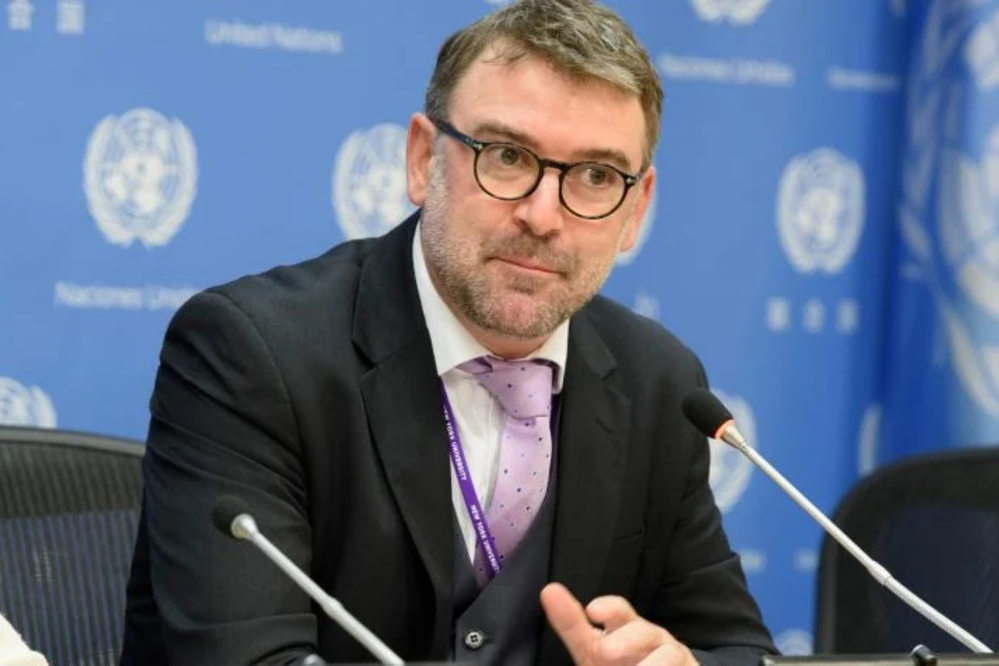
A United Nations human rights expert has urged Nepal to make transitional justice a national priority, calling on the government to expedite appointments to two long-vacant commissions and revive a process that has made little progress nearly two decades after the end of the decade-long Maoist insurgency.
Bernard Duhaime, the UN special rapporteur on the promotion of truth, justice, reparation and guarantees of non-recurrence, made the appeal as Nepal prepares to mark the 20th anniversary of the Comprehensive Peace Accord, signed on November 21, 2006, which formally ended the armed conflict.
Despite repeated national and international calls for progress, Nepal has yet to complete key elements of the transitional justice process envisaged by the agreement between the then government and Maoist rebels.
“Since the Accord was signed in 2006, several transitional justice initiatives have been launched, yet progress has remained slow,” Duhaime said in a statement issued by the UN Human Rights Office.
He said the formation of a new government earlier this year had created an opportunity to strengthen governance and reinvigorate the transitional justice agenda, adding that Nepal must not let it slip away.
Duhaime urged the government to appoint commissioners without further delay to the Truth and Reconciliation Commission and the Commission of Investigation on Enforced Disappeared Persons, allowing both bodies to resume their work.
He also called on the authorities to engage meaningfully with international human rights mechanisms and institutions to meet Nepal’s commitments to justice, accountability and human rights.
The UN expert expressed regret that he could not undertake his planned visit to Nepal this year. He said he would continue working with the government to identify alternative dates, describing a country visit as an important opportunity to deepen engagement and support efforts to advance transitional justice and protect victims’ rights.
Nepal’s transitional justice process has been held back by political disagreements, legal and institutional obstacles, and repeated delays in appointing officials to the two commissions. Thousands of conflict victims and families of those who disappeared during the insurgency continue to wait for answers, justice and reparation.
Both commissions have been without office-bearers since the government removed their previous leadership through an ordinance in May this year. The failure to appoint new commissioners has left the bodies unable to resume their work and added to uncertainty surrounding the transitional justice process.
The delay has also affected plans for Duhaime’s visit, which was expected to provide an opportunity for discussions with the government and other stakeholders on advancing the process.
The Comprehensive Peace Accord envisaged the formation of a truth and reconciliation commission within six months to investigate serious human rights violations and crimes against humanity committed during the conflict and promote reconciliation. Twenty years later, the failure to fulfil that commitment remains one of the most enduring unfinished tasks of Nepal’s peace process.
Anil Giri is a Chief Sub Editor covering diplomacy, international relations and national politics for The Kathmandu Post. Giri has been working as a journalist for more than two decades, contributing to numerous national and international media outlets.